
Understanding Israel Beyond the Headlines
Itamar Ben-Gvir – An Unapologetic Jew
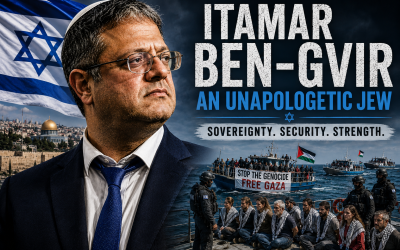 Love him or hate him, Itamar Ben-Gvir has become one of the most controversial and recognizable figures in Israeli politics. At a time when many politicians carefully calculate every statement to avoid international backlash, Ben-Gvir built his image around doing the exact opposite. Loud, confrontational, populist, and unapologetically Jewish, becoming one of the defining figures of Israel’s modern nationalist political movement.
Many Israelis who back Ben-Gvir argue that the “old Israel” no longer works. They believe that for years Israel focused heavily on diplomacy, restraint, and international approval while enemies interpreted hesitation as weakness. Endless explanations to foreign governments, media organizations, and international institutions did not stop terrorism, anti-Israel activism, or growing hostility toward the Jewish state. After October 7, many Israelis began demanding a different kind of leadership, one focused less on global popularity and more on deterrence, sovereignty, and visible strength.
That frustration created political space for Ben-Gvir.
For many on the Israeli right wing, Ben-Gvir represents a “new Israel”, one that refuses to apologize for defending itself and is willing to project power openly, even if it creates controversy abroad. They believe survival in the Middle East depends not only on military capability but also on psychological deterrence and national confidence.
This debate became especially visible during the recent maritime incidents involving foreign activists attempting to challenge Israeli restrictions around Gaza, including a Turkish-led flotilla that the State of Israel viewed not as a humanitarian mission but as a calculated political provocation designed to create media spectacle, viral footage, and international pressure against Israel.
The State of Israel argued the activists knowingly violated Israeli policy and entered a restricted security zone in order to provoke confrontation, while international media often portrayed them as victims instead of political actors attempting to create chaos at Israel’s borders.
Itamar Ben-Gvir’s viral footage showing detainees under heavy security control alongside Israeli flags and the Israeli national anthem became one of the defining moments of the incident, with Israeli officials presenting it as a message of deterrence and Israeli sovereignty. Many aligned with Ben-Gvir’s approach viewed the footage as a warning to future flotillas and activists, showing that illegal attempts to enter Israel would be met with arrest, humiliation, and visible consequences.
Despite the international outrage surrounding the footage, most detainees were processed and deported within days, leading many to argue that the backlash was fueled more by symbolism, viral imagery, and political narratives than by the actual treatment of the activists.
Many ask what would happen if dozens of Israeli boats carrying Israeli flags attempted to approach the shores of Turkey in political protest. The response would likely involve arrests, prolonged detention, and severe legal consequences, highlighting what many see as a global double standard toward Israel.
Israel’s own political and media ecosystem also helped amplify the incident globally. Senior Israeli figures, including Benjamin Netanyahu, Gideon Sa’ar, members of Knesset, journalists, commentators, and international allies, rapidly reacted across television and social media, transforming what may have remained a localized maritime confrontation into an international political controversy. In their view, Israel’s nonstop political discourse and highly reactive media environment often magnify provocations far beyond their actual operational significance.
The flotilla incident also elevated Ben-Gvir internationally. Within hours, one video transformed him from a controversial domestic politician into one of the most recognizable faces of Israel’s nationalist movement worldwide.
Itamar Ben-Gvir understands that modern politics revolves around viral moments, emotional reactions, and media visibility. Instead of avoiding confrontation, he uses it to project strength and shape the narrative himself. Critics and supporters alike have even nicknamed him “The Minister of TikTok” because of his constant use of viral and controversial social media posts to dominate public conversation and political discourse.
Supporters further argue that Itamar Ben-Gvir’s aggressive style as National Security Minister has raised eyebrows internationally but appears effective domestically. They believe harsher prison conditions, stricter enforcement, and a more uncompromising law-enforcement atmosphere increased deterrence among hostile actors, pointing to Israeli reports claiming significant declines in nationalist terror incidents and security-related violence during his tenure, including reports citing decreases of roughly 70% in certain categories of nationalist attacks over the past year.
Critics, however, argue that Ben-Gvir’s methods rely too heavily on provocation, symbolism, and media spectacle. They accuse him of escalating tensions unnecessarily, damaging Israel’s international image, and turning sensitive security incidents into political theater. Critics also viewed the flotilla footage as inflammatory and humiliating, accusing Israeli officials of deliberately intensifying tensions through psychological messaging and public humiliation tactics. Even Mike Huckabee publicly criticized the video shared on social media, adding to the international controversy surrounding the incident.
Itamar Ben-Gvir, in his position as Israel’s National Security Minister, is ultimately carrying out the agenda and governing style he was elected and appointed to implement. He has remained consistent in presenting his ideology openly and actively pursuing the policies and approaches he promised to bring into office.
Whether one agrees with Ben-Gvir’s methods or not, his rise reflects something very real inside Israeli society: a growing belief among many citizens that Israel must stop acting like a country seeking permission to exist and start acting like a sovereign regional power fully confident in its identity, strength, and legitimacy.
Related Topics
Related Posts