
Jeremy Griffith and the Question We Keep Avoiding About the Human Condition
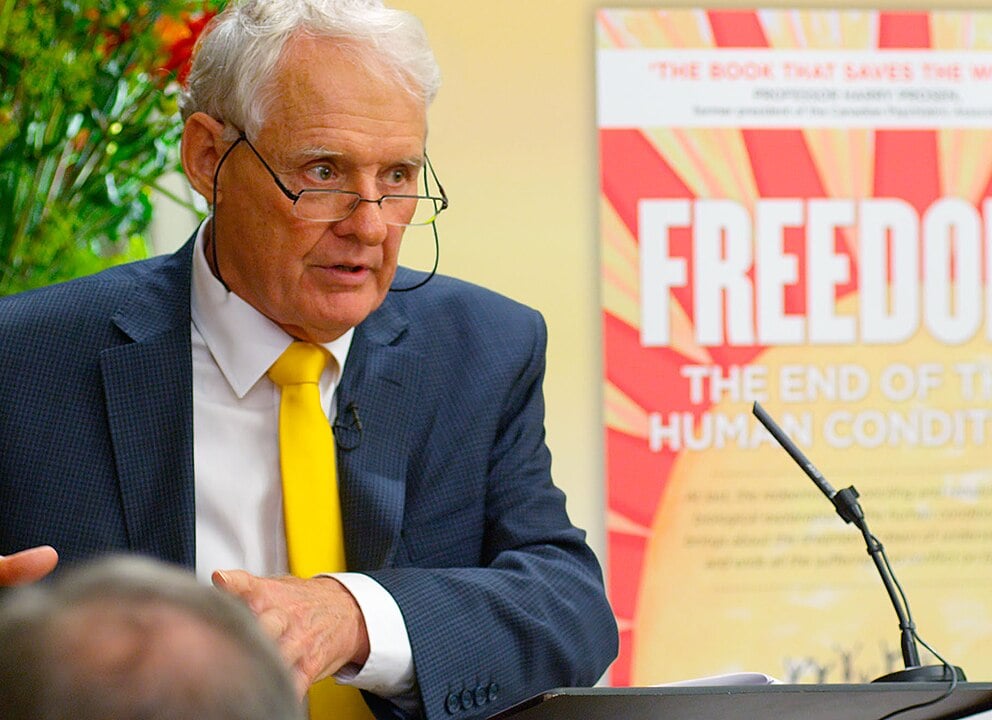
The problem we describe but rarely explain
Modern life is saturated with diagnoses. We talk constantly about distraction, polarisation, anxiety, moral confusion, and social breakdown. Psychologists chart rising rates of distress, philosophers debate the erosion of judgment, and religious traditions wrestle with guilt and responsibility. We are not short on description.
What remains elusive is explanation. Why, when our stated ideals are cooperation, empathy, and restraint, does human behaviour so reliably veer toward conflict, defensiveness, and self-justification? Why does moral failure feel so intimate and psychologically charged, rather than merely rule-breaking? And why do these patterns appear across cultures and historical periods, regardless of political or technological conditions?
It is a question that Australian biologist Jeremy Griffith argues biology has largely failed to answer.
These questions sit at the heart of what has long been called the human condition. They are frequently invoked, but rarely confronted directly.
Why existing explanations stop short
Philosophy has offered searching descriptions of human frailty, but generally refrains from claims about biological origin. Religion frames human failure in moral or spiritual terms, often emphasising obligation and repair rather than causation. Psychology treats distress symptomatically, while neuroscience maps mechanisms without addressing subjective meaning.
Biology, for its part, has largely avoided the issue altogether. Evolutionary theory is comfortable explaining behaviour that enhances survival or reproduction, but far less comfortable accounting for guilt, shame, or the sense of being fundamentally at odds with oneself. The subjective dimension of human experience – the inner feeling of contradiction – has often been treated as either unscientific or irreducible.
The result is a persistent gap. We are rich in explanations of what humans do, but poor in accounts of why being human feels the way it does.

Jeremy Griffith and a Biological Explanation of the Human Condition
It is into this gap that Jeremy Griffith has stepped. Working largely outside academic institutions, he has spent several decades developing a biological explanation of the human condition itself – not merely human behaviour, but the underlying psychological conflict that gives rise to it.
His work has attracted both sustained interest as well as objections from the mechanistic paradigm, in part because it attempts something most scientists have avoided: explaining subjective experiences such as guilt, defensiveness, and moral contradiction in evolutionary terms.
Rather than beginning with culture, politics, or pathology, Griffith starts with a distinction he argues has been overlooked within biology itself.
Instinct, intellect, and an ancient clash
At the centre of Jeremy Griffith’s theory is the claim that human psychology emerged from a conflict between two fundamentally different systems of information processing.
For most of evolutionary history, behaviour was governed by instinct – genetic orientations shaped by natural selection. These orientations do not require understanding; they simply guide action. Around two million years ago however, the fossil record shows the association cortex greatly increased in size, indicating the human lineage developed a fully conscious, reasoning intellect. This new system attempted to understand and manage the world.
According to Jeremy Griffith, this created an unavoidable dilemma. The conscious intellect could only function by experimenting, questioning, and deviating from established instinctive patterns in order to learn. But instincts, which had previously governed behaviour, naturally resisted such deviations. The result was an internal clash: a thinking mind seeking understanding, opposed by an instinctive system interpreting deviation as error.
In this account, the core features of the human condition – guilt, anger, egocentricity, and alienation – are the consequences of the thinking mind defending itself against the apparent – and undeserved – criticism coming from the instincts.
Rethinking guilt and responsibility
This account has implications for how guilt and responsibility are understood. Jeremy Griffith does not deny moral agency or suggest that harmful behaviour should be excused. His claim is explanatory rather than normative.
In this framework, guilt is not treated as evidence of inherent moral failure. It is understood as the result of the conscious mind acting in ways that instincts resisted, before those actions could be understood or justified. Guilt and defensiveness arise from this internal conflict, not from a deliberate choice to do wrong.
Responsibility therefore remains, but it is no longer based on the assumption that humans are fundamentally flawed. Behaviour can still be judged and regulated, while the psychological conflict that produced it is taken into account.
For traditions and disciplines that place guilt at the centre of human experience, this represents a reframing: from moral defect to biological explanation, and from blame toward understanding as a basis for change.
Discussion about human nature is always contentious
Explanations of this scope inevitably provoke scepticism. The human condition is a confronting subject, and claims to resolve it invite suspicion. Modern science is particularly wary of accounts that appear to cross from mechanism into meaning, or from description into moral terrain.
There is also a psychological dimension to the resistance. To explain the human condition is to confront it – and that confrontation can destabilise long-held narratives of blame, virtue, and identity. As thinkers from Plato to Hannah Arendt observed, people often recoil from ideas that remove familiar frameworks for self-judgment and moral certainty.
Jeremy Griffith’s work challenges both moralistic condemnation and reductionist dismissal, placing it in an intellectually uncomfortable middle ground.
Serious engagement, cautious language
Although Jeremy Griffith works outside mainstream academic institutions, his ideas have drawn serious engagement from senior figures in psychiatry and biology. One of the earliest and most prominent was Professor Harry Prosen, former President of the Canadian Psychiatric Association and former Chair of Psychiatry at the Medical College of Wisconsin.
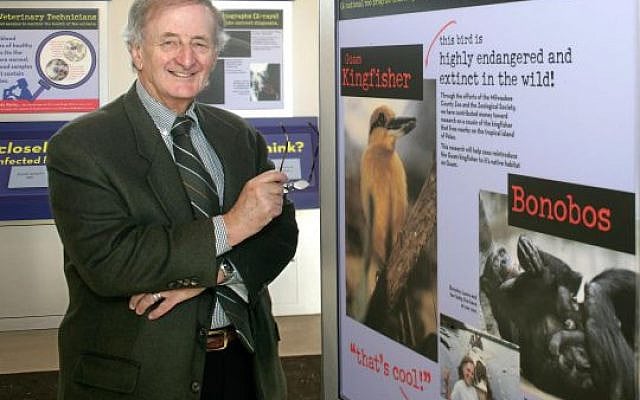
Prosen argued that Jeremy Griffith was addressing a critical blind spot in modern thought: the absence of a psychologically relieving explanation for humanity’s internal conflict. While such assessments may appear ambitious, they help explain why Griffith’s work has continued to be discussed.
A question that refuses to disappear
An international non-profit organisation, Fix The World (formerly World Transformation Movement), now supports discussion of Griffith’s ideas and their implications. The name is arresting, but the ambition is narrower than it appears: to sustain attention on a question many believe has been deferred for too long.
If Jeremy Griffith is wrong, the human condition remains unresolved – a permanent feature of human life to be managed but never understood. If he is right, the implications are unsettling, challenging, and potentially exciting.
Either way, the question he raises is one we keep circling. At some point, it demands a direct answer.