
This Way Up: Spiritual Means to Psychological Ends
Jewish and Chinese Connections: Remembering Adler, Reimagining Tomorrow
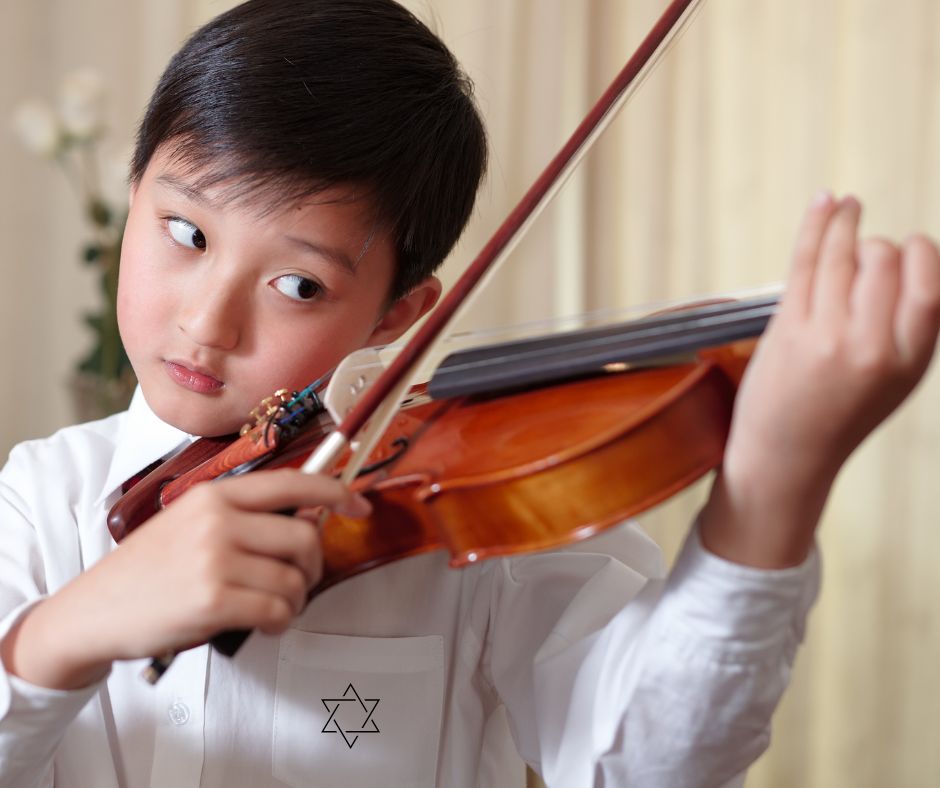
Image courtesy of Canva.com
In a world often fractured by tribalism and historical grievance, stories of cross-cultural solidarity offer rare and vital inspiration. One such story—both touching and profound—was brought to light by the CBC in a 2018 radio segment titled Finding Adler: The music and mystery of the Jewish refugee who shaped the lives of a Chinese family. It traces the journey of two Chinese sisters searching for the Jewish man who once saved their family. Their father, a musician and conductor, had been mentored and protected in wartime Shanghai by a Jewish refugee named Adler.
The setting is the Shanghai Ghetto, one of the few places in the world that offered refuge to Jews fleeing the Holocaust. There, amidst overcrowding and deprivation, a fragile but meaningful coexistence between Jewish refugees and the local Chinese population emerged. And within that context, relationships like the one between Adler and the sisters’ father were forged—not as part of a grand diplomatic scheme, but through ordinary decency and the healing power of music.
What makes the story powerful is not only its historical depth but its emotional symmetry: a Jewish man who had lost everything finds refuge in China and, in turn, brings opportunity and hope to a Chinese family. This mutuality of care echoes through the generations. The sisters’ search for Adler decades later is an act of remembrance—but also of renewal, a desire to reclaim and reweave a forgotten thread of kinship between peoples.
As a Jewish thinker attuned to the spiritual and ethical imperatives of both my own tradition and the rich heritage of Chinese philosophy, I am deeply moved by such stories—not only because they affirm our shared past, but because they invite us to imagine what might come next.
Both Jewish and Chinese civilizations are ancient, literate, and morally aspirational. Each prizes family, education, and intergenerational continuity. Both have suffered persecution, yet both have also cultivated enduring wisdom traditions—Judaism through Torah, Talmud, and Kabbalah; China through Confucianism, Taoism, and the Five Elements. And both have, at their best, envisioned the role of the human being as not merely surviving in the world, but bringing light to it.
In Hebrew, this mission is called tikkun olam—the repairing of the world. In Chinese traditions, too, there is the idea of harmony between Heaven, Earth, and humanity (tian ren he yi), and the cultivation of the junzi (noble person) who uplifts society through self-refinement. These are parallel visions that beg for alignment.
So what if we could use these ancient affinities—highlighted by stories like Adler’s—not only to celebrate the past but to build bridges for the future? Could Jewish and Chinese thinkers, artists, therapists, educators, and community leaders come together to share insights, combine wisdom systems, and address modern challenges with moral clarity and cultural depth?
The world is in crisis—ecologically, ethically, spiritually. We need coalitions not only of political will but of moral imagination. The Jewish–Chinese relationship, rooted in both shared suffering and shared aspiration, is uniquely poised to offer such a vision.
Let Adler’s story not simply be a moving footnote in history. Let it be a call: to remember, to connect, and to co-create.
Let us find each other again.
Related Topics
Related Posts