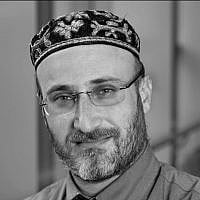
Former Jewish Prison Chaplain / Co-Founder: L’chaim
Knesset’s Second Death Penalty Bill Debases Israel’s Lag Ba’Omer Revelry
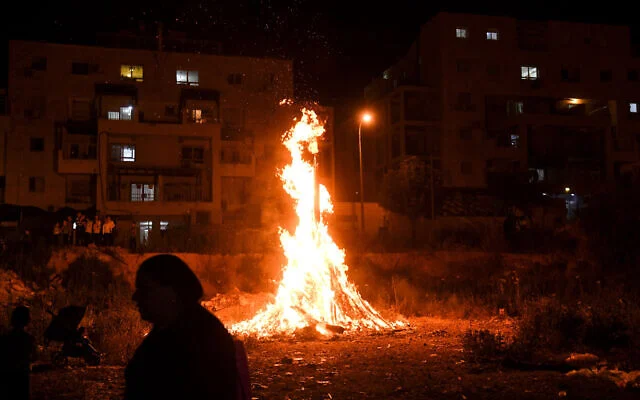
People celebrate Lag B'Omer near a bonfire, in Kiryat Sefer, Israel on May 22, 2019. (Yossi Zeliger/Flash90) The fiery passion for vengeance that Israel’s latest death penalty represents will only fan the flames of hatred that threatens to engulf Jews everywhere.
The Knesset’s obsession with the death penalty in Israel once again collided with the Jewish liturgical calendar in yet another telling synchronicity, highlighting how that legislative body has upended the Jewish value of life. Many in Israel and across the Jewish world were shocked last month when Israeli Minister of National Security Itamar Ben Gvir celebrated the passage of his “Death Penalty for Terrorist” law with a champagne toast just ahead of Passover, effectively desecrating that sacred holiday’s observance. The unfolding impact of that macabre development in turn defiled the subsequent commemoration of Yom Hashoah (Holocaust Remembrance Day), just as it violated Yom Hazikaron (Israeli Memorial Day), and betrayed the core Jewish values celebrated on Yom Haatzmaut (Independence Day) later that month. As if on cue, earlier this week, just ahead of the festive Jewish holiday of Lag Ba’Omer, the Knesset publicly released details of a second death penalty bill detailing its plans to establish military tribunals with the authority to put to death convicted terrorists who helped carry out the horrific October 7th, 2023, massacre in Israel. Once again, the dark shadow of capital punishment eclipsed any light and joy cast by Jewish life and values, with the totality of that eclipse bringing only suffering and death. We, the thousands of members of “L’chaim! Jews Against the Death Penalty” in Israel and across the world, stand against this insidious fixation with vengeful killing. Instead, we support the victims of the October 7th acts of terror by siding with restorative justice – and life.
The Uplifting of Death as the Antithesis of Lag Ba’Omer’s Joy
The traditional Jewish ritual of Sefirah, or counting the omer, begins on the second day of Passover. It marks the ancient practice of presenting an omer – an offering of the new barley crop – at the Temple. It lasts for forty-nine days (seven weeks) until Shavuot, the “Feast of Weeks” festival that commemorates the giving of the Torah on Mount Sinai. The enumerating of days connects the national Jewish redemption story of Passover’s Exodus narrative to the idea of collective revelation that Shavuot underscores.
This season of “Counting the Omer” also constitutes a seven-week mourning period associated with various calamities in the Jewish calendar, notably a plague that killed upwards of 24,000 students of the famed rabbinic sage Akiva ben Yoseif (50 -135 CE). The period is associated with various massacres recorded in Jewish history that tradition teaches occurred in these spring months, beginning with the execution and martyrdom of the same Rabbi Akiva and his students at the hands of the Romans, and continuing through targeted attacks on Jewish communities during the three Crusades (1096-1192). To memorialize these awful events, many Jews across the world refrain from participation in celebrations during this time span. According to the Code of Jewish Law in Orakh Hayim 493:2, no weddings should take place, and even cutting one’s hair is prohibited during the Sefirah, reflecting similar Jewish practices during periods of mourning.
In years past, the members of “L’chaim!” have juxtaposed the Omer period’s counting of days with the psychological torture of our condemned pen pals (Jewish and non), who have been forced to count down their final days ahead of Shavuot executions in the United States. This year presents another awful parallel between the Omer and the death penalty. That correlation centers on the Jewish holiday of Lag Ba’Omer that falls in the middle of this countdown.
Lag Ba’Omer is a festive day occurring on the 33rd day of this Omer count (May 5-6, 2026), breaking the forty-nine-day mourning period between Passover and Shavuot. Tradition holds that the aforementioned plague halted on this date. This festive day also marks the passing of Rabbi Shimon bar Yochai (90-160 CE), the renowned author of the Zohar (the foundational text of Kabbalah). Bar Yochai’s passing is considered a day of joy rather than sadness, as he was said to have revealed deep mystical secrets on that day. Others link Lag Ba’Omer to the date of the start of the Bar Kochba revolt against the Roman Empire, celebrating Jewish resistance. Joy is the overwhelming feature of this day, contrasting with the surrounding somber weeks of the Sefirah. Jews in Israel and around the world celebrate the day with kumsitzim (bonfires) associated with Jewish resistance, joyful songs and music, picnics, weddings, playing with bows and arrows, haircuts for young children, and visits to the burial site of Rabbi Shimon bar Yochai in Meron, Israel.
It was just ahead of this consummate day of joy in the Jewish calendar that the Knesset unveiled its plans for state killing via military tribunal. Whether intentional or not, the timing of this revelation inextricably links the death penalty, which Holocaust survivor and staunch abolitionist Elie Wiesel appropriately dubbed the manmade “Angel of Death,” with the joyful celebrations of Lag Ba’Omer. Like Ben Gvir’s recent, abominable noose-decorated birthday cake topped with the message for him that “sometimes dreams do come true,” the optics of this timing sends the message to the world that Judaism celebrates death, feeding the antisemitic canard that it is a “Death Cult.”
Supporting the Jewish Value of Life with Unequivocal Opposition to Israel’s Second Death Penalty Bill
Let there be no doubt: the members of “L’chaim! Jews Against the Death Penalty” in Israel and across the world stand united against this latest proposed military tribunal bill that allows for the execution of the perpetrators of the October 7th, 2023, mass murder in Israel. We would hold this position on any day in the Jewish calendar. When days of life-affirming joy such as Lag Ba’Omer are debased and devalued by developments like the advancement of this bill, we have a responsibility and an obligation to highlight this meaningful alignment and remind the world why we stand against capital punishment in all cases, and we’re day.
Our position does not mean that we stand against the victims of the horrors of October 7th. On the contrary, we stand with these victims in the hope of creating a safe, secure, and peaceful Israel, and working toward restorative justice for the perpetrators who so heinously murdered their loved ones and traumatized them. Our approach very much applies even to October 7th family members like former Gaza hostage Eliya Cohen, who asserted that hostages should be given “the honor of pressing the button” to carry out death penalties for Hamas terrorists. Mr. Cohen wrote on Instagram, “Raping, murdering, smashing heads, desecrating bodies, burning babies, kidnapping civilians, and torturing them 24/7, is that not a violation of the international convention?” Mr. Cohen has every right in the world to feel this way, and no one should judge him, nor any direct or indirect victims, for this opinion. A civilized society can – and must – indeed honor and support these victims without succumbing to the vengeful collective urge to execute, which would only further endanger Israel and Jews across the world.
The Jewish world changed forever with the monstrous Hamas terrorist attack of Oct. 7, 2023. The unjustifiable terror unleashed on that day – born of Hamas’ foundational mandate to destroy Israel –undoubtedly was an act of unmitigated horror. In what constituted the worst assault on the Jewish people since the Holocaust, Hamas terrorists murdered 1,195 Israelis and foreign nationals, including 815 civilians, and captured 251 hostages, many of whom eventually died in unfathomable, grotesque conditions in tunnels underneath Gaza.
This unmitigated atrocity and hostage crisis led to a redoubling of L’chaim’s mission to uplift the Jewish value of life. In the immediate months following October 7th, L’chaim marched for the safe return of the hostages, carrying posters emphasizing Judaism’s central tenet of reverence for all life. This action reflected L’chaim’s life-affirming approach to protesting every execution that takes place in the United States and the world. For each American state killing event, L’chaim members gather to recite traditional mourning prayers for the victims of the crimes that led to the death sentence being meted out, offering kavanot/prayerful intentions as well for their loved ones in mourning. Members then also chant prayers for the condemned men and women that the state is putting to death for those same crimes, creating new victims in the insane cycle of violence. In the case of the infamous October 27, 2018, Pittsburgh Tree of Life synagogue shooting, L’chaim members followed this model by publicly intoning the Eil Malei Rachamim traditional Jewish memorial prayer for the eleven martyrs killed that fateful day as part of an anti-death penalty protest at the US Supreme Court in Washington, DC.
Guided by this foundational principle of affirming the value of life, L’chaim’s intentionally absolutist approach to capital punishment has always included convicted Hamas terrorists who perpetrated the October 7th attack. Members, therefore, deplore Israeli National Security Minister Itamar Ben Gvir’s recent moral regression of seeking to resurrect executions in the Jewish state, aiming to put to death those guilty of October 7th’s carnage and other terrorist acts. Doing so would only give ammunition for those who seek to equate the Netanyahu regime with the terrorism of Hamas, whose members continue to employ executions regularly across Gaza. The net result of such a policy would be to increase already rising incidents of antisemitic violence across the world. Far from “deterring” would-be terrorists, the threat of a death penalty would only incite and invite further shaheeds seeking martyrdom.
Just as L’chaim members never deigned to speak for the eleven Tree of Life victims while advocating against the death penalty for Pittsburgh synagogue shooter Robert Bowers, so, too, we would never attempt to do so for victims of the unimaginable terror that Hamas perpetrated on October 7th. As a chaplain, I regularly counsel mourners that, when they grieve, they should allow themselves to experience the full range of human emotions, including rage and, where applicable, the desire for vengeance. Let no one ever judge anyone in such a position. If I myself were to lose a loved one to murder, I, too, might find myself advocating for the death of my loved one’s killers. A civilized society has a responsibility to protect and honor all such mourners, while also upholding the fundamental human rights upon which the world stands. Most basic to these liberties is the right to life. This mandate is one of the reasons why more than 70%of the world’s nations have abolished the death penalty in law or in practice.
Lessons from the Tree of Life Synagogue Shooting
Israel would do well now to follow the example of the inspiring Jewish community in Pittsburgh, Pennsylvania. In a profound example of that group’s unflagging steel resolve, it hosted a life-affirming parade to celebrate the dedication of a new Torah – known also as an Eitz Chayim (”Tree of Life”) – in loving memory of Joyce Fienberg, Z’L, one of the eleven Tree of Life martyrs, and her late husband, Dr. Steven Fienberg, Z’L. That sacred gathering brought new life to the exhortation that has motivated Jewish people for millennia: “Am Yisrael Chai” – “The People of Israel Live!” To this profound demonstration of the very best of Jewish values and resilience, the resounding response of the thousands of members of L’chaim was—and remains—to chant “L’chaim – to Life!”
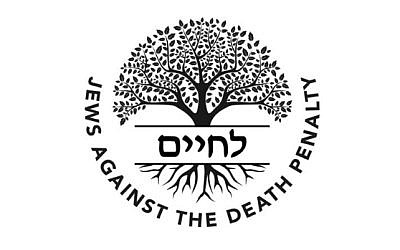
To honor the victims of the 2018 Pittsburgh synagogue attack, L’chaim provides annual donations to the Cecil and David Rosenthal Memorial Fund, created in memory of the eponymous brothers who were Tree of Life victims. L’chaim also created a new logo featuring the Eitz Chayim – Tree of Life – itself. That image serves as a reminder of L’chaim’s mission to extend the symbolic ethical roots of that tree of collective wisdom and morality to all human beings who are at risk of state killing, including now the perpetrators of the murderous October 7th antisemitic attack of terror. Indeed, it calls upon the world to reaffirm the sanctity of life.
A longstanding anti-death penalty slogan asks: “Why do we kill people who kill people to show that killing people is wrong?” This paradoxical question has plagued the human condition since time immemorial, during periods of both war and peace. In response, L’chaim stands with rabbinic sages like Rabbis Tarfon, Akiva, and Maimonides, and modern Jewish human rights and philosophy icons Elie Wiesel and Martin Buber – along with countless historical and contemporary voices of reason – in disavowing the penalty of death “in all forms,” replacing these avenues of killing with the proverbial Tree of Life. Jewish liturgy often highlights and reiterates the exclamation of the author of the Book of Proverbs that “she is a Tree of Life to those who grasp her.” (3: 18) May humanity, for the sake of its survival, choose never to let go of that tree’s branches, and may the members of the Knesset firmly grasp hold of it now as they vote with a resounding “no” to Israel’s latest bill of death.
Dangerous Excesses Remind the Fires of Extremism on Lag Ba’Omer
Lag Ba’Omer festivities have become dangerously excessive over the years. The annual pilgrimage to Rabbi Shimon bar Yochai’s grave at Mount Meron in northern Israel has proven catastrophic. On April 30, 2021, during the annual Lag Ba’Omer festival at that location, one of the deadliest civilian disasters in the country’s history occurred when 45 people were killed, and approximately 150 were injured during a crowd crush that resulted from an excessively overcapacity crowd of nearly 100,00 worshippers. One cannot help but consider the unintended impact of these excesses of revelry when reflecting on death penalty proponents like Ben Gvir, who sickeningly celebrate state killings, and the cycle of violence and killings that they are perpetuating.
In like manner, Israel’s Fire and Rescue once again this year urged Lag Ba’Omer revelers to limit the scale and scope of their festive bonfires and to “celebrate responsibly,” given the history of hazard to people and the environment that fires have posed in previous years’ observance of the holiday. These bonfires can burn out of control all too easily, replacing joy with carnage. They offer a fitting symbol for the Knesset’s ongoing playing with the fire of state-sponsored killing. As human history demonstrates time and again, the opening of the Pandora’s Box that is the death penalty indeed constitutes one of the most telling examples of the danger of fanning the flames of extremism, in any form. May all Israelis realize the danger of the fiery passion for vengeance that this latest death penalty represents – before the unchecked impact of that flame engulfs Jews everywhere.
Cantor Michael Zoosman
Co-Founder: “L’chaim: Jews Against the Death Penalty”
Advisory Board Member: Death Penalty Action
Related Topics