CFO | Empower Society for Good I Author
Lag BaOmer: The Fire We Run Towards
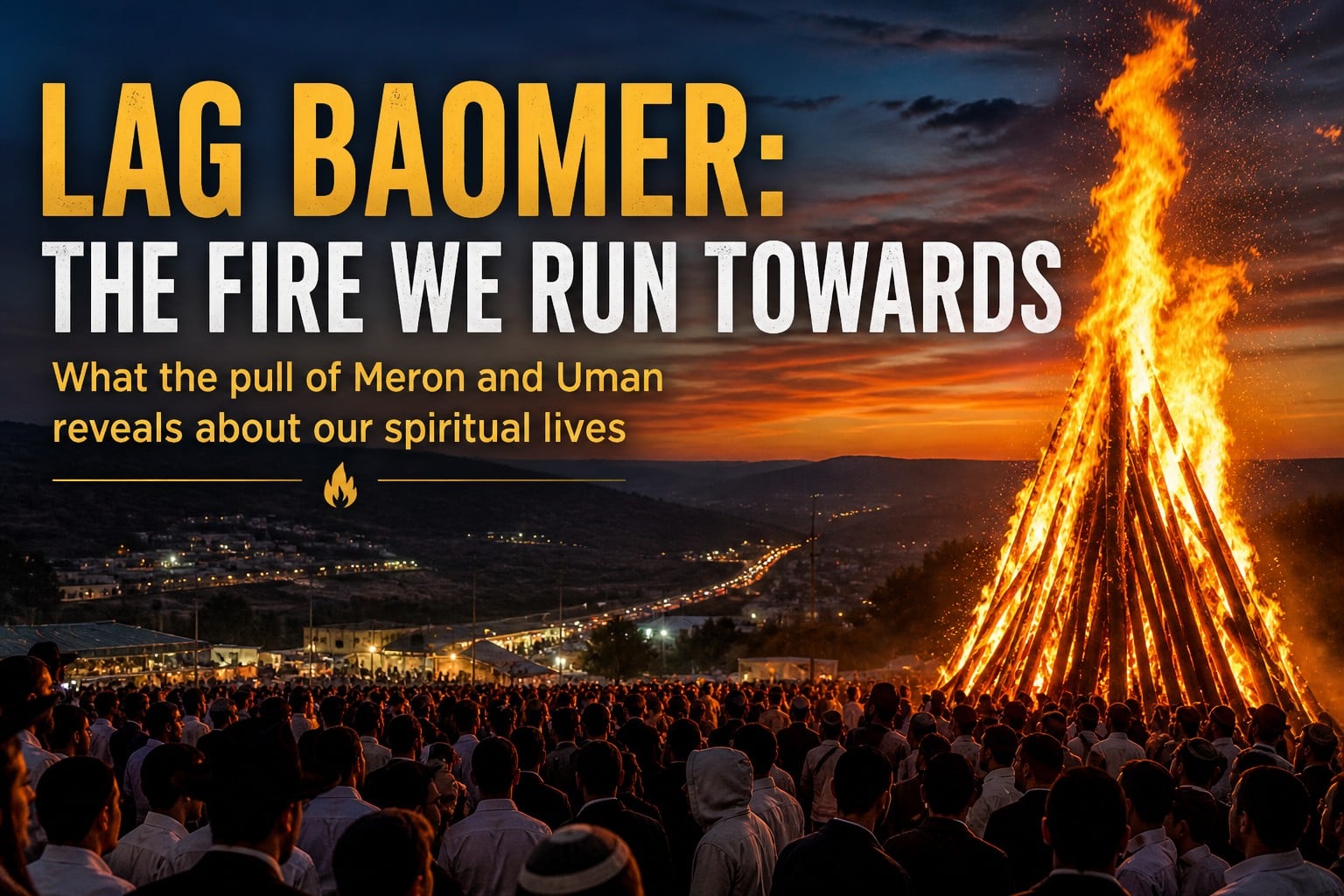
Yesterday, as the winds picked up in Jerusalem, I found myself thinking about the fires of Lag BaOmer.
Strong winds make bonfires unsafe. Authorities warn. Restrictions are discussed. And yet, the fires are lit, and the crowds gather—undeterred by the wind, the cold, or the risk.
A few years ago, Meron became the site of one of the worst civilian disasters in Israel’s history. Forty-five people lost their lives in a crush that should never have happened.
For a brief moment, there was silence. Shock. Reflection.
And then, the following year, the crowds came back.
This year, Meron was shut down due to real security threats, including the risk from Hezbollah. And still, the question remains—what is it that draws us so powerfully to this fire?
And this year, despite security concerns and clear risks, the same pattern repeats.
People push forward. They insist. They find a way.
And it is not only Meron.
Every year, tens of thousands also travel to Uman for Rosh Hashanah—crowded flights, difficult conditions, real inconvenience, sometimes risk.
Two different places. Two different times.
But the same question:
What are we really running towards?
Not Just Places
On the surface, the answer is obvious.
Two towering spiritual figures.
Meron—Rabbi Shimon Bar Yochai, the mystic of fire and revelation, whose teachings opened the deepest layers of Torah.
Uman—Rabbi Nachman of Breslov, the master of inner struggle and healing, who spoke to the broken soul searching for תיקון and meaning.
But that answer is too simple.
Because what we are witnessing is not just reverence. It is something deeper—emotional, powerful, and at times, not entirely rational.
People are not just visiting graves.
They are searching for something they feel they cannot access anywhere else.
Two Very Different Fires
Rabbi Nachman spoke to the individual:
- brokenness
- healing
- תיקון
- personal struggle
Rabbi Shimon Bar Yochai was something else entirely:
- intensity
- withdrawal from society
- total immersion in Torah
- an uncompromising vision of truth
He lived in a cave for 12 years, disconnected from the physical world. When he emerged, he could not tolerate ordinary life. People working the land disturbed him.
He had to return to the cave for another year to relearn how to live among others.
This was not accessible spirituality.
This was fire.
And yet today, his legacy is marked by:
- bonfires
- music
- massive gatherings
- moments of inspiration, often without deep engagement in the Torah he embodied
And Rabbi Nachman, who spoke of inner עבודה, has become associated—at least in part—with mass pilgrimage.
So the question is unavoidable:
Are we connecting to their teachings—or reshaping them into something we need?
The Power of the Crowd
Part of the answer lies not in theology, but in human need.
Modern Jewish life often feels:
- structured
- individual
- contained
Then comes Meron. Then comes Uman.
And suddenly:
- thousands sing together
- strangers embrace
- individuality dissolves
This is not just prayer.
It is collective transcendence.
Perhaps people are not only seeking tzaddikim.
Perhaps they are seeking belonging.
After Tragedy—Why Return?
After Meron, logic would suggest caution.
Instead, many return with even greater determination.
Why?
Because for some, this is no longer optional.
It is identity.
And within that identity, a quiet belief takes hold:
If I sacrifice for this, if I endure discomfort or risk, then it must be meaningful.
There is something authentic in that.
But also something dangerous.
Judaism does not demand recklessness.
There is a line between mesirut nefesh and preventable harm.
And we are not always respecting it.
A Simpler Spiritual Space
We are living in a time of deep complexity:
- Israel is politically charged
- Zionism is debated
- identity is contested
- religion and modern life are in tension
These are not easy conversations.
But Lag BaOmer—and to some extent Uman—offer something else.
No debates.
No positions.
No complexity.
Just:
- fire
- singing
- unity
- emotion
You don’t need to resolve anything.
You just need to show up.
And Yet—The Land Matters
Here is where Meron differs from Uman—and where something profound happens.
In Meron, people are not just gathering.
They are standing on the land of Israel.
Even those who are not ideological, not political, not engaged in debates about Zionism—
they come.
They connect.
Not intellectually. Not ideologically.
But physically.
Instinctively.
As if to say:
This is part of us.
Lag BaOmer becomes a connection to Israel that bypasses all arguments.
The Fire
The bonfires are not incidental.
They carry meaning:
- Torah is fire
- the soul is a flame
- revelation burns
But fire is never neutral.
It can:
- illuminate
- inspire
- elevate
But it can also:
- spread
- destroy
- become dangerous
We have seen both sides.
This Year’s Test
This year, the winds themselves tell a story.
Strong winds make bonfires unsafe. Authorities warn. Restrictions are discussed. And yet, the fires are lit, and the crowds gather—undeterred by the wind, the cold, or the risk.
Because when something carries emotional and spiritual weight, it can override judgment.
But faith cannot mean ignoring reality.
If anything, true spirituality should deepen responsibility—not weaken it.
So What Is Really Happening?
This is not just about Meron.
It is not just about Uman.
It is about a generation searching for:
- meaning
- connection
- identity
- transcendence
And finding it in places where:
- depth and simplicity collide
- truth and projection mix
- inspiration and avoidance sit side by side
The Question We Cannot Avoid
Are we connecting to Rabbi Nachman and Rabbi Shimon Bar Yochai—
or creating versions of them that reflect our own needs?
Perhaps it is both.
But if it is both, we need to be honest about that.
A Final Reflection
The fires of Lag BaOmer will burn again.
The journey to Uman will continue.
They will inspire. They will unite. They will uplift.
But they also ask something of us:
Are we using the fire to illuminate our lives—
or to avoid confronting them?
That is the real question.
And it is one we cannot escape.
Footnote: Remembering the Victims of Tragedy
As we gather around our bonfires this Lag BaOmer, we must also remember the unfortunate victims of the Meron disaster, including the gentle soul Yohanton Hevroni (the son-in-law of good friends of ours), whose life was tragically cut short. The Meron tragedy serves as a painful reminder of the critical importance of health and safety in our celebrations and gatherings.
https://www.youtube.com/watch?v=80t2Ybe2uC4
Previous years’ reflections
https://blogs.timesofisrael.com/fires-missiles-and-the-relentless-pulse-of-life-in-israel/
Related Topics
Related Posts