
Middle East Analyst
Leaders of Saudi Arabia
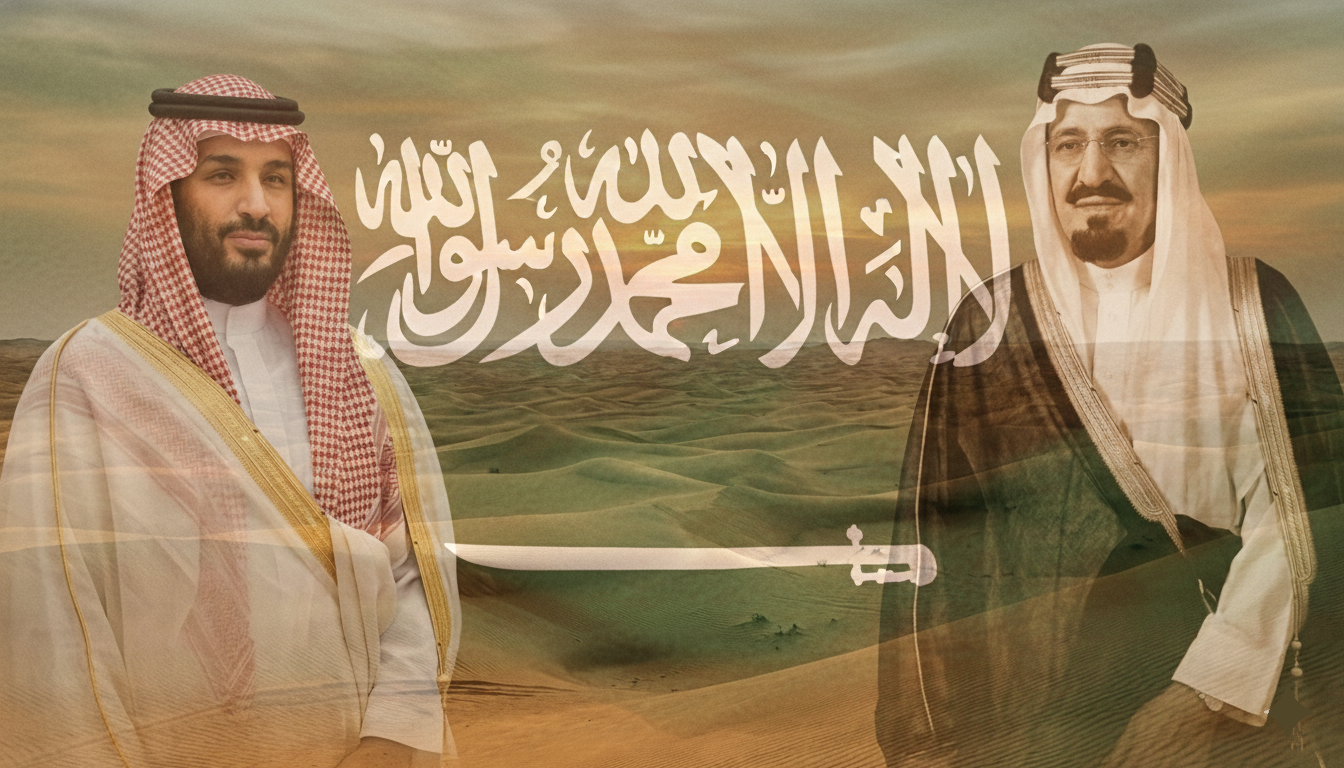
Graphic by author/Nano Banana
Leadership of Modern Saudi Arabia – highlighting the distinct eras of development, challenges, and modernization that have shaped the Kingdom from its unification to its current transformative phase.
King Abdulaziz Al Saud (The Founder)
Reign: 1932 – 1953 (Kingdom of Saudi Arabia) King Abdulaziz was the architect of the modern state, transforming a collection of warring tribes into a unified Kingdom. His most significant accomplishment was the military and political consolidation of the Arabian Peninsula, culminating in the declaration of the Kingdom of Saudi Arabia in 1932. Crucially, he oversaw the discovery of oil in 1938, granting the standard concession to an American company (later Aramco), which shifted the nation’s trajectory from a subsistence economy to a global energy power. He laid the rudimentary foundations of state bureaucracy, though the country remained largely tribal and undeveloped at the time of his death.
King Saud bin Abdulaziz
Reign: 1953 – 1964 King Saud succeeded his father during a period of rapidly increasing oil revenues. He established the first Council of Ministers and initiated early infrastructure projects, including schools and hospitals. However, his reign was marked by administrative disorganization and extravagant spending that brought the state to the brink of bankruptcy. A deepening rivalry with his brother Faisal over fiscal management and foreign policy eventually led to a power struggle. The royal family and religious establishment (Ulema) ultimately forced his abdication in favor of Faisal to restore stability.
King Faisal bin Abdulaziz
Reign: 1964 – 1975 King Faisal is often credited as the modernizer of the Saudi state bureaucracy. He implemented rigorous fiscal reforms that saved the country from financial ruin and introduced the first “Five-Year Development Plans.” His accomplishments include the abolition of slavery in 1962, the introduction of television, and the opening of public schools for girls—a controversial move at the time that he navigated with political savvy. Internationally, he is remembered for the 1973 oil embargo, which asserted Saudi Arabia’s geopolitical weight. He was assassinated in 1975 by a nephew.
King Khalid bin Abdulaziz
Reign: 1975 – 1982 King Khalid presided over the “boom years” where oil prices skyrocketed, leading to massive, rapid modernization. His reign saw the construction of the industrial cities of Jubail and Yanbu and the rapid expansion of the Kingdom’s physical infrastructure. He was a popular figure known for his benevolence, but his era also faced significant security challenges, including the 1979 Siege of the Grand Mosque in Mecca. This event, coupled with the Iranian Revolution, led to a conservative turn in domestic social policy to appease religious hardliners, shaping the social landscape for decades.
King Fahd bin Abdulaziz
Reign: 1982 – 2005 King Fahd guided the Kingdom through a period of intense regional instability, including the Iran-Iraq War and the Gulf War (1990-1991), during which he made the pivotal decision to host US coalition forces. Domestically, he formalized the Basic Law of Governance in 1992, which serves as the country’s constitution. However, his reign also saw a significant drop in oil prices in the 1990s, leading to debt and economic stagnation. He oversaw the expansion of the Two Holy Mosques but faced criticism for the rise of domestic extremism that culminated in the post-9/11 era.
King Abdullah bin Abdulaziz
Reign: 2005 – 2015 (De facto ruler since 1995) King Abdullah was seen as a reformer who sought to cautiously modernize the Kingdom. He brought Saudi Arabia into the WTO, established the King Abdullah University of Science and Technology (KAUST) as a mixed-gender research hub, and initiated the King Abdullah Scholarship Program, sending hundreds of thousands of students abroad. He also appointed women to the Shura Council for the first time. He navigated the turbulent waters of the Arab Spring by utilizing massive welfare spending to maintain stability, though structural economic issues remained unresolved.
King Salman bin Abdulaziz
Reign: 2015 – Present King Salman’s reign marks a decisive shift in Saudi leadership, moving power to the third generation of princes. He acted quickly to consolidate power and streamline the government decision-making process. His era has been defined by a more assertive and interventionist foreign policy. Domestically, he empowered his son, Mohammed bin Salman, to oversee a radical restructuring of the economy and society, creating the political umbrella necessary for rapid change.
Crown Prince Mohammed bin Salman (MbS)
Role: Crown Prince & Prime Minister (2017 – Present) Though not yet King, Crown Prince Mohammed bin Salman is the de facto ruler and the driving force behind “Vision 2030,” a blueprint to diversify the economy away from oil dependence. His accomplishments include radical social reforms such as stripping the religious police of their powers, allowing women to drive, and reopening cinemas. He has launched “giga-projects” like NEOM, Diriyah Gate, and the Red Sea Project to boost tourism and investment in Artificial Intelligence infrastructure. He represents the new face of the Kingdom, focusing on nationalism, youth empowerment, and economic diversification.
Related Topics
Related Posts