Learning a New Language While Keeping Your Own

What Eliezer Ben-Yehuda’s life can teach us about mother tongues, cultural belonging, and integration
A language becomes a home through everyday exchanges: a parent comforting a child, friends sharing a joke, a grandparent telling a familiar story. Through these encounters, words acquire personal meaning. They connect people to one another and to the experiences of earlier generations.
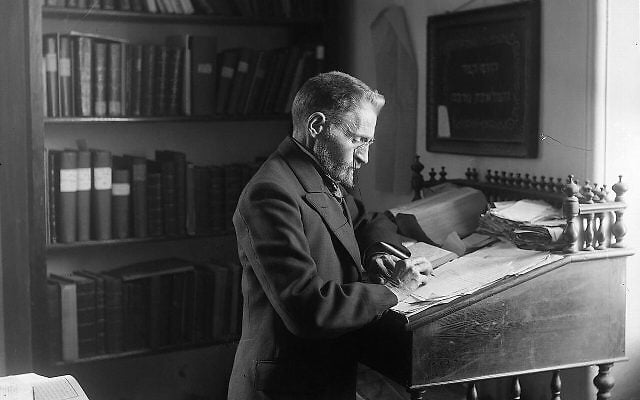
Eliezer Ben-Yehuda devoted his life to making Hebrew a shared language of everyday life again. His story offers a compelling example of cultural renewal. It also invites a question relevant far beyond Israel: how can people learn the language of a new home while preserving their own mother tongue?
Born Eliezer Yitzhak Perlman in 1858 in what is now Belarus, Ben-Yehuda received a religious education and encountered the Jewish Enlightenment. He settled in Jerusalem with his wife, Devora, in 1881. They resolved to speak Hebrew with those who understood it. He later used his newspaper, HaZvi, to introduce new words and worked on a comprehensive dictionary whose publication began in 1908 and continued after his death in 1922. The Academy of the Hebrew Language documents this work.
His commitment shaped family life. His son Ben-Zion, born in 1882 and later known as Itamar Ben-Avi, was raised speaking Hebrew. Ben-Yehuda also championed its use in schools. The wider revival depended on teachers, families, and immigrants who brought Hebrew into their daily lives, as linguist Jack Fellman explains in his account of the revival.
Hebrew had remained alive in prayer, scholarship, and writing. Its modern revival expanded its use into the ordinary encounters of a growing community.
That distinction matters. A language needs opportunities for new experiences as well as ways to preserve inherited knowledge. Children must be able to use it to ask unexpected questions. Adults need it to discuss their work, build relationships, and describe a changing world.
Ben-Yehuda’s dedication deserves recognition. The lesson I draw for our own time is that languages need sustained support—and that people should have the freedom to make several languages part of their lives.
For immigrants, learning the language of the wider society creates opportunities for participation. It helps people communicate with teachers, find work, understand institutions, and contribute to public discussion.
Israel’s ulpan system demonstrates the importance attached to this task. The Ministry of Aliyah and Integration describes Hebrew learning as an important contributor to integration and provides information about public courses.
Other societies can learn from that commitment. Language learning requires skilled teachers, accessible classes, and opportunities to speak with others. People balancing employment and family responsibilities need practical routes into education.
Their existing languages also deserve support. A mother tongue is an important key to culture. It can also contribute to integration by helping people explain their experiences and bring them into conversation with those around them.
For a child, a family language may provide access to a grandparent’s memories or to stories that carry a particular understanding of the world. Keeping those relationships accessible is a meaningful cultural undertaking.
Schools can build on what children already know. A pupil beginning to learn the language of instruction may have substantial knowledge and expressive ability in another language. Recognizing those abilities gives educators a fuller understanding of the child.
UNESCO’s guidance on multilingual education supports approaches that build on languages children understand while introducing additional languages. It connects such education with stronger learning and the preservation of cultural heritage. Success still depends on the quality and circumstances of teaching.
Libraries with books in several languages, family reading activities, and opportunities to share personal histories can give this recognition practical form. They allow people to contribute something of themselves while developing new connections.
Respect for mother tongues must also accommodate different lives. Some people have several first languages. Others become more comfortable in a language learned later, or seek to recover a family language they were never taught. Cultural belonging should leave room for all these experiences.
The revival of Hebrew arose from particular historical circumstances. It nevertheless offers a powerful reminder of what sustained attention to language can accomplish.
We can learn much from the effort to give a language a future. Applying that lesson today means helping people learn the language of their new home while supporting the languages through which they remember, understand, and share where they come from.