Lithuania Decorated Baker for Representing Lithuanian Jews. Who Chose Him?

Lithuanian Jewry was nearly annihilated, and with it the machinery for choosing representatives. Lithuania’s President has since honored Andrew Baker for representing Lithuanian Jews’ interests. Its Foreign Ministry called an AJC meeting “the leadership of the American Jewish community.” The Litvak descendant who asked to witness that meeting was told he would not be able to attend.
Before there was representational inheritance, there was annihilation. Before World War II, Lithuania had some 160,000 Jews; refugees from German-occupied Poland raised the number to about 250,000 by 1941, according to the United States Holocaust Memorial Museum. In June and July 1941, German Einsatzgruppen together with Lithuanian auxiliaries began murdering them. Of the approximately 220,000 Jews living under Nazi occupation in Lithuania, about 212,000 were murdered, 96.4 percent, as Efraim Zuroff has documented. The Embassy of Israel in Lithuania states that over 200,000 Lithuanian Jews were murdered, “the highest percentage of any country in Europe.” In 2023, the World Jewish Congress estimated that 2,400 Jews lived in Lithuania.
Descendants survive. A small Jewish community survives. The prewar Litvak civilization, a mass communal world able to reproduce its own institutions and choose its own representatives, was almost extinguished.
The murderers destroyed more than a population. They destroyed families, congregations, schools, newspapers, charities, political movements, businesses and communal bodies: the structures through which Lithuanian Jews could have said, this property is ours; this memory is ours; this person speaks for us. Most of the people were murdered. The name, property, artifacts, claims and moral authority survived. So did a vacancy. No surviving body had the reach to choose representatives, transmit authority and contest claims made in the community’s name. The destruction left a vacancy. It did not leave a mandate.
The destruction of Lithuanian Jewry left four inheritances: demographic, material, cultural and representational. This article concerns the fourth: who, after the communal structures were destroyed, acquired the power to negotiate, administer, settle and speak.
That inheritance now sustains an institutional economy. I do not allege private profiteering by nonprofit organizations. I mean that Litvak history supports restitution administration, board seats, diplomatic access, museum programming, state honors and reputational legitimacy. Lithuania’s restitution statute budgets for part of it: the Good Will Foundation may spend up to 10 percent of each annual compensation payment on its own administration. AJC, WJRO and Holocaust Museum LA each operate within that economy in different ways. Those functions may exist. What remains unanswered is who authorized anyone to convert the inheritance of an almost-destroyed people into representation of that people.
The exclusion is documented. Before AJC’s May 1, 2026 meeting with Lithuania’s delegation in Los Angeles, I asked to be present. On April 29, AJC Los Angeles’s interim regional director wrote to me that the meeting was a “limited private, invitation-only engagement,” that I was “not an invitee,” and that I “will not be able to attend” (email of April 29, 2026, in my records). That does not prove AJC excludes Litvaks as a class. It proves something narrower and harder to explain: a Litvak descendant who had spent decades documenting Lithuania’s Holocaust-memory record, supplied AJC with the underlying sources, and asked to witness the discussion was kept out of the room that Lithuania would later describe as a meeting with American Jewish leadership. Lithuania was welcome. Litvak heritage was welcome. The Litvak descendant insisting that the record accompany them was not.
AJC was entitled to limit its guest list. It was not entitled to let Lithuania present that guest list as the leadership of American Jewry. In its account of the meeting, Lithuania’s Foreign Ministry said Vice-Minister Taurimas Valys had met “the leadership of the American Jewish community.” The Ministry did not name an organization. It named a community. Did AJC ever ask Lithuania to correct that description? If it did, it should publish the request.
That formulation follows directly from my article Lithuania Got Its Photographs. Where Are the Answers? The photographs raised the due-diligence question. The Ministry’s language raises the authority question: who gave the people in those rooms the right to function as representatives of the Jews whose destruction gives Lithuania’s Holocaust diplomacy its moral stakes?
Lithuania has already said whom Baker represents
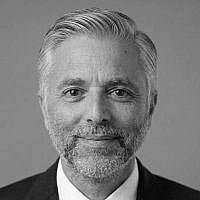
By decree of February 15, 2024 (No. 1K-1551), President Gitanas Nausėda awarded Rabbi Andrew Baker the Commander’s Cross of the Order for Merits to Lithuania. Among the stated grounds: representing the interests of Lithuanian Jews “in our country and in the world.” The Good Will Foundation reported the ceremony that July. Lithuania made the representational claim itself.
Baker holds real institutional authority. He joined AJC in 1979 and retired in July 2026 as its Director of International Jewish Affairs. Before retiring, he told JNS that he intended to remain active in matters he called “AJC-adjacent,” and specifically to continue as co-chair of the Lithuanian Good Will Foundation. JNS also reported that Baker had served as the main negotiator with the Lithuanian government on behalf of international groups and the country’s Jewish community. That description does not identify descendants of the murdered as a separate constituency for whom Baker negotiated, or as a source of his authority to negotiate. As of September 27, 2026, the Good Will Foundation’s board page still listed him as co-chair with Faina Kukliansky and said both had belonged to the initiative group that negotiated communal-property restitution with Lithuanian authorities.
Recognition is not authorization
A state may invite an interlocutor, negotiate with him, decorate him and describe him as representing a constituency. None of that manufactures the constituency’s consent. The same decree honored Faina Kukliansky, chair of the Lithuanian Jewish (Litvak) Community, for persistence in defending the interests of Lithuanian Jews in Lithuania and beyond its borders. For the chair of the Jewish community inside Lithuania, the decree says defending. For the American rabbi, it says representing. Lithuania’s decree is evidence of whom Lithuania recognized as a representative. It is not evidence that Lithuanian Jews, or their descendants, gave Lithuania the power to confer that mandate.
The Lithuanian state whose historical record is under dispute is thus helping decide who counts as the Jewish interlocutor on that record.
The restitution statute gives the Good Will Foundation defined authority. Its collegial governing body must represent the Lithuanian Jewish Community, the Lithuanian Jewish religious community, and other organizations and institutions that foster Jewish religion, health care, culture and education in Lithuania, if they ask to be represented. The statute defines its represented constituencies by organization and function. It does not name descendants of the murdered, by reason of descent, as a represented category. It also declares the compensation amounts fixed in Article 2(1) final: they may not later be changed, and no claims concerning those amounts may be made.
The World Jewish Restitution Organization describes itself as the legal and moral representative of world Jewry in pursuing claims for Jewish property in Europe. The same page states: “WJRO does not represent individuals.” That line separates collective diplomacy from an individual’s consent.
The private-property program shows what sits on the other side of that line. The statute directs the Foundation to pay one sum for all of a Lithuanian Jew’s expropriated real property, a sum that does not depend on the value of what was taken, in an amount the Foundation sets itself and applies equally to every approved claimant. Applications under the program closed on December 31, 2023. JNS reported that the payments came to roughly €20,000 per claim from a one-time €7.5 million allocation WJRO helped negotiate. When the government proposed the law, its explanatory note said that by paying the monetary compensation the state would “definitively resolve” the issue of compensation for unlawfully expropriated private real property of Lithuanian Jews. An organization that says it does not represent individuals helped negotiate the program through which individual families were compensated, and the government described that payment as closing the compensation question.
Baker can speak for the offices that authorized him. The Foundation can exercise the powers Lithuania’s law gives it. AJC can speak for AJC. None of that establishes that Baker speaks for me, for every Litvak descendant, or for every family whose property and dead became subjects of Lithuanian state policy.
Baker also knew the historical problem. In 2019, AJC publicly condemned the state-supported Genocide Centre’s defense of Jonas Noreika, and Baker said that no one could claim ignorance about the role of Lithuanian collaborators.
Beth Kean administers survivor authority
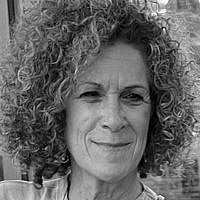
Beth Kean’s authority is different. Holocaust Museum LA has identified her as its CEO and a granddaughter of Holocaust survivors. The museum was founded in 1961 by survivors. Its authority is inseparable from the people who created it so that their murdered families, documents and memories would outlive them.
Kean has said that most of the museum’s artifacts were donated by survivors, liberators and their descendants. She administers more than a nonprofit brand. She administers an institution built from survivor testimony and survivor property.
Lithuania has repeatedly sought proximity to that authority. In 2020, Lithuania’s Consulate General, its Foreign Ministry and Holocaust Museum LA dedicated a tree and plaque to Lithuanian rescuers. In 2026, AJC named Holocaust Museum LA among the partners for its May 1 meeting with Lithuania. When the museum reopened in June, Lithuania’s Consulate reported that its deputy consul general had attended and praised Kean, and wrote that Lithuanian artifacts in the exhibition “further underscore Lithuania’s place within the broader narrative of European Jewish heritage and the Holocaust.” I documented that sequence in June.
The questions were public before the meeting. On April 16, 2026, I sent Kean my documented congressional letter on Lithuania’s Holocaust-memory record. On April 21 and April 24, I published the forthcoming AJC meeting and AJC’s own notice that it would host Lithuania. My correspondence contains no reply from Kean, either to the April 16 letter or to my request for comment before my June 17 article. As of September 27, 2026, neither Holocaust Museum LA nor AJC had published an account of what it asked Lithuania about the historical controversies or what Lithuania answered.
Whatever Kean’s intention, the exchange documented through September 27, 2026 was transactional in effect. Lithuania received access to a survivor-founded institution, ceremonial proximity and a Consulate post praising its chief executive. I found no published account of what Lithuania had to answer, correct or concede in return.
I will not call that service to Holocaust victims merely because it takes place inside a Holocaust museum. On the public record, the visible diplomatic benefit went to Lithuania unless the museum can show the victim-centered conditions it imposed. If Kean demanded correction, disclosure, acknowledgment or answers, she should publish them.
Kean’s family history makes that demand more appropriate, not less. In 2022, speaking as a granddaughter of survivors, she raised the future of Holocaust education in what she called “a post-survivor world.” The museum’s founders cannot be asked whether its authority should be lent to Lithuania’s diplomacy. Its chief executive can be asked what she required first. The murdered cannot consent. In Lithuania, many have no graves at all, only death pits. Their absence cannot become diplomatic permission.
AJC named other Los Angeles Jewish partners for the May meeting, including ADL and the Jewish Federation. I focus on Holocaust Museum LA because it is survivor-founded and because its chief executive received my direct notice months earlier. I do not claim that every organization in the room played the same role.
A Litvak in the room would not answer the question
Who in that room represented Litvaks? The public materials I have reviewed identify no one as a delegate selected by descendants of Lithuanian Jewry. I will not infer anybody’s ancestry from a photograph.
Even if one or several participants were Litvaks, that would only begin the inquiry. How much did they know about their own heritage and history? Had they studied Lithuania’s archival record? Did they know the controversies over Noreika, Škirpa, Brazaitis and Ramanauskas? Had they examined Lithuania’s state historical institutions, the restitution law, the Artur Fridman prosecution, or the record of Lithuanian participation in the destruction of Lithuanian Jewry?
What documents did they read before meeting the delegation? What questions did they prepare? What answers did Lithuania give? Did anyone test those answers against primary sources afterward? A photograph cannot answer any of that.
Heritage is not documentary knowledge, and a family connection is no mandate from other descendants. I do not claim to speak for Litvaks. I speak for my own murdered family and from the documentary record I have spent decades assembling. That is exactly why institutions claiming communal authority should have to show their constituency, their preparation and their due diligence.
The dead left no blank power of attorney
Representation also accumulates by repetition. Institutions meet the same officials, negotiate through the same bodies and publish the same photographs until the arrangement looks self-authenticating. What began as a practical relationship acquires the appearance of a mandate simply because it has lasted for years. Repetition can turn contingency into habit. It cannot turn habit into consent.
I asked the precursor question in 2025 in Demanding Transparency: who negotiated Lithuania’s symbolic restitution arrangement, by what authority, how the money was allocated, and where the audited accounts were. Those questions concerned money. Representational inheritance concerns the more valuable asset behind the money: authority.
Who may negotiate because the original communities were destroyed? Who may accept a statutory settlement? Who may administer compensation for heirless property? Who may stand beside the state and let institutional presence be read as Jewish reassurance? The answers may differ in each setting. They must be explicit.
The discipline is simple. AJC can say when it speaks only for AJC. The Good Will Foundation can identify the exact legal constituency and authority under which it acts. Baker can identify which office he occupies in each Lithuanian engagement. Holocaust Museum LA can state that diplomatic hospitality does not certify a government’s historical record. Anyone claiming a Litvak mandate can identify the constituency that selected that representative and the mandate actually given.
Lithuania crossed the representational line in its own words. Its Foreign Ministry called a Los Angeles gathering “the leadership of the American Jewish community.” Its President decorated Baker for representing the interests of Lithuanian Jews in Lithuania and in the world. Those are state claims about Jewish representation. They deserve Jewish scrutiny.
The dead left property. They left photographs. They left testimony. They did not leave a universal power of attorney appointing twenty-first-century executives to turn institutional access into consent.
Beth Kean can speak for Holocaust Museum LA. Andrew Baker can speak within the offices that authorized him. AJC can speak for AJC. Lithuania can meet every one of them.
None of that is my consent.
Beth Kean did not inherit my dead. Andrew Baker did not inherit my consent. Lithuania does not acquire either by taking a photograph.