Advancing Women's Health, One Policy at a Time
Look for the Quiet Ones
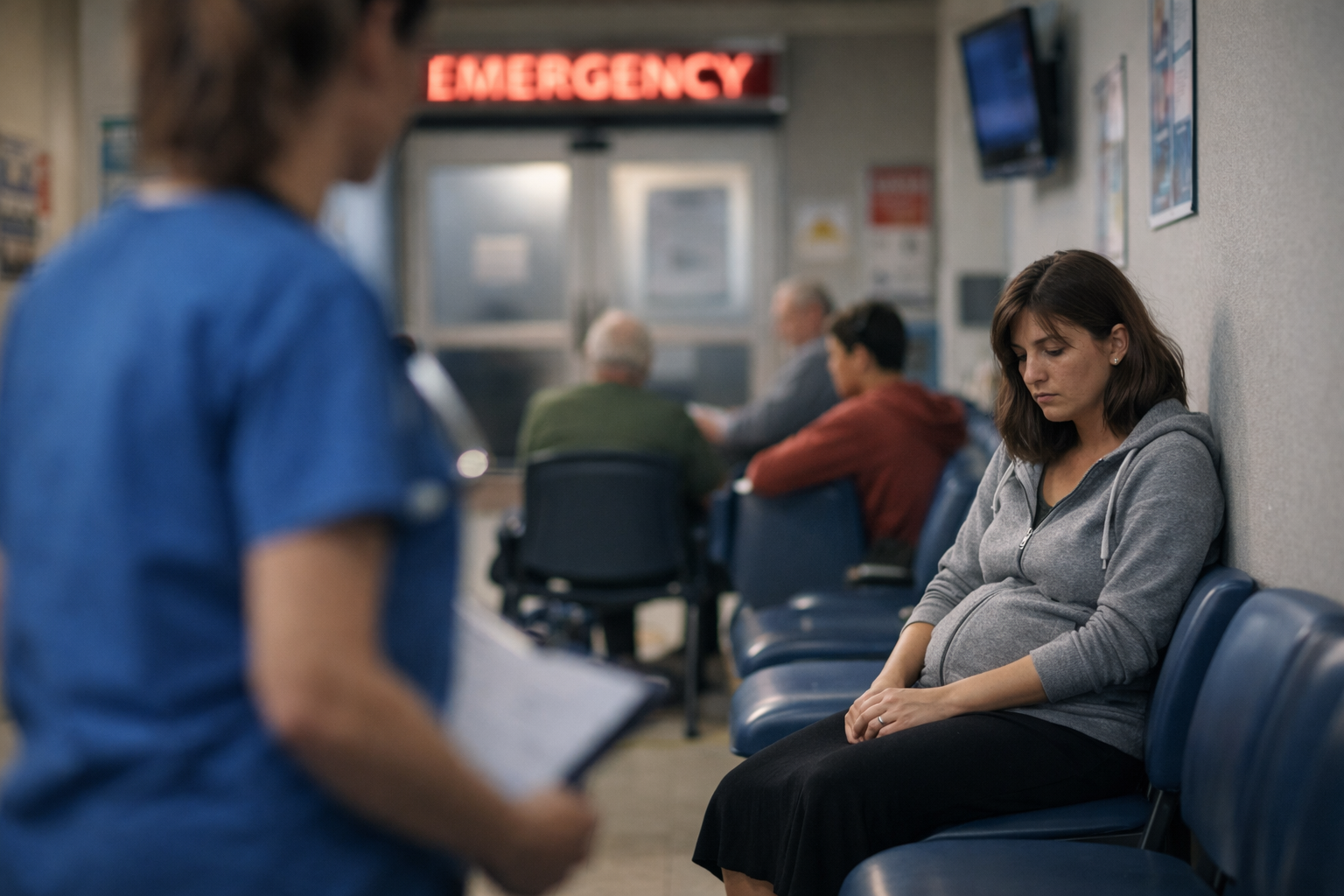
When you work in medicine, and especially in triage, you learn something quickly: the quiet patient in the corner is often the most urgent.
In my field, it is the woman who has not felt her baby move all day.
She feels something strange between her legs, but no pain.
She cannot explain it, but something just does not feel right.
You have to get up from your triage desk and go find her. You have to move through the waiting area, one by one, because she may not come to you. She will sit quietly and wait her turn. She will assume everyone else is more urgent.
That is exactly why you go to her first. If you don’t, you can miss her for hours, and the results can be catastrophic.
War is the same.
We are surrounded by noise: yelling, sirens, headlines, videos, chaos, and the surreal normal moments, people making coffee in shelters, kids playing cards on the floor, laughter over never-ending memes. Or those moments when you are simply trying to breathe seeing devastating scenes that stop you cold.
In all that noise, we have to look for the quiet ones.
Not everyone processes crisis by calling for help. Some people shut down. Some isolate. Some tell themselves they are not allowed to need anything because others have it worse. Some are ashamed. Some are simply alone.
So ask yourself:
Who have you not heard from?
Who were you expecting to see at 3 a.m. in the shelter, and was not there?
Who has stopped answering messages?
Who has disappeared from the group chat?
Which child has gone silent in the corner?
Those are the urgent ones.
We need to get up from our triage chair. We need to actively look for them. Knock on doors. Pick up the phone. And when you reach them, do not rush past it. Stay long enough to actually see what is going on.
Offer something concrete. Do you have water, batteries, food, medication? Is someone with you? Do you want me to sit with you for a few minutes? Do you want to come over? Should I call someone for you? Then follow up, and check again. (And if you are the quiet one, consider this my knock on your door. This is your permission to raise your voice).
You are not alone. We are in this together.
In birth, this instinct can save a life.
In war, it might, too.
Look for the quiet ones.
Related Topics