Mayor Mamdani’s condemnation of antisemitism matters
Words matter. A few years back, the Conference on Jewish Material Claims Against Germany, known as the Claims Conference, conducted a digital campaign called “#ItStartedWithWords” to put the spotlight on the rhetoric of hatred that preceded and laid the groundwork for the Holocaust. (Full disclosure: I am an ad personam member of the Claims Conference board of directors and serve on the organization’s leadership council.)
“The Holocaust started with words,” Gideon Taylor, the president of the Claims Conference, explained in 2022. “Hateful words that were yelled in the park, spat on the street, and roared in the classroom. These words alienated, belittled, and shocked; but worse, these words gave birth to the horrific massacre of six million Jews.”
Taylor was right, of course. Genocides, crimes against humanity, and acts of bigotry generally are rooted in words of discrimination, oppression, and hatred.
Eighty-one years ago, two of the Nazi defendants who sat in the dock of the International Military Tribunal at Nuremberg had not been political or military leaders of the Third Reich. They were media personalities who were accused not of actually killing anyone, but of inciting their audiences to murder Jews with words. Julius Streicher had been the publisher of the virulently and pruriently antisemitic tabloid, Der Stürmer, and Hans Fritzsche had been the director of the radio department of Joseph Goebbels’s Propaganda Ministry and one of its best-known broadcaster.
Prosecutor Mervyn Griffith-Jones referred to Streicher as “Jew-baiter Number One” and told the Tribunal: “For the course of some 25 years, this man educated the whole of the German people in hatred and…incited them to the persecution and to the extermination of the Jewish race. He was an accessory to murder, perhaps on a scale never attained before.”
Another prosecutor, meanwhile, charged that Fritzsche’s radio broadcasts “literally teemed with provocative libels against Jews, the only logical result of which was to inflame Germany to further atrocities against the helpless Jews who came within its physical power . . .”
The prosecutions of Streicher and Fritzsche—the former was convicted and sentenced to death; the latter was acquitted—were the immediate jurisprudential precursors of, if not the catalysts for, a separate and independent new criminal cause of action rooted in words that would in short order be featured in the 1948 Convention on the Prevention and Punishment of the Crime of Genocide—namely, incitement to genocide.
As Gideon Taylor correctly noted, hateful words are far too often the precursors to and inspiration for hate crimes on both the micro and the macro levels. But words can also have the opposite effect. They can be expressions of healing, or repudiations of hatred and bigotry. In the summer of 1942, Archbishop Jules-Géraud Saliège of Toulouse protested against the arrest and deportation of Jews in France. “The Jews are men, the Jews are women,” he declared in a letter that was read aloud in all the churches of his archdiocese on Sunday, Aug. 23, 1942 “Foreigners are men, foreigners are women. … They are part of the human race. They are our brothers like so many others. A Christian may not forget this.”
Archbishop Saliège’s message caused French men and women to come to the aid of persecuted Jews. His words saved lives.
In 2013, at the beginning of his papacy, Pope Francis told a group of interfaith leaders that “Because of our common roots, a true Christian cannot be antisemitic.” This condemnation of antisemitism sent an unambiguous message to Roman Catholics the world over.
When Pope Leo XIV appealed to God at a general audience in the Vatican this week on the day after International Holocaust Remembrance Day “for the gift of a world no longer marked by antisemitism, nor by prejudice, oppression, and persecution against any human being,” he was following in Pope Francis’ footsteps.
If we applaud Pope Francis and Pope Leo for their repudiation of antisemitism – and we do – we must do so as well when other public figures utter similar sentiments.
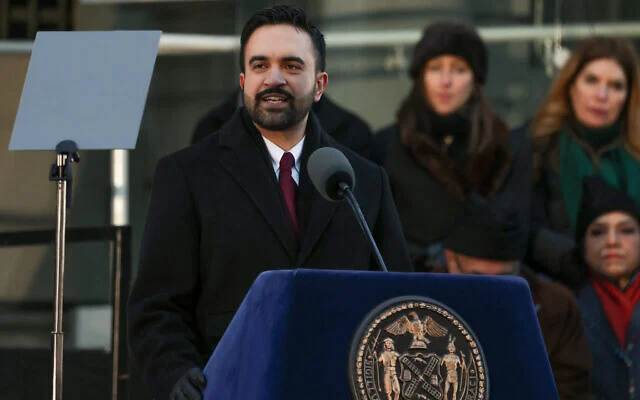
Specifically, I am referring to New York City Mayor Zohran Mamdani who condemned antisemitism twice this past week in no uncertain terms. When a rabbi was physically attacked in Queens on Tuesday, Mamdani posted on X that “antisemitism is not a thing of the past—it is a present danger that demands action from all of us. There is no place for antisemitism in our city. I stand in solidarity with Jewish New Yorkers and my administration is committed to rooting out this hatred.”
The following day, after a man had crashed his car repeatedly into the Brooklyn headquarters of the Chabad movement, the mayor posted that “Any threat to a Jewish institution or place of worship must be taken seriously. Antisemitism has no place in our city, and violence or intimidation against Jewish New Yorkers is unacceptable.”
I have been, and remain, sharply critical of Mamdani’s anti-Zionism and his past anti-Israel rhetoric. But that does not mean that we should not commend him when he repudiates antisemitism categorically and unequivocally, as he has done, or when he condemns Hamas as a terrorist organization.
If we criticize Mamdani when we disagree with him, which we should, we also have an obligation to speak out publicly when his words are words of support for and solidarity with the Jewish community.
Words indeed matter.