My Smallest Book Feels Like My Most Important
I have written four books, with a fifth now underway. Yet strangely, the piece of work that has affected me most is not one of the larger projects.
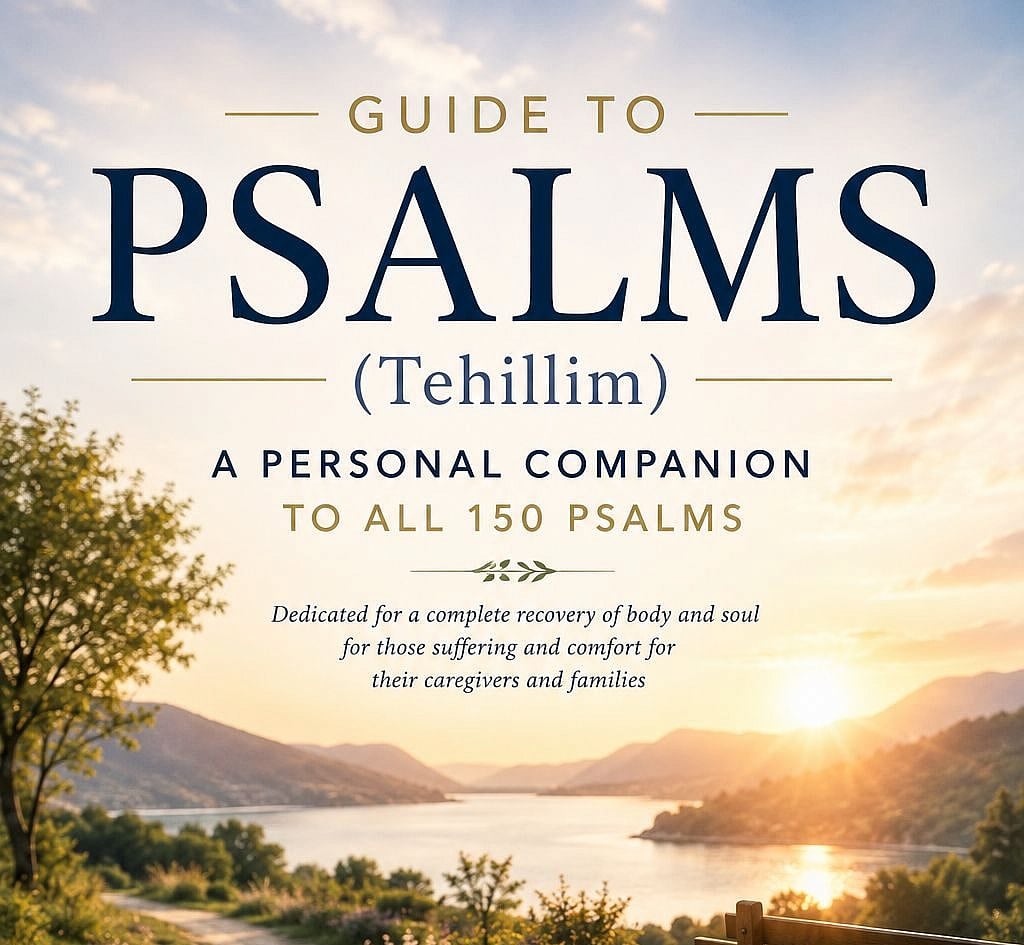
It is a small booklet: my Guide to Psalms (Tehillim).
And I think PSP is the reason why.
Over the last few years, many people have organized Tehillim for me. In Jewish life, saying Psalms for someone who is ill is a natural response. It is an act of kindness, care and prayer.
But if I am honest, I have always found it uncomfortable.
Part of me still thinks there are people more deserving of prayer than me. People who are sicker. People facing harder situations.
But the reality is what it is.
I have PSP, and it is progressing.
Yesterday I went for my second Botox treatment. During the appointment it became painfully obvious that the doctor could no longer properly hear or understand me, despite sitting only a short distance away. Through no fault of their own, they turned to my wife and asked her to explain my condition instead.
Outwardly it was a tiny moment.
Internally it was not.
For someone who values clarity, communication and control, it hurt deeply to realize I could no longer fully explain my own situation.
That moment stayed with me.
Then this morning I suddenly saw the wider picture more clearly than before.
The vision problems.
The speech difficulties.
The anxiety.
The flashes of anger.
The exhaustion.
PSP is slowly playing itself out in front of me.
And one of the hardest realities is accepting how little control I truly have over it. There is currently no cure. No treatment that stops the disease.
Strangely, that realization brought me back again to Tehillim.
Because when you read King David carefully, you begin to understand why Psalms endure across generations. They are not polished theology. They are raw human cries.
Fear. Hope. Gratitude. Loneliness. Vulnerability. Faith.
They are the words of someone trying to reach God from the depths of human experience.
But for many of us, myself included, that emotional connection is often lost. We rush through the words mechanically without truly understanding or feeling them.
So I decided, in my own small way, to try to change that.
Using my own reflections together with AI assistance, I created a guide to help people connect more deeply and emotionally to the Psalms they are saying.
Not academically.
Not comprehensively.
Simply emotionally.
Unexpectedly, creating the guide changed me as well.
Some people have already told me it helped them slow down, focus more deeply and connect emotionally to prayers they had been saying for years almost automatically.
Today, with Israel once again facing war and uncertainty, I turned to my own guide for comfort.
The first Psalm listed there for times of war is Psalm 20. In my reflection on that Psalm, I wrote:
“Doctors and medicine are the chariots of our time, but the true healer guides them all.”
Reading it today felt almost uncanny.
Psalm 20 is traditionally associated both with war and with surgery. We may have weapons, technology, surgeons and medicine, but ultimately, for those who believe, God remains the guide behind them all.
Sometimes the answers we receive are not the answers we hoped for.
Sometimes we do not understand them.
Sometimes we cannot even see them.
But faith means believing we are still heard.
That is ultimately why I created this guide.
Not because I think it is perfect.
But because PSP has forced me to search for deeper meaning in vulnerability, prayer, dependence and faith. Somehow this small booklet became part of that journey.
Oddly enough, my smallest book suddenly feels like my most important one.