Network Before Weapons
An Iranian opposition supporter inside Iran recently asked me to remove every reference to Shervin Hajipour and Toomaj Salehi from one of my articles. Both men, he insisted, were IRGC agents. He openly supports Israel — and still suspected that the link to my own article might be an IRGC trap.
This is one of the regime’s deepest successes. It has taught even some of its enemies to distrust the people whose voices it worked hardest to break.
The war launched in February was aimed, by Washington’s and Jerusalem’s own account, at changing the regime. It killed Ali Khamenei. Yet the mass uprising Israeli planners reportedly counted on never came, and the Islamic Republic still stands — now under his son Mojtaba. This week, with the ceasefire declared over, the naval blockade back in force and hundreds of strikes across Iran in recent days, the debate over what could bring the regime down is open again — including calls to arm its opponents. That debate keeps skipping the first question — the one nobody wants to answer.
Iran does not lack courage. It lacks the secure communications, trusted institutions and organization that let brave people find one another and act together.
Hajipour showed why the regime fears communication. In September 2022 his song Baraye gathered over 40 million views on Instagram in two days: Iranians could suddenly see they were not alone. The authorities arrested him and forced the song off his account. Copies kept appearing anyway. For a few days, a song connected people faster than any opposition organization ever had.
Toomaj Salehi shows the other side: what the regime does to the people who create such moments. After his arrest in October 2022 he spent, by his own account cited by UN experts, 252 days in solitary confinement; UN experts reported a broken nose, broken fingers and a severely damaged leg. When he described the torture during a brief release, he was rearrested within days and sentenced to death. The sentence was later overturned, and a UN working group ruled his detention — more than 753 days of it — arbitrary and unlawful. Yet the man who contacted me dismissed him as an agent.
Israelis know what such videos mean. We saw it in Gilad Shalit’s proof-of-life video and again after October 7, in footage produced by hostage-takers. When the captor controls the room, the camera and the prisoner’s life, the words are not freely given. And captivity marks people long after release: when Belarus freed opposition leader Siarhei Tsikhanouski last year after five years, mostly in solitary, he had lost over 50 kilos and wept describing how his daughter did not recognize him. Yet some opponents of the Islamic Republic still judge former prisoners as though they had spoken under ordinary conditions. The regime produces the statement inside the prison and waits for free people outside to use it against the prisoner.
That is how the interrogation leaves the prison.
The organizational failure is older than the Islamic Republic. The coalition that overthrew the shah in 1979 agreed on what it wanted to destroy but never built institutions capable of restraining its best-organized faction. Khomeini’s followers captured the state and eliminated their former partners. Iran’s opposition cannot afford to repeat that sequence — least of all with weapons added.
That is why calls to arm the opposition start too late. Whether weapons ever become necessary is a later question; an opposition that cannot verify its own members or communicate securely is not ready to answer it. A rifle cannot verify a recruit, connect cities during an internet blackout, or distinguish a real call to action from a security-service provocation.
In Ukraine, starting in 2014, I helped organize and train a National Guard brigade from the time it was a few officers — as an individual on the Ukrainian side, not as part of any foreign mission; one of its companies was later selected to train with US forces. The lesson was the opposite. Even an excellent unit cannot change the system around it. Strength in one place spreads through connection, or it does not spread at all. Equipment can strengthen an organization that already works. It cannot create one.
Reza Pahlavi is the closest thing Iran’s opposition has to a unifying figure, and that is exactly what such a project needs: his reach to launch and fund a permanent communications network for people inside Iran, and his standing to bring the opposition’s democratic factions behind it. The strongest guarantee he can give the network is its independence — Iranian technical, security and civil-society professionals running it, with outside auditing and a wall between political fundraising and operational decisions. A network owned by one faction will be distrusted by the rest; a network guaranteed by a leader but owned by none will be used by all.
Which technologies to use and how to protect users from detection are questions for security professionals, not op-eds. The principles matter more: no dependence on a single provider, device or delivery route; compartmentalization, so that one captured device exposes no one else; independent ways for users to check information before acting on it.
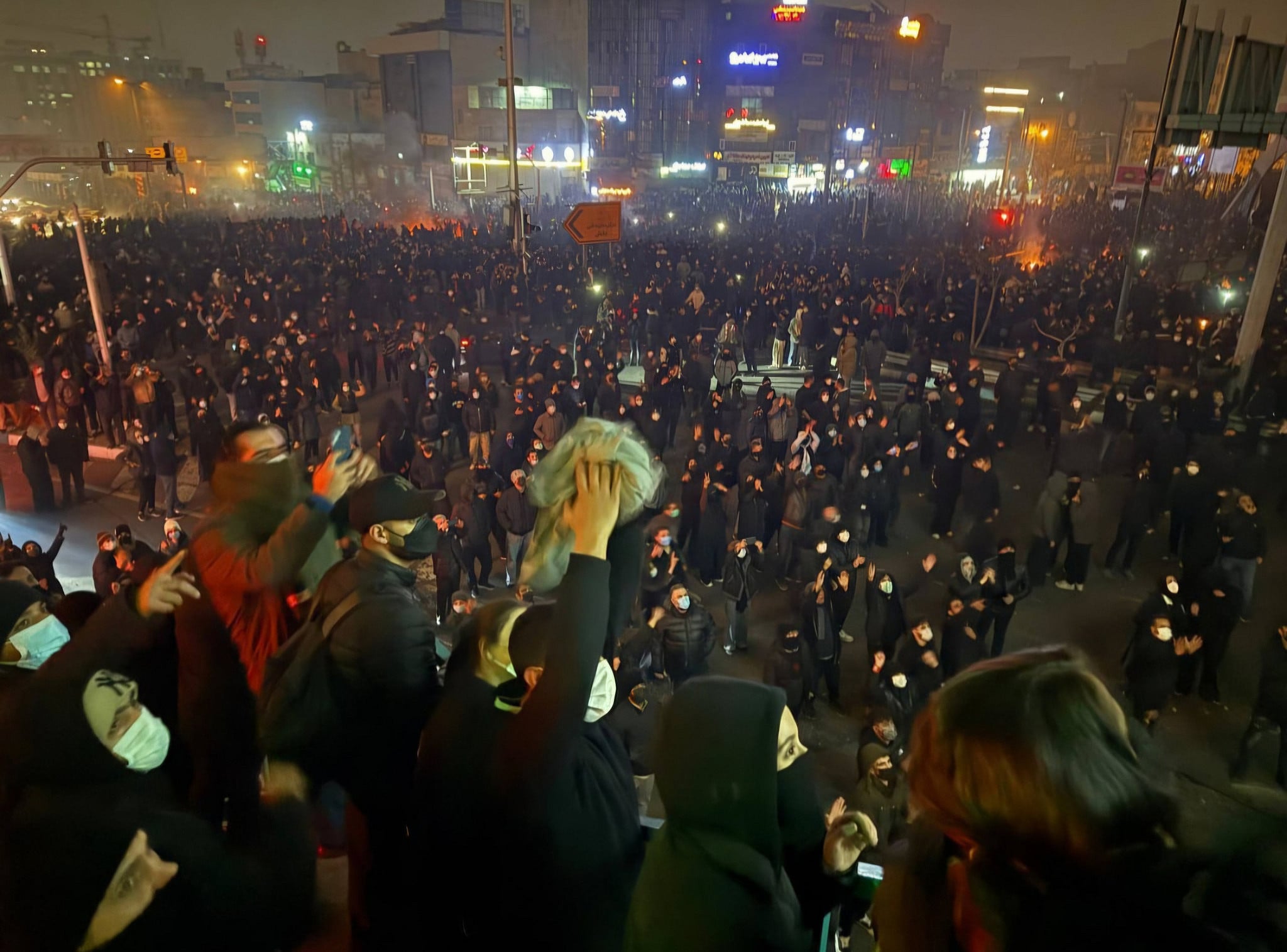
A communications network alone would not overthrow the regime. Its first value is more basic. When protests broke out in January, the regime’s first weapon was a months-long internet blackout. A resilient network would let people compare claims, document repression and build relationships that survive blackouts and arrests. If one city moved, others would know it was real instead of waiting for rumors or regime television. Evidence could leave the country — and voices the regime’s propaganda never reached could enter it.
Israel can help disrupt the regime’s coercive and surveillance capabilities and support the technologies that keep Iranians connected. It cannot organize Iran’s opposition on their behalf. Neither can the diaspora. Their role is to give people inside the country tools to find one another, check information and build trust that lasts.
Which brings me back to the man who called Hajipour and Salehi agents. The regime never needed to persuade him to support the Islamic Republic. It only needed to make him distrust the people who had challenged it most visibly. The war has shown what airpower alone cannot do. Until Iranians can verify information independently, understand what captivity does to a human being, and organize without the regime controlling every connection, weapons would only make the opposition easier to break.
Baraye