
No, It’s Not Occupied Territories
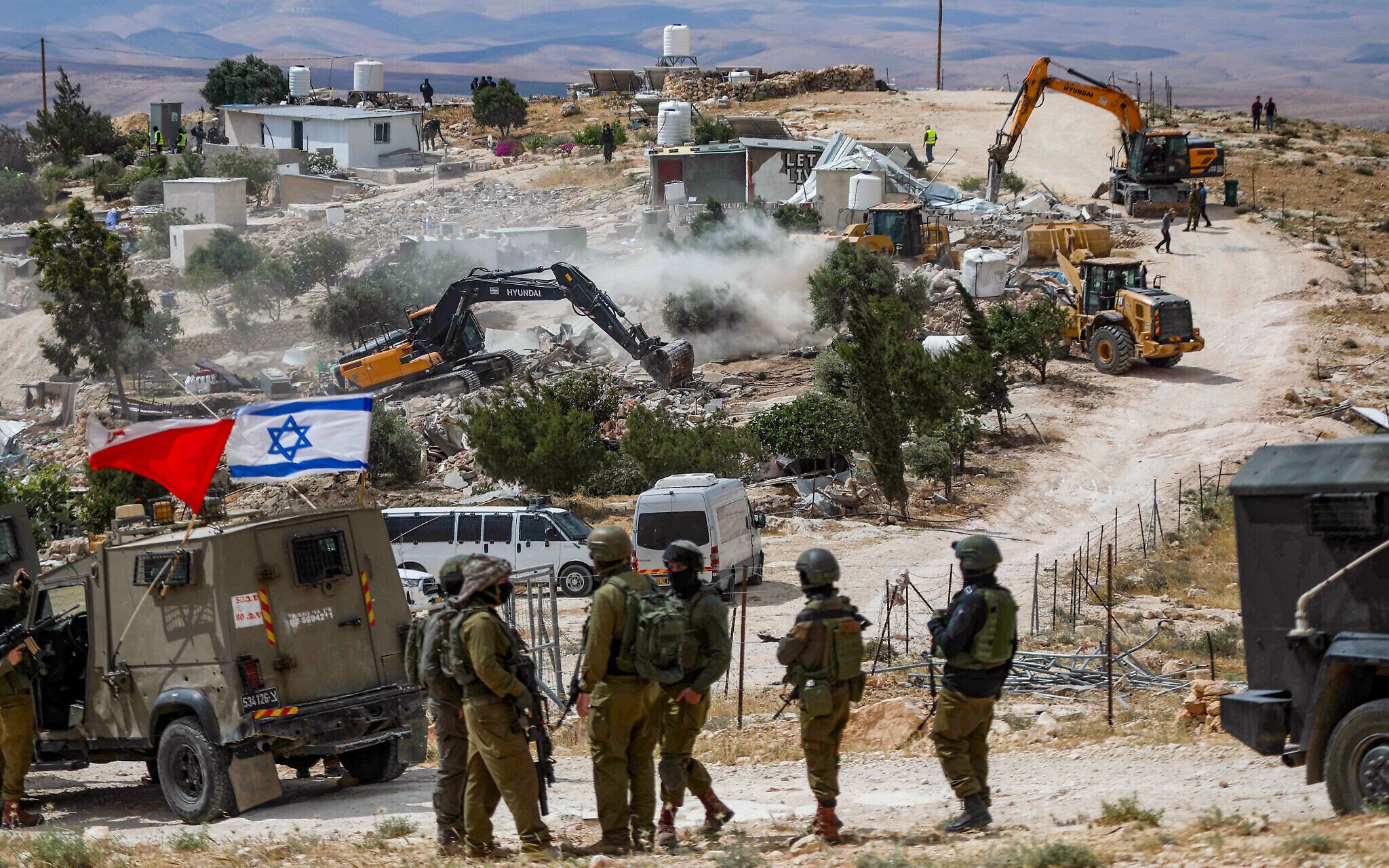
This week, Israel blocked a delegation of Arab foreign ministers from entering Ramallah. The group, which included senior diplomats from Saudi Arabia, Jordan, Egypt, and others, had planned to meet with Palestinian leaders in a visible gesture of support for renewed international diplomacy and Palestinian statehood. Their trip was stopped cold. Why? Because even the Palestinian capital, under current conditions, is accessible only with Israeli permission. And permission was denied.
It was a vivid reminder that despite the diplomatic doublespeak, the West Bank remains firmly under Israeli occupation.
The Israeli government justified the decision by calling the meeting a “provocation.” The foreign ministers were attempting to discuss paths toward peace. Apparently, that qualifies as a threat.
But don’t call this an occupation. Not officially. In the narrative upheld by Israel’s current government, the West Bank is “disputed,” not occupied. Millions of Palestinians live under Israeli military control, but according to this fiction, these are not occupied territories.
Nevertheless, the facts—and the law—refuse to conform to the politics.
The International Court of Justice (ICJ), in its July 19, 2024, advisory opinion, reaffirmed what has been legally clear for decades: the West Bank, including East Jerusalem, and Gaza are occupied territories. The ICJ found that Israel’s prolonged occupation, settlement expansion, and annexation efforts violate the Palestinian people’s right to self-determination and international humanitarian law. The Court reiterated that occupation is defined by effective control, not by formal annexation or military visibility. Even in Gaza, where Israel withdrew ground troops in 2005, it retained decisive authority over borders, airspace, and trade—a textbook case of occupation without presence.
According to the Court:
“The decisive criterion is not whether the occupying Power retains its physical military presence in the territory at all times but rather whether its authority has been established and can be exercised.
It also warned that the legal consequences extend beyond Israel itself. Third-party states and the United Nations, the Court said, have obligations not to recognize or assist in maintaining this unlawful situation.
This legal clarity is not new. It aligns with decades of UN resolutions, the 2004 ICJ advisory opinion on the West Bank wall, and the settled principles of the Geneva Conventions and the Hague Regulations. But it carries renewed urgency.
Even within Israel’s own judiciary, the situation has been treated as an occupation. In Adela v. Minister of Defense (7957/04), the Israeli High Court ruled that the West Bank is held under what it called “belligerent occupation.” The Israeli High Court reinforced that the region is not part of sovereign Israel and that the military operates there under international legal constraints. The court applied principles of international humanitarian law, affirming that Israeli control is exercised through a regime defined by military authority—not civil governance.
From a legal perspective, the control is undeniable. Israel controls who enters and leaves. It administers checkpoints, regulates building permits, polices land use, and dictates the terms of Palestinian movement. Even senior foreign ministers must request approval to visit a city that is nominally part of the Palestinian Authority.
So let’s review: if it looks like occupation, operates like occupation, and has been declared occupation by international and Israeli courts alike—what exactly is being disputed?
The answer lies in politics, not law. Israeli officials reject the term not because it is inaccurate, but because acknowledging it would force a reckoning: with the illegality of settlements, the denial of basic rights, and the impossibility of perpetual control without either apartheid or full enfranchisement.
It is more convenient to erase the word “occupation” than to confront the moral and legal contradictions it exposes.
This is why the blocking of the Ramallah visit matters. It wasn’t just a procedural delay. It was a demonstration of power: of who controls access, who decides what conversations are permitted, and who silences diplomacy before it begins. But even more important, it exposed a deeper truth: Israel is not only refusing to resolve this conflict—it is choosing to manage it indefinitely. There is no strategy for peace, only a preference for the status quo, in which ambiguity allows for maximal maneuvering. Not deciding is, in itself, a decision—one that enables policies and facts on the ground that a true peace process would forbid.
To be clear, no one is suggesting that the Palestinian Authority, in its current form, is ready today to become the government of a fully independent state. But the path toward coexistence and security for both peoples begins with starting that process. And what better way to begin than with the support of the region’s most influential players? Blocking that path is not just shortsighted—it’s dangerous.
In 1633, in a candlelit hall of the Inquisition in Rome, Galileo Galilei stood trial for telling the truth. He had dared to assert that the Earth moved around the Sun—a view supported by science, reason, and evidence, but condemned as heresy by the Church. Faced with torture, imprisonment, and ruin, Galileo relented. He recanted his findings before a tribunal that demanded obedience over observation.
But according to legend, as he rose from his knees, Galileo muttered a quiet, defiant phrase: “Eppur si muove”—”And yet it moves.” Whether he whispered it or not, the truth did not change. The Earth continued to move.
Today, we are told, these are not occupied territories. And yet—they are.
Denial may delay justice—but it cannot erase it.