Nvidia’s ‘Second Home’: Why the AI Giant Is Doubling Down on Israel
At a time when parts of the Western corporate world are reassessing their exposure to Israel amid its war with Hamas, Hezbollah, and the broader confrontation with Iran, Nvidia is taking a markedly different course. Rather than pulling back, the world’s most valuable public company is expanding its long-term presence in Israel through one of the largest technology infrastructure investments ever made in the country.
Nvidia is advancing plans to establish Israel’s largest and most powerful server farm alongside a major new research and development campus in the north. Together, these projects represent several billion shekels in committed investment and position Israel as one of Nvidia’s most important innovation hubs outside the United States. In an era when capital is increasingly sensitive to geopolitical risk, Nvidia’s actions amount to a clear and deliberate vote of confidence in Israel’s technology ecosystem.
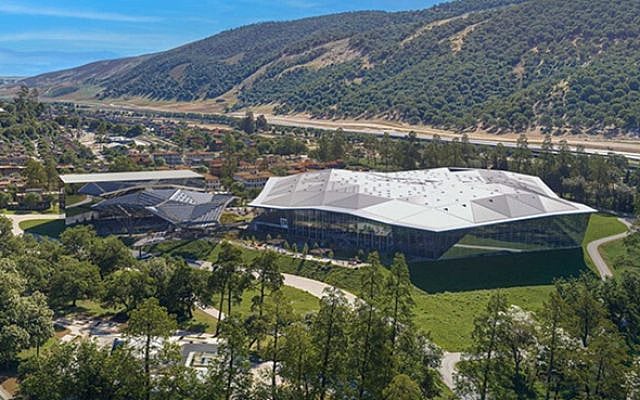
The centrepiece of the expansion is a hyperscale data centre under construction in the Mevo Carmel industrial zone near Yokneam. Nvidia is in advanced negotiations to lease the facility from Mega Or, which is developing the site through its data-centre subsidiary. The facility will be dedicated exclusively to Nvidia’s internal use, supporting advanced artificial intelligence development rather than serving external cloud customers.
Once operational, the data centre will become the most power-intensive facility of its kind in Israel and one of the largest in the Middle East. Nvidia’s total investment – including infrastructure, computing systems, and supercomputing equipment – is expected to reach close to NIS 4.8 billion, or roughly $1.5 billion. The facility will host next-generation AI systems and serve as a core platform for developing, testing, and validating new technologies before they are deployed globally.
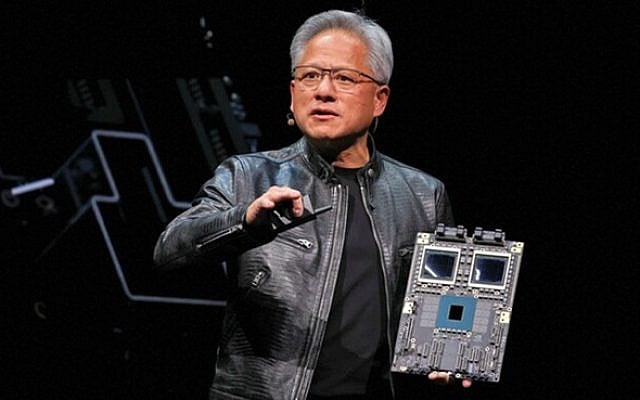
Commenting on the company’s expanding footprint, Nvidia’s CEO Jensen Huang emphasised the strategic importance of Israel to its future growth: “Israel is home to some of the world’s most brilliant technologists and has become Nvidia’s second home. Our new campus will be a place where our teams can collaborate, invent, and build the future of AI. This investment reflects our deep and enduring commitment to our families in Israel and their unique contributions to the AI era.”
The statement underscores a broader reality: Israel is no longer simply a regional R&D base for Nvidia, but a critical pillar in its global AI strategy. The company’s investment reflects confidence not only in Israel’s engineers but also in its ability to support complex, mission-critical infrastructure over the long term.
Alongside the data-centre project, Nvidia is finalising plans for a large research and development campus in Kiryat Tivon. The campus is expected to accommodate up to 8,000 employees and will significantly expand Nvidia’s presence in northern Israel. While the real estate investment itself is modest relative to the server-farm spend, the strategic implications are substantial, anchoring high-value employment and deepening collaboration with academic and research institutions.
Nvidia’s expansion builds on the foundation laid by its 2020 acquisition of Mellanox, whose Israel-developed networking technologies have become central to Nvidia’s global AI platforms. Since that acquisition, Nvidia’s Israeli operations have grown rapidly, evolving from a specialised networking centre into one of the company’s most comprehensive development hubs, spanning hardware, software, systems, and infrastructure.
The scale of this transformation is reflected in workforce growth. Over the past two years alone, Nvidia has added roughly 2,000 employees in Israel, contributing to a global headcount that has nearly tripled since 2020. Israel today plays a direct role in shaping Nvidia’s most advanced AI systems, rather than merely supporting them.
With a market capitalisation exceeding $4 trillion and the flexibility to deploy capital almost anywhere in the world, Nvidia’s decision to commit long-lived, capital-intensive infrastructure to Israel is neither symbolic nor incidental. It reflects a strategic judgment that Israel remains a stable, competitive, and indispensable node in the global AI value chain.
For Israel’s technology sector – and for global investors watching where the foundations of the AI economy are being laid – the message is clear. Even amid geopolitical tension and international pressure, one of the most influential companies of the AI era is doubling down on Israel, treating it not as a liability to manage but as a strategic asset central to its future growth.