
Ohio: Beyond the Political Divide
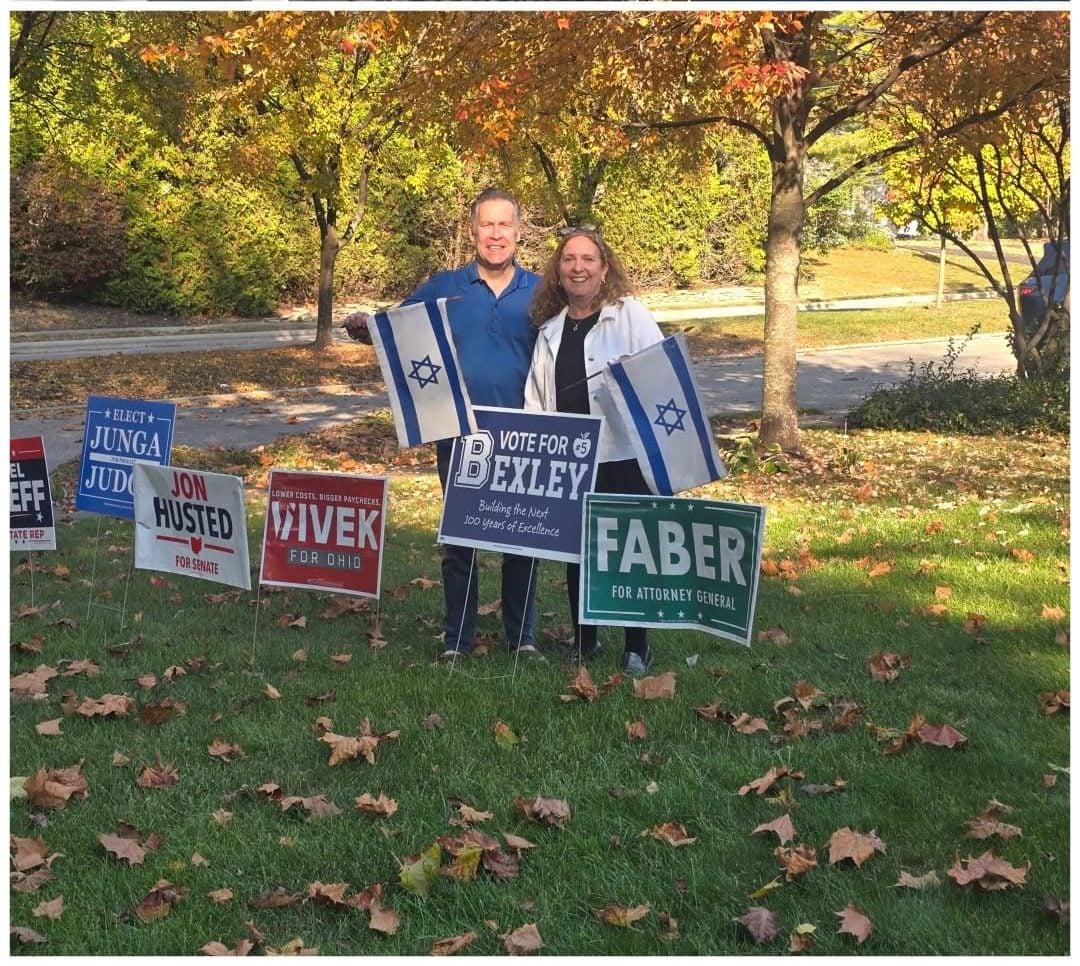
Ohio was once considered one of America’s quintessential swing states, a place where presidential elections could be won or lost. Today, the political landscape is more complicated. Although the state has moved decidedly Republican in recent presidential elections, individual races tell a more varied story.
Driving through Ohio, we saw Democratic and Republican campaign signs sharing space on front lawns and competing for attention along the highways. Some contests remain highly competitive, while others may be decided by down-ballot voting, with voters making different choices for Congress, governor or the Senate than they do for the party they generally support.
The races for governor and the U.S. Senate have attracted particular attention, but several congressional contests are also being closely watched. It is a reminder that even in a state that appears to be moving firmly in one political direction, voters are not necessarily predictable.
We also saw the less attractive side of an intensely competitive election. In at least one race, political advertising crossed a line, resorting to personal attacks that seemed more intent on damaging an opponent than persuading undecided voters. From our perspective, this was a misstep. Such tactics risk alienating the very people a campaign hopes to attract. There is an important difference between challenging someone’s political record and attacking them personally. In an already polarized political climate, that distinction matters.
For Sarah and me, Ohio offered an opportunity to look beyond the advertisements and campaign rhetoric, and to consider something that is becoming increasingly difficult to sustain in American public life: relationships that cross political and ideological boundaries.
Our journey took us from Columbus to Cincinnati, where we spent time with two members of Congress who approach politics from very different directions: Democrat Greg Landsman and Republican Warren Davidson.
Both conversations reinforced our belief that meaningful engagement between Israel and the United States cannot be confined to one political party or one set of ideological assumptions.
Greg Landsman: The Importance of Showing Up
Congressman Greg Landsman represents Ohio’s First Congressional District, which includes Cincinnati. A Jewish Democrat with a strong commitment to Israel, Landsman occupies an increasingly challenging position in a party where disagreements over Israel have become more pronounced.
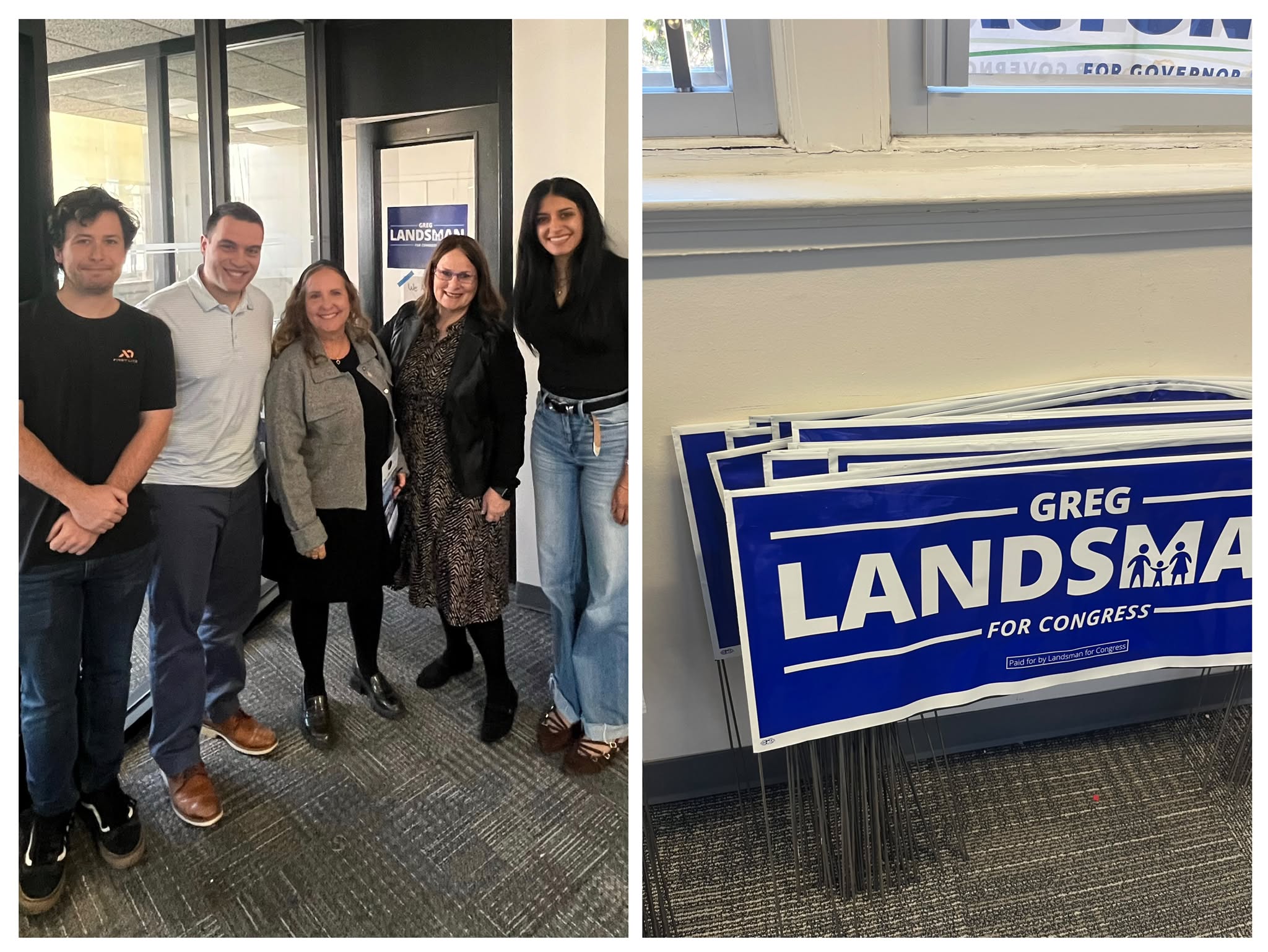
His approach reflects some of the pragmatic traditions associated with moderate Democrats, including the Blue Dog movement. Landsman has developed his own record of bipartisan engagement, particularly through the Problem Solvers Caucus.
For those of us who care deeply about the U.S.-Israel relationship, that approach matters. It is easy to gravitate toward political allies who agree with us on nearly everything. But relationships become particularly important when there are disagreements, when political positions carry complications, or when standing by a friend requires more than a public statement.
Landsman has spoken openly about his support for Israel while also expressing concern for Palestinian civilians and advocating a negotiated two-state solution. His positions reflect the complexities of balancing a commitment to Israel with broader political and humanitarian considerations.
Our visit was about friendship and appreciation, but also about recognizing the importance of maintaining dialogue within a Democratic Party that is itself undergoing considerable debate about Israel and America’s role in the Middle East.
The U.S.-Israel relationship has historically enjoyed support from both major American political parties. Maintaining that support requires consistent engagement, particularly with those who are willing to listen, challenge assumptions and work toward common ground.
We felt it was important to show up in person, not simply send a message from thousands of miles away.
Warren Davidson: A Different Political Perspective
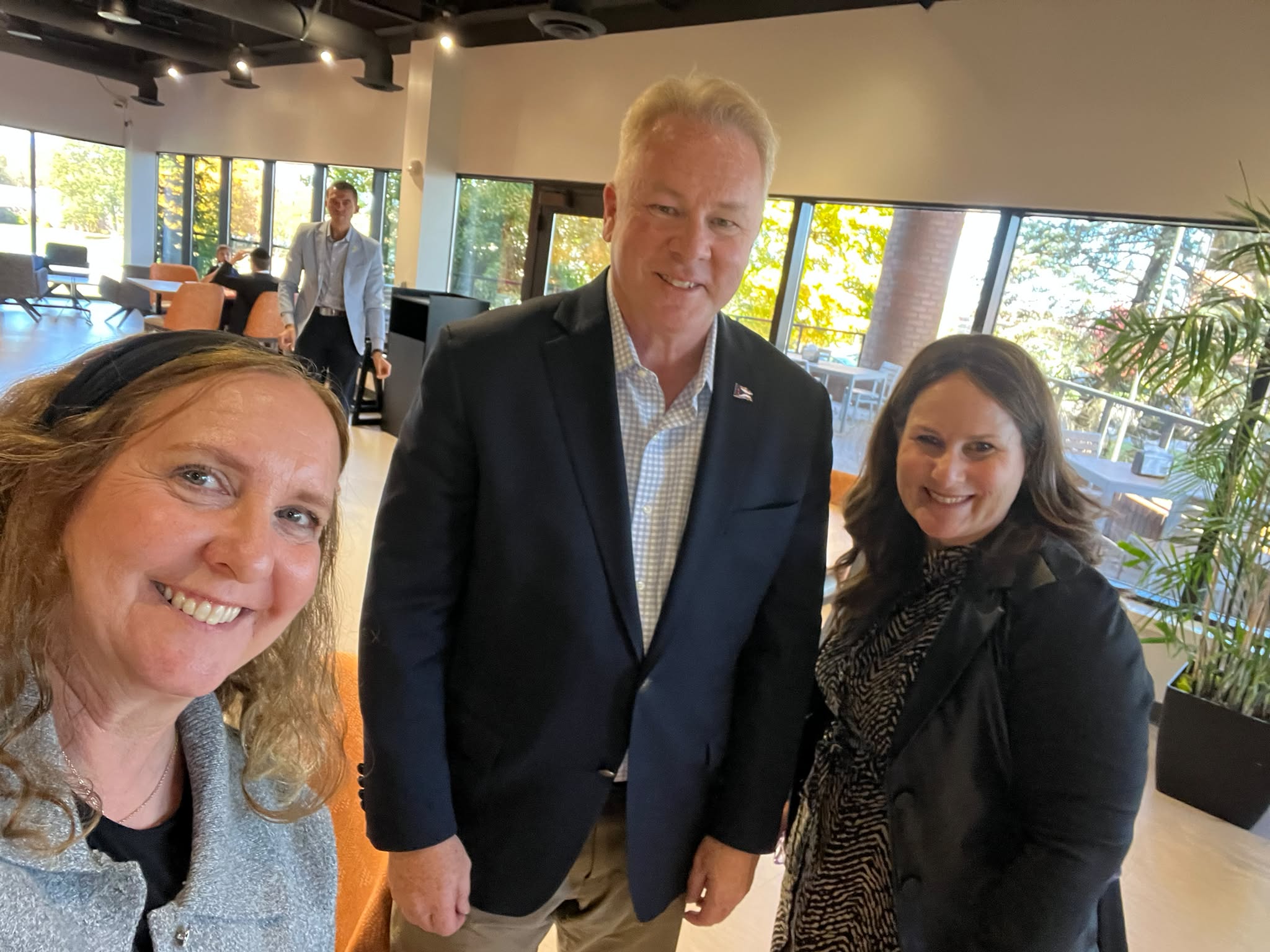
Our time with Congressman Warren Davidson offered a different political perspective and an equally interesting conversation.
Davidson represents Ohio’s Eighth Congressional District. A West Point graduate, former Army officer and businessman, he brings a strong emphasis on individual liberty, fiscal responsibility and limited government to his work in Congress.
Over lunch, our conversation ranged from the American economy and domestic policy to Iran, national security and the relationship between Israel and the United States.
 Davidson’s political outlook places considerable weight on national sovereignty and the responsibilities of independent nations. This provides an interesting starting point for discussing the U.S.-Israel relationship.
The United States and Israel are close partners, but they are also independent democracies with their own institutions, interests and responsibilities. A serious relationship must be able to accommodate differences in judgment while recognizing areas of shared strategic concern.
Our discussion about Iran was particularly relevant in that context. The question of how to confront regional threats, and what role the United States should play, remains an important subject of debate in Washington.
We also discussed changes in the congressional district and opportunities to strengthen connections with Jewish constituents and community leaders.
These are the conversations that rarely make headlines but can have lasting significance. They allow people to understand one another’s priorities, raise concerns directly and build relationships that extend beyond a particular election cycle.
Beyond Party Labels
Meeting Landsman and Davidson during the same stretch of our Ohio journey brought into focus an essential feature of American democracy.
These two congressmen differ substantially in their political philosophies. They represent different constituencies, belong to different parties and frequently approach national questions from very different starting points.
There is no need to minimize those differences to appreciate the value of engaging with both.
Indeed, the differences are part of the reason such engagement matters.
For Israel, bipartisan relationships have long been an important element of its connection with the United States. But bipartisanship cannot simply be invoked as a slogan. It requires an ongoing investment in people, an understanding of their constituencies and a willingness to listen even when conversations become uncomfortable.
That investment must extend beyond Washington.
One of the most revealing aspects of our road trip has been seeing members of Congress in the communities they represent. Away from Capitol Hill, we see the relationships that shape their political lives: local families, community organizations, business leaders, longtime supporters and constituents whose immediate concerns often have little to do with international affairs.
These connections help explain how national policy is formed and why elected officials respond differently to issues that may look straightforward from a distance.
The more time we spend in these communities, the more apparent it becomes that American politics cannot be understood entirely through national headlines or party labels.
State pride, local identity, economic concerns and personal relationships all play a role. The political divisions are real, but so too is the desire among many Americans to see their communities prosper and their children inherit a better future.
What Ohio Taught Us
As we traveled through Ohio, the intensity of the election campaign was impossible to miss.
The state’s changing political character makes it particularly interesting. It is no longer the familiar presidential bellwether of earlier decades, yet its Senate, gubernatorial and congressional races demonstrate that political competition remains very much alive.
Some voters will follow their party loyalties throughout the ballot. Others may distinguish between candidates, rewarding individual records, local relationships or particular policy positions. And in closely contested races, turnout and the choices voters make further down the ballot may prove decisive.
But beyond the electoral calculations, our visits offered a reminder that political differences need not eliminate the possibility of constructive relationships. In fact, the more divided the political environment becomes, the more valuable those relationships may be.
We left Ohio thinking not only about the outcome of individual races, but about the broader challenge of preserving trust across political divisions.
For Sarah and me, that is an important part of why we are making this journey.
We are not traveling simply to attend campaign events or collect photographs with members of Congress. We are here to maintain friendships, deepen conversations and remind people that the relationship between Israel and America is sustained by individuals who take the time to know one another.
There will always be disagreements, some of them substantial. But enduring relationships are not built by avoiding differences. They are built through the willingness to have those conversations, to listen carefully and to remain engaged.
In an election season marked by considerable division, that seems to us a particularly worthwhile investment.
YES! Is Going Places | From Laundry to Lawmakers
Nine states. Eight days. Two women on a mission.