
Permanent borders, first
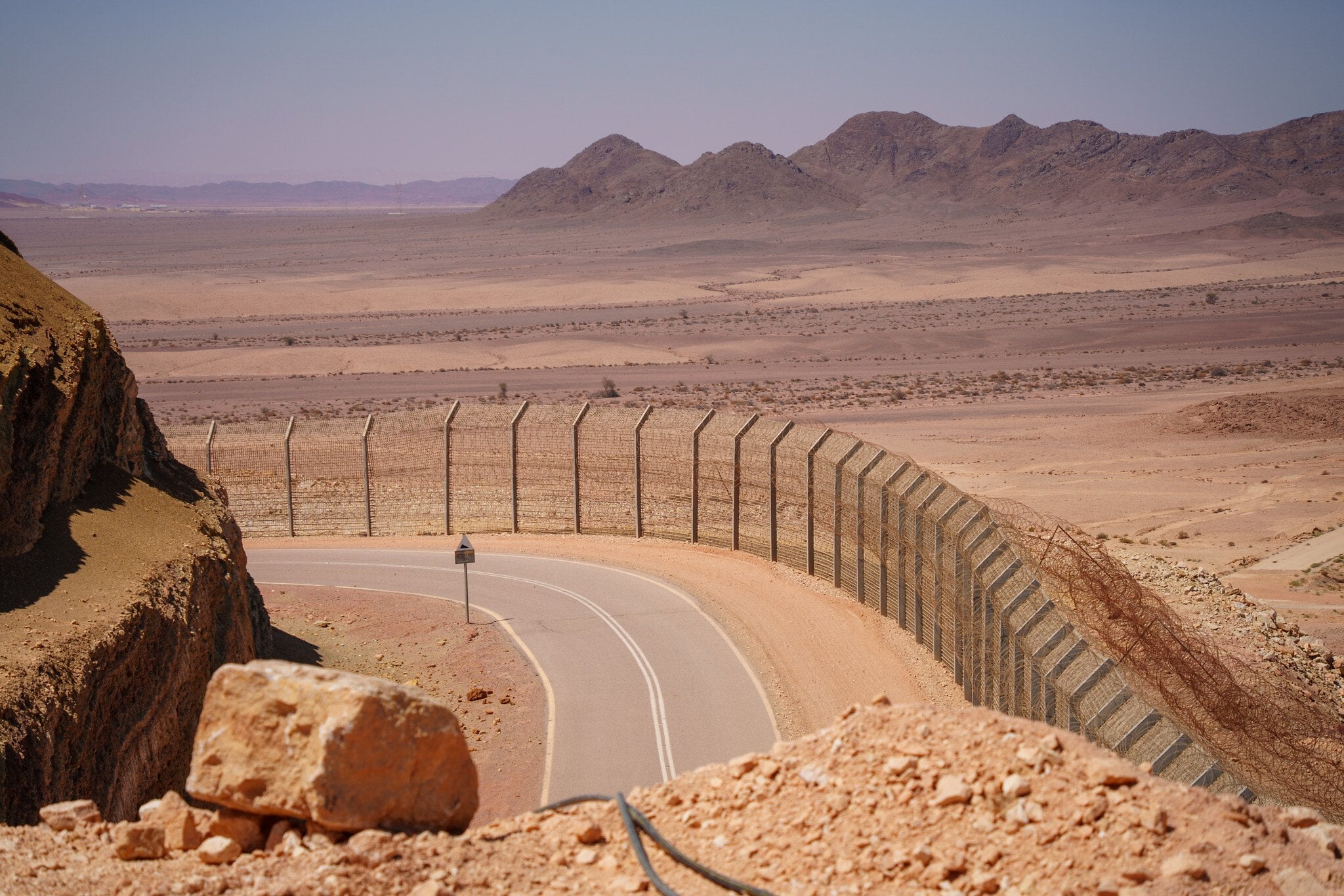
Politicians tend to postpone decisions that spark public controversy. True statesmen, by contrast, recognize historic moments that demand difficult choices — and have the courage to make them. David Ben-Gurion put it best: “When you see a galloping horse, jump on it. You may slip, but you won’t get another chance.”
Today, we are witnessing two parallel processes in US–Israel relations: on the one hand, massive American assistance; on the other, the rigid enforcement of Washington’s positions on Jerusalem. This reality inevitably casts doubt on the future of the “special relationship” between the two countries, as Israel’s standing in the United States steadily weakens amid deep ideological polarization and demographic shifts within American society that do not play to the Jewish state’s advantage.
A responsible Israeli statesman must therefore ask: Is America’s generous assistance — military, economic, and diplomatic — likely to erode? If so, should we not seize, right now, under President Trump and his unique support for Israel, this rare window of opportunity to anchor our permanent borders?
Israel cannot remain forever without recognized borders. Nor should it harbor illusions about the basic principle that will determine their eventual delineation: the 1967 lines, with equal territorial exchanges. Yet the current geopolitical moment offers an optimal — perhaps final — opportunity to “strike a deal” that would leave the settlement blocs under Israeli sovereignty and establish a boundary aligned with Israel’s security needs.
The only leader who has shown the capacity to advance such a far-reaching diplomatic initiative and to enlist wide international and Arab backing for it is, of course, President Trump. Only he has the leverage to secure a UN Security Council resolution that would define Israel’s permanent borders without requiring an immediate commitment regarding the nature of the entity beyond them.
An Israeli willingness to delineate its permanent borders would signal to the world that Israel seeks not annexation or perpetual occupation, but a fair and lasting division of the land — while safeguarding its security and Jewish identity. In this context, deferring discussion of the entity beyond the border would be more readily understood. This deferral rests on both strategic and emotional grounds. The October 7 massacre and the war in Gaza have deepened doubts about the Palestinian side’s ability to serve as a credible partner for a two-state solution in the near term. At the same time, one cannot ignore the emotional response of many Israelis: Should Hamas — which brought upon us the calamity of October 7 — now be rewarded with an independent state for its people, many of whom openly condoned its horrific acts?
The approach calling for the determination of Israel’s permanent borders distinguishes between a political border — the line of sovereignty that will secure Israel’s Jewish character — and a security border — the Jordan River line that will protect it from terrorism and threats from the east. Israel’s readiness to draw such a border must, of course, be conditioned on strict and irreversible security requirements: continued Israeli control over the area until a future political settlement is reached, and afterward — full demilitarization, a long-term Israeli military presence in the Jordan Valley, supervision of border crossings and airspace, and more.
These crucial demands can be met within the current window of opportunity under President Trump’s leadership, but are unlikely to remain fully attainable in the future.
International recognition of Israel’s permanent borders would also serve President Trump’s interests, enabling him to present a major diplomatic achievement in the Middle East. It would pave the way for implementing his “New Middle East” vision — a vision whose benefits for Israel would be immense: a dramatic improvement in its international standing, access to new markets, and a genuine expansion of the circle of peace — both with regional neighbors and with the broader Muslim world.
Such a move would also yield other benefits: it would halt the settlers’ right-wing efforts to create irreversible facts on the ground, locking Israel into occupation and bi-nationalism. At the same time, the bond between Diaspora Jewry and Israel would strengthen, the trend of distancing would be reversed, and Jewish commitment to Israel’s prosperity and international stature would deepen.
The idea of defining Israel’s borders now will, of course, face opposition from those who cling to the vision of Greater Israel — a vision that leads inevitably to the destruction of Israel’s Jewish character, and an endless conflict.
The reaction of the “conflict-management camp” in Israel, however, is likely to be different. That camp, positioned at the political center, includes many Israelis who oppose occupation yet remain convinced that the Palestinian side is divided and not ready for an agreement. The initiative proposed here — to establish Israel’s permanent borders first — directly addresses that concern: it is not dependent on negotiations with the Palestinians, nor does it prejudge the nature of the entity that may one day rule beyond the border. In that context, the true dilemma confronting the Israeli public will be “Permanent borders — yes or no?” rather than “A Palestinian state — yes or no?”
Thus, the dividing line in Israeli politics should rightly run between two competing visions for Israel’s future: one that favors continued occupation, growing isolation, and endless wars; and another that supports permanent borders now — to ensure Israel’s security, prosperity, and Jewish identity.