Philippe Karsenty Interview | Alexandre Gilbert #301
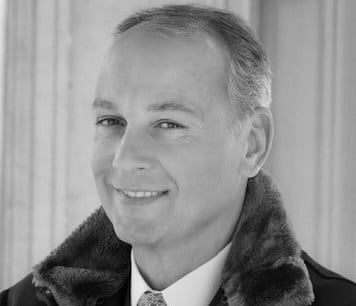
Philippe Karsenty is the spokesperson for the Trump France committee.
Osama bin Laden explicitly cited the Al-Dura case as justification both for the assassination of Daniel Pearl, a journalist from the Washington Post, who was about to find him, in Abbottabad in 2002, and for the 9/11 2001 aircraft hijack and attacks on the United States. How do you interpret that?
Philippe Karsenty: Bin Laden invoked Al‑Dura very directly. He pointed to the footage as proof that Jews and the West were child‑killers. He then used that grievance as a pretext to justify Daniel Pearl’s murder — presenting it as vengeance for Al‑Dura. And he cited the same image again as moral cover for 9/11, claiming that the attacks on New York and Washington on the World Trade Center and the Pentagon, were retaliation for the supposed killing of a Palestinian child. In his rhetoric, one short televised clip became the excuse both for executing a single journalist and for massacring thousands of civilians.
That’s how far the reach of this image went: from Gaza, to Karachi, to the Twin Towers. Modern media ecosystems — from satellite networks to the social platforms that would come later — are accelerants. An emotionally charged image, broadcast without context, can spiral into a global narrative within days. Bin Laden’s invocation was not the origin of that mechanism, but it displayed how effectively extremists could harness it. That is why accountability, forensic analysis, and the willingness to pursue uncomfortable inquiries are vital. If we ignore how images propagate and mutate, we hand the moral high ground to those who traffic in outrage.
It’s crucial to understand that we moved from the notion of “deicide” to “genocide.” In Christian tradition, Jews were stigmatized as “Christ-killers.” With the Al-Dura case, the Jews were recast as child-killers, genocidal by nature. This image of Mohammed Al-Dura, supposedly shot by Israeli soldiers in 2000, became the ultimate weapon of demonization against the Jewish people. And honestly, if you search through every existing representation, you won’t find anything more powerful or more destructive than that image. Everyone knows it, even people completely detached from politics or the conflict.
And let me add this: I actually agree with Charles Enderlin on one point. The October 7th atrocities in Israel prepared by Yahya Sinwar—was also staged, planned, a carefully orchestrated performance of horror.
Would you liken what some describe as ‘Pallywood’ propaganda to The Protocols of the Elders of Zion or Édouard Drumont’s La France juive—both bestsellers translated into numerous versions across the globe?
Philippe Karsenty: Drumont’s books, terrifying as they were, don’t compare to a single televised image like Al-Dura. That’s the difference. An image is infinitely stronger than a text. The Protocols, in fact, are boring and incoherent. Few read them. Everyone remembers Al-Dura. An example: during one of my trials, I was working at my sister’s home. Her cleaning lady, a North African woman, walked past my computer. The moment she saw the image, she exclaimed, “Ah! Mohamed Al-Dura!” She became visibly agitated. This was someone with no background in politics, history, or the Middle East—and yet she knew this picture. That shows how deep and far-reaching its impact was. It became a tool of propaganda that reached everywhere.
How did you connect with the Pearl family?
Philippe Karsenty: After I began speaking about the Al-Dura case, I was invited to give lectures around the world, including the United States. At one event, I was told Judea Pearl would be in the audience. He was, of course, the father of Daniel Pearl, the Wall Street Journal journalist kidnapped and brutally murdered in Pakistan in 2002. We met, became friends, and stayed in touch. I also met his wife, Ruth, before she passed away. My personal experience with Marianne wasn’t easy, but let’s be clear: she had her own perspective and we didn’t connect. Later, her story was dramatized in A Mighty Heart with Angelina Jolie, produced by Brad Pitt’s company. Personally, I found it overblown. For me, Daniel Pearl’s murder was the first filmed beheading—the first Internet “snuff movie.” Just as I argued that Al-Dura’s death had been given a quasi-theological dimension, Pearl too became a kind of virtual martyr, an ex-voto of horror in the age of digital media.
What about Bernard-Henri Lévy who wrote
Philippe Karsenty: Lévy avoided the Al-Dura case entirely. Elisabeth Lévy, however, became one of my strongest advocates. After seeing my presentation, she lobbied figures like Robert Badinter and Alain Finkielkraut. Badinter dismissed it, saying, “If the Mossad doesn’t act, then nothing can be done.” Finkielkraut was supportive in his way. BHL, on the other hand, wanted nothing to do with it. He feared jeopardizing his relationships with major media outlets.
You stress that you weren’t the first to discover the Al-Dura fabrication. Who was?
Philippe Karsenty: It was Nahum Shahaf, an Israeli researcher. He was the one who opened my eyes. When I saw his analysis, it struck me as obvious. So I approached France 2, expecting them to correct their mistake. Instead, they dismissed me. I went to the CRIF, to the Israeli ambassador—everyone brushed me off. Ambassador Daniel Shek even refused to shake my hand, calling me a “conspiracy theorist.” That was the environment I was up against.
Let’s talk about the legal battle. How did it begin?
Philippe Karsenty: Since I had no legal standing to sue, I published a deliberately provocative article, hoping France 2 would sue me for defamation. They did. In 2006, at my first trial, the prosecutor said I had presented convincing evidence of a staged event and should be acquitted. Yet I was convicted. On appeal, the court demanded France 2 release its raw footage. I had obtained 18 minutes of it. The footage exposed blatant inconsistencies. I was acquitted, and the case made global headlines—even appearing in US diplomatic cables later revealed by WikiLeaks.
But the story didn’t end there, did it?
Philippe Karsenty: No. France 2 appealed to the Court of Cassation. Despite the Attorney General’s conclusions in my favor, I lost—on a procedural point. The court ruled that I didn’t yet have the footage when I published my article, and therefore my claim was defamatory at the time, even if later proven correct. In 2013, at the retrial, I brought experts from around the world—architects, analysts. France 2 was demolished in court. But once again, the verdict went against me. I was ordered to pay €11,000. At that point, I decided to stop. The system was hopelessly politicized.
So where does that leave you today?
Philippe Karsenty: Today, I continue to say openly that the Al-Dura video was staged. France 2 can no longer sue me. Their only argument—that I lacked proof at the time of publication—has expired. I have the evidence, and I speak freely. The irony is that the more they tried to silence me, the more the affair spread—the Streisand effect in action.
How do you respond to being associated with conspiracy figures like Alex Jones, Steve Bannon, or Alain Soral?
Philippe Karsenty: I reject that completely. I have no connection to those people. In fact, they despise my work. Why? Because it disrupts their antisemitic narratives. I expose Palestinian propaganda as fraudulent, which doesn’t serve their agenda. Unlike others who were co-opted by conspiracy networks, I remained isolated—especially in the pre-social media era. That isolation made the fight very lonely. But it also kept me clean.
You mentioned earlier that Robert Ménard changed his stance after meeting you. Can you tell us more?
Philippe Karsenty: Yes. Ménard had initially signed the petition against me. Later, after reviewing my evidence, he admitted he had been wrong. He was stunned by the scale of the Palestinian fabrication. He agreed to interview me for his quarterly review Média. That experience was remarkable. The day after our interview, Charles Enderlin called him, furious: “You are not allowed to interview Karsenty. Nobody is.” Ménard replied: “Not only will I publish it, I’ll let him say exactly what he wants.” And he did. He published every word. At that moment, I knew he was honest.
Ménard’s review also gave space to Soral and Dieudonné, and, later on, Renaud Camus.
Philippe Karsenty: True. At that time, he wasn’t exactly a friend of Israel. But on this case, he was fair. Later, yes, he introduced Renaud Camus’ “Great Replacement” concept through Russia Today, before I co-authored a book with Camus. That’s part of his trajectory. Still, I like to think I played a role in shifting his stance on Israel. Today, he’s still a controversial figure, but at least on this issue, he took a stand when few others dared.
If some confuse Al-Aqsa with “Al-Aqwa,” or mix up Aberbaijan with Azerbaijan and Armenia with Albania, others don’t even know who Gadi Eisenkot, Herzi Halevi, or Khaled Meshaal are in France while nobody know Eric Zemmour, Sarah Knafo, Meyer Habib or Bernard-Henri Lévy in Israel. Why is that ?
Philippe Karsenty: Because in France, the “debate” is disconnected from reality. You’re right to point that out. And I’ll go further: it’s not just ignorance. Nobody know also Elie Barnavi in Israel either.
The distorted vision of the Israeli-Palestinian conflict is mostly in France a quarrel between Alsatian Ashkenazi and Algerian Berbers, isn’t it ?
Philippe Karsenty: Yes. And a conflict suggests two equal sides fighting each other. That’s not the case. Israel never wakes up in the morning deciding to kill its neighbors. What exists is a war: the Arab attempt to destroy Israel, ongoing for 75 years. They tried conventional wars, terrorism, rockets—all failed. Where they succeeded was in waging media warfare. And in that realm, Israel doesn’t fight. The Al-Dura case was their greatest victory. That’s why I insist: this is not a conflict, it’s a war fought on a different battlefield—the media.