
PKK: A Jubilee or a Dissolution?
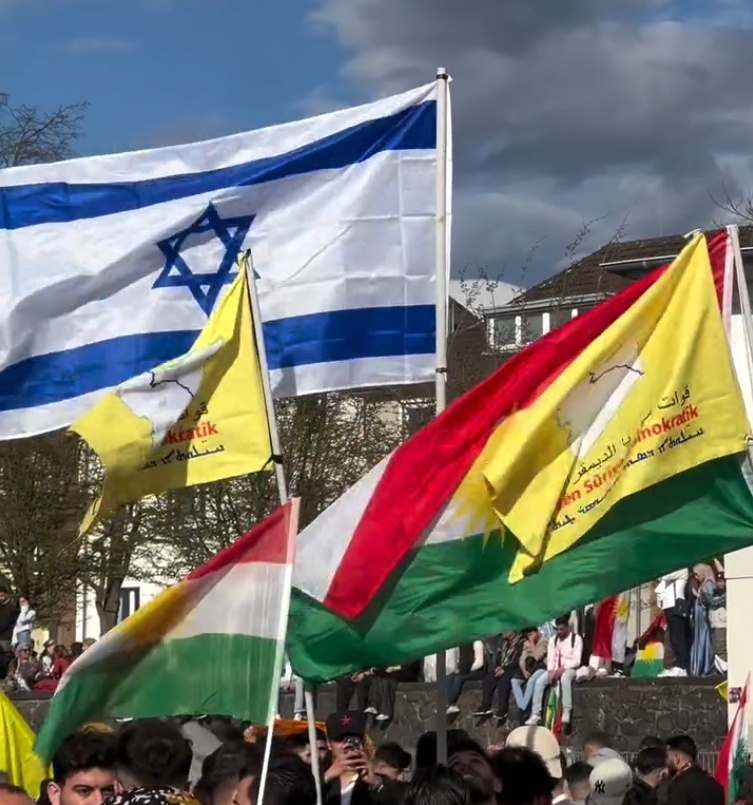
In Middle Eastern politics, the Kurdish question remains one of the most critical issues in terms of international relations and regional security. This is because the Kurdish issue directly or indirectly influences many of the region’s political crises. Although there are several Kurdish leaders who have taken initiative on a regional level, Abdullah Öcalan is the only figure who holds undisputed authority across all four parts of Kurdistan.
A recent statement made by Öcalan resonated across international media as “breaking news”:
“The PKK has fallen into a state of meaninglessness and excessive repetition. Therefore, it has fulfilled its historical role and its dissolution has become necessary.”
Founded under the leadership of Abdullah Öcalan in 1974 within the Faculty of Political Sciences at Ankara University as a student movement under the banner of the Ankara Democratic Higher Education Association (ADYÖD), the PKK became an official party in 1978. The organization initiated its armed struggle with the Eruh and Şemdinli attacks in 1984. Over the ensuing fifty years, the PKK became a defining actor not only in Turkey’s political and security landscape but also across the entire Middle East.
On May 12, 2025, the PKK announced its dissolution upon the recommendation of its founding leader. While most observers described this development as a mere “dissolution,” it is, in essence, an evolutionary process. In my view, what the PKK is experiencing today is not simply a dissolution but a jubilee.
Today, the term jubilee is commonly perceived as a ceremonial farewell marking the end of a career. For instance, in a 1992 interview with journalist Mehmet Ali Birand, Öcalan referred to the final match of his admired footballer Metin Oktay as a “jubilee.” This is how the concept is understood in popular culture; however, its etymological and historical meanings are far deeper.
In ancient Jewish tradition, the Jubilee Year refers to a period when slaves who had completed fifty years of service were set free, and lands were returned to their rightful owners. Thus, jubilee signifies not an ending but liberation and rebirth. Based on this etymology, the PKK’s decision to end its fifty-year armed struggle and move toward a new phase can be understood precisely in this sense. Therefore, analyzing this transformation apart from the influence of Israel—and consequently, the Jewish tradition—would be a mistake.
In short, the PKK’s 12th Congress is not a funeral rite marking death, but rather the labor pains echoing in the delivery room of a new birth. Viewed from this perspective, the PKK has conducted its jubilee, symbolically closing one chapter while entering a new evolutionary and challenging period.
During this painful yet transformative rebirth, all eyes will be on Rojava, as the most significant Kurdish achievement to date lies in the territories of Northern and Eastern Syria. While Turkey has taken steps toward reconciliation with its own Kurdish population, it simultaneously seeks to curtail Kurdish gains in Syria—reducing their rights to merely a cultural level. In doing so, Ankara has employed proxy forces, reviving remnants of Al-Qaeda and ISIS, and opening the door to a new war against the Kurds.
Yet, there exists a power in Syria capable of limiting Turkey’s operations and indirectly supporting the Kurds: Israel. Although the PKK and Israel once had a hostile relationship during the organization’s founding years, the two are now positioned as natural and inevitable allies. Some factions within the Kurdish movement may resist this reality, but denying it could once again cost the Kurds the historic opportunity they have awaited for a century.
Historically, the Kurdish and Jewish peoples share much in common—they have both endured massacres and mutual cultural influences. The fact that Osnat Barzani, the first female rabbi in history, was of Kurdish origin is a significant testament to this shared cultural heritage.
Since the 1980s, efforts have been made to import Iran- and Egypt-based Islamist ideologies into Kurdish regions. However, due to the secular nature of the Kurdish political movement, these attempts have largely failed. The Kurds remain the only Muslim people in the Middle East who have fully embraced secularism and rejected jihadist paradigms. Today, they stand at a decisive historical crossroads.
Carrying traces of both Zoroastrianism and Judaism, the Kurdish people have, within Syrian territory, become natural allies of Israel. Despite occasional anti-Israeli rhetoric within parts of the Kurdish political sphere, farsighted Kurdish leaders recognize the importance of this alliance. Ankara’s attempts to extend an “olive branch” to the Kurds are, in fact, efforts to block the emerging Rojava–Tel Aviv rapprochement.
President Erdoğan—known for his persistent hostility toward Israel—expressed this stance explicitly:
“Just like our Kurdish citizens within our borders, the Kurds in Syria are our brothers. We will never allow them to become appetizers at the table of Zionism.”
However, the same Erdoğan who supported assaults on Kurdish cities alongside ISIS, sanctioned massacres of Kurdish civilians, and banned the Kurdish language in several regions of Syria cannot expect the Kurds to believe in his proclaimed “brotherhood.” His words must be read in light of a singular aim: to prevent Kurdish–Israeli cooperation.
While Israel grants religious and cultural freedoms to Arabs and Muslims within its borders, Erdoğan—who denies such rights to the Kurds—has lost all credibility in their eyes. The Kurds, alongside their Jewish allies, are poised to play a decisive role in reshaping the Middle East.
Ultimately, it will be the Kurdish dagger that slew the devil—once immortalized in Hollywood films—and the sharp edges of the six-pointed Star of David that will restore balance to this inhuman and regressive region. Those Muslim Kurds who reject this reality must be reminded that by invoking Qur’anic verses and the call to prayer to justify violence, Saddam, Erdoğan, and Khomeini all stood on the same line of tyranny.