
Middle East specialist focusing on conflict, human rights, and media narratives.
Selective Grief at a Dutch University
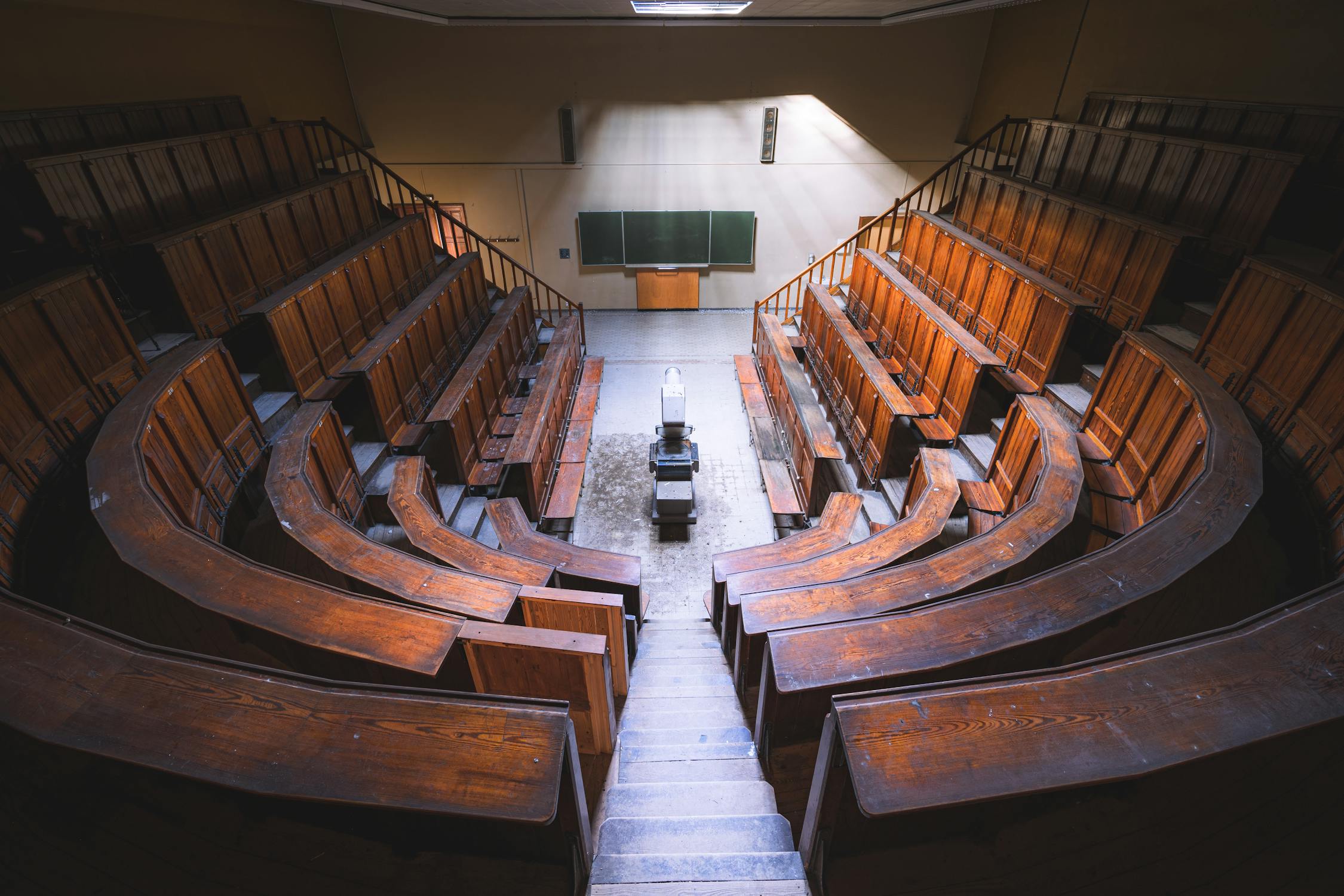
Empty lecture hall, full of silence. When universities choose sides, dialogue becomes theatre. (Photo by Sonny Vermeer / Pexels)
When only some grief is acknowledged, academic neutrality becomes moral theatre.
As a Middle East specialist based in the Netherlands, I’ve often analyzed how media and institutions frame violence, suffering and blame, and how language doesn’t just reflect a message but defines it. One thing I’ve learnt: neutrality is rarely as neutral as it claims to be. The latest example? A statement from the Vrije Universiteit Amsterdam (VU) that manages to speak volumes through what it omits.
On 10 October 2023, just days after Hamas brutally attacked southern Israel, murdering over 1,200 civilians, abducting hundreds and committing documented atrocities, the VU published a balanced statement. It expressed sympathy for all innocent civilians, regardless of nationality, acknowledged the emotional toll of the conflict, and offered support to affected students and staff. No political framing, no legal terminology, no blame. It did what a university should do: offer care without campaigning.
Fast forward to 26 May 2025. The tone has changed.
Before continuing, let me be clear: I condemn Netanyahu’s government and the excessive military violence in Gaza in the strongest possible terms, just as I unequivocally condemn Hamas and its campaign of terror against Israeli civilians. I believe that criticism of Israeli policy is not only legitimate but necessary – especially when it comes to the devastating impact on Palestinian civilians. But condemnation cannot come at the cost of erasing October 7, or the humanity of Israeli victims.
FROM BALANCE TO BIAS
The new statement opens with horror – but only from Gaza. Tens of thousands dead, hospitals destroyed, humanitarian aid obstructed. It uses the term “genocidal violence”, citing the NIOD Institute, which in May 2024 stated that Israel’s ongoing attacks on Gaza displayed characteristics of genocidal violence, but notably omits any reference to Hamas, to 7 October or to the Israeli victims of terror. There is no mention of the still-missing hostages. Not a single word about antisemitic violence that has surged across Europe since that attack.
Instead, Jewish pain is abstracted into a vague “fear of antisemitism”, paired with Islamophobia – as if both are equal in frequency, intensity and historical context. Israeli suffering is erased. Jewish students are acknowledged only in passing, their grief sidelined in favor of a narrative that casts Gazans as sole victims and Israelis as silent aggressors.
This isn’t neutrality. It’s a form of institutional gaslighting, one that cloaks itself in compassionate language while selectively recognizing only the pain that fits the dominant narrative.
THE ILLUSION OF DIALOGUE
The statement ends with a call for dialogue. But real dialogue requires honesty and space for uncomfortable truths. If a university positions one group as morally righteous and another as complicit – even if by omission – it suffocates real conversation before it begins.
How can Jewish students trust a space that refuses to name their trauma? How can a campus be called inclusive when it echoes the talking points of activists but not the testimonies of survivors?
The university claims to offer a “space for dialogue.” But dialogue cannot exist where pain is politically filtered, and mourning is ranked by perceived virtue.
A UNIVERSITY IS NOT AN NGO
A university should not be a mouthpiece for activist sentiment, no matter how well-intentioned. It should not publish carefully worded press releases that mimic political manifestos. And it should never allow moral clarity to dissolve into moral convenience.
If the only grief worth naming is grief that serves an ideological purpose, the university has ceased to be an academic institution. It has become a stage for selective outrage.
Who gets remembered, and who gets erased, says everything about where we are. And at the VU, it seems, Israelis no longer exist.
Related Topics
Related Posts