South Africa’s chief rabbi gets it wrong when he calls crime ‘genocide’
In an emotionally charged video released earlier this week, Chief Rabbi Warren Goldstein repeatedly likened the devastating and tragic crime situation in South Africa to a “genocide.” The responsibility for this he laid squarely at the door of the African National Congress (ANC), the senior partner in the current coalition government, and, in particular, that of South African President Cyril Ramaphosa.
That so emotive and politically loaded a term was used by Rabbi Goldstein is, to say the least, inappropriate. Genocide is not a word that should be used loosely or casually, as it has so disturbingly (wrongly) been employed regarding the conflict in Gaza. The same is true regarding South Africa, and indeed any situation around the world that, no matter how tragic they may be, cannot be equated to genocide.
No one disputes that South Africa has a shockingly high murder rate, including in rural areas, and among farmers, women, and youth who have experienced brutality and trauma that can never be denied. Neither can it be denied that the current government, like its predecessors going right back going back decades, have, to date, clearly failed to take effective steps to address the scourge. For this, they deserve to be criticized, and harshly. Yet there is a crucial difference between being charged with negligence, incompetence, or outright dereliction of duty on the one hand and of being complicit in genocide on the other. As Jews, we cannot diminish or manipulate the meaning of the word genocide. It demonstrates a lack of respect for what victims of real genocide have suffered, whether during the Holocaust or in other instances of targeted mass murder that have taken place both before and since, including on our own continent.
Usage of the term “genocide” with regard to the South African scenario is simply not accurate. No matter how horrific the country’s violent crime rate might be, characterizing it as such ultimately cheapens and belittles what genocide is really about. That is, not random, opportunistic killings by criminal individuals, but a planned, coordinated, systematic annihilation of an identifiable, and specifically identified sector of humanity.
As the UN Convention clearly states, genocide is based on intent. Specifically, that intent to destroy in “whole or in part a national, ethnical, racial, or religious group.” In addition to killing members of the group outright, its articles include causing serious bodily or mental harm, creating conditions calculated to bring about the group’s physical destruction, preventing births, and transferring children.
In the case of the Holocaust, the intention of the Nazi perpetrators was to hunt down and kill every single Jew they could, with the ultimate, and explicit aim of rendering the world completely Judenrein – Jew-free. No exceptions were allowed – just to have been born Jewish amounted to a death sentence. Earlier this year, we attended the 80th anniversary of the liberation of Auschwitz, where we saw firsthand the concentration camps and death camps where Jewish and other people were callously herded through the gates to their deaths in the gas chambers. This is what true genocide looks like.
It is disrespectful, even callous to the victims when such horrors are casually likened to situations that in reality bear no comparison to what they endured — and no leader should manipulate the tragedy of Jewish history to score cheap political points. The South African Jewish Board of Deputies and South African Holocaust Museums and Memorials globally have consistently and unstintingly worked to ensure that the memory of the Holocaust is not misappropriated as an adjective to describe other painful situations.
Most certainly, the terrible scourge of violent crime in our country is something we must acknowledge. Every life is precious and we condemn this terrible situation. But we must name it properly. It is crime, not a deliberate, organized mass killing campaign. The responsibility for dealing with this lies in the first instance with those charged with ensuring the safety, security, and well-being of the citizens who elected them in the first place. When they fail in this fundamental duty, it is indeed appropriate that they be called to account for it. However, levelling inaccurate and emotionally charged accusations of genocide is not the way to go about this. They are not useful and do not lead to solutions.
At this time, when there is so much hurt in the world, those in positions of leadership need to choose their words carefully. Innocent South Africans are suffering, from crime, poverty, gender-based violence and so much more. Israelis and Gazans are suffering in a devastating war. We need to be part of the solution by engaging rationally and respectfully on these issues, in ways that are productive and functional. We must take care not to engage in emotionally driven denunciations that obfuscate the real issues and divide rather than unite.
—
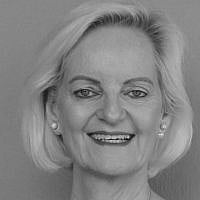
The above was co-authored by Professor Karen Milner, an academic at Wits University since 1993, where she earned her BA with honors, her MA, and her PhD. Currently, she holds th position of associate professor of Psychology. She was elected onto the SAJBD Gauteng Council in 2010, and is currently the national chairperson of the SA Jewish Board of Deputies. Karen is actively involved in combating antisemitism at all levels of South African society, especially on university campuses. In August 2018, she completed the ISGAP summer institute in critical antisemitism studies at Oxford University.