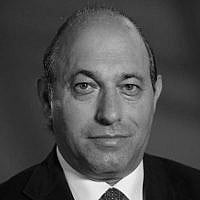
Starmer Is Gone. What Did He Leave British Jews?
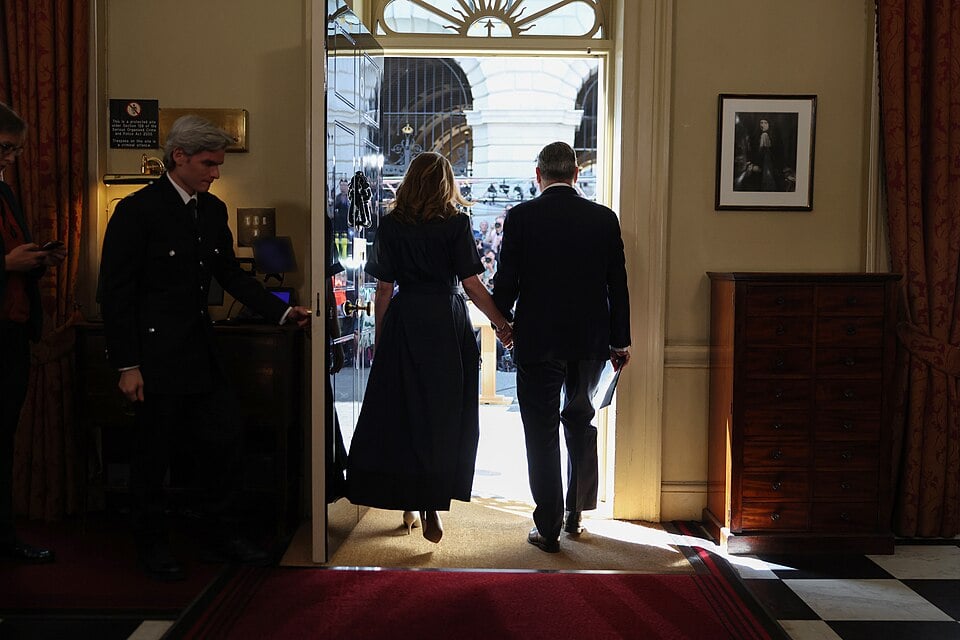
This morning Keir Starmer went to Buckingham Palace and gave up the job. A little later Andy Burnham arrived, kissed hands, and became the 59th prime minister of the United Kingdom, the seventh in a decade. He ran unopposed, five weeks after winning a by-election in Makerfield. For a country that has made political chaos into a national habit, today was oddly calm.
Which makes it a decent moment to ask the question a lot of us have been circling for two years without quite saying out loud. Was Starmer good for the Jews? And what happens now?
What he got right
Starmer built his leadership on one promise. In 2020 he said he would tear the poison of antisemitism out of the Labour Party by its roots, and he meant it. He inherited a party found in breach of equalities law, a party thousands of Jews had walked out of.
He did the work. He suspended Corbyn, rebuilt the disciplinary process, and changed the culture enough that Phil Rosenberg at the Board of Deputies called the shift inside Labour transformative, pointing also to unprecedented security funding and the move to proscribe the IRGC. That is not a small legacy.
It mattered to him personally, too. Victoria is Jewish, the children were raised in the faith, and the Friday nights were real for them, as opposed to a photo opportunity. I do not think we should be embarrassed to say so.
What he never solved
Here is the uncomfortable part. Labour got safer for Jews. Britain did not.
CST recorded 3,700 antisemitic incidents last year, a rise on 2024 and the second highest total ever logged. Then came Yom Kippur at Heaton Park, the first lethal antisemitic terror attack in this country since CST began keeping records in 1984. By May, Starmer himself was acknowledging that Jewish communities were asking whether Britain was still safe for them.
The pattern of his response was always the same. Real money, real security, real seriousness, and almost always after the fact. He was very good at guarding the buildings. He was far less willing to fight the argument that made guarding them necessary.
On Israel he moved steadily in one direction. Restored UNRWA funding, dropped the challenge to ICC jurisdiction, suspended some arms export lisences, froze the trade talks, sanctioned Ben Gvir and Smotrich, and then formally recognized the State of Palestine last September.
You can read that as a slow abandonment. You can also notice what he refused. No full embargo. No ban on settlement goods. He insisted recognition was not a reward for Hamas, demanded Hamas disarm and stay out of governing Gaza, and never once used the word genocide.
My honest reading is that he was a friend who got tired. Not hostile, not indifferent, but less and less willing to spend political capital on us as the price went up. He protected the community and drifted from the country.
Here comes Burnham
If you want reassurance, there is plenty. Burnham is a longstanding member of Labour Friends of Israel. He called BDS spiteful. He met 80 members of the Board of Deputies in 2019, when doing so was not fashionable in his party. He condemned the October 7th massacre without reservation and went straight to the chief constable about police presence around Jewish sites. He was mayor of the region with the second largest Jewish community in Britain, which means he knows their schools and their shuls by name rather than by briefing note. He stood at Heaton Park when it counted. People who have worked closely with him, including a former director of Labour Friends of Israel, say he listens and he cares.
If you want to worry, that is available too. In late October 2023, with hostages still underground, he joined other northern leaders calling for a ceasefire by all sides, breaking with Starmer, and Manchester’s Jewish leadership pushed back formally and seriously. He pushed for recognition of Palestine while hostages were still held. Last month he declined to say whether Gaza was a genocide, saying he could not judge something of that enormity from where he sat, which was not clarity so much as a shrug in both directions.
What I will be watching
Burnham’s instincts on antisemitism look sound. My worry is not the man, it is gravity. Reform is eating Labour from the right and the Greens from the left, and the left flank is exactly where pressure on Israel policy comes from. A prime minister who needs those voters back is a prime minister who can be moved.
So the test is not whether he shows up to Holocaust memorial events. He will. The test is whether he can tell the difference between a Jewish community that needs protecting and a Jewish community that is told it will be protected only if it stays quiet about Israel. Starmer never quite made that argument out loud. If Burnham can, he will be a better prime minister for Britain than his predecessor, whatever he ends up doing about arms licenses.
The cabinet lands within hours. The Foreign Office appointment will tell us more about the next two years than any speech from the steps of Number 10.