
Russian-American-Israeli Palestinian. Palestine is Israel.
Stop Calling UNRWA Clientele ‘Palestinians’
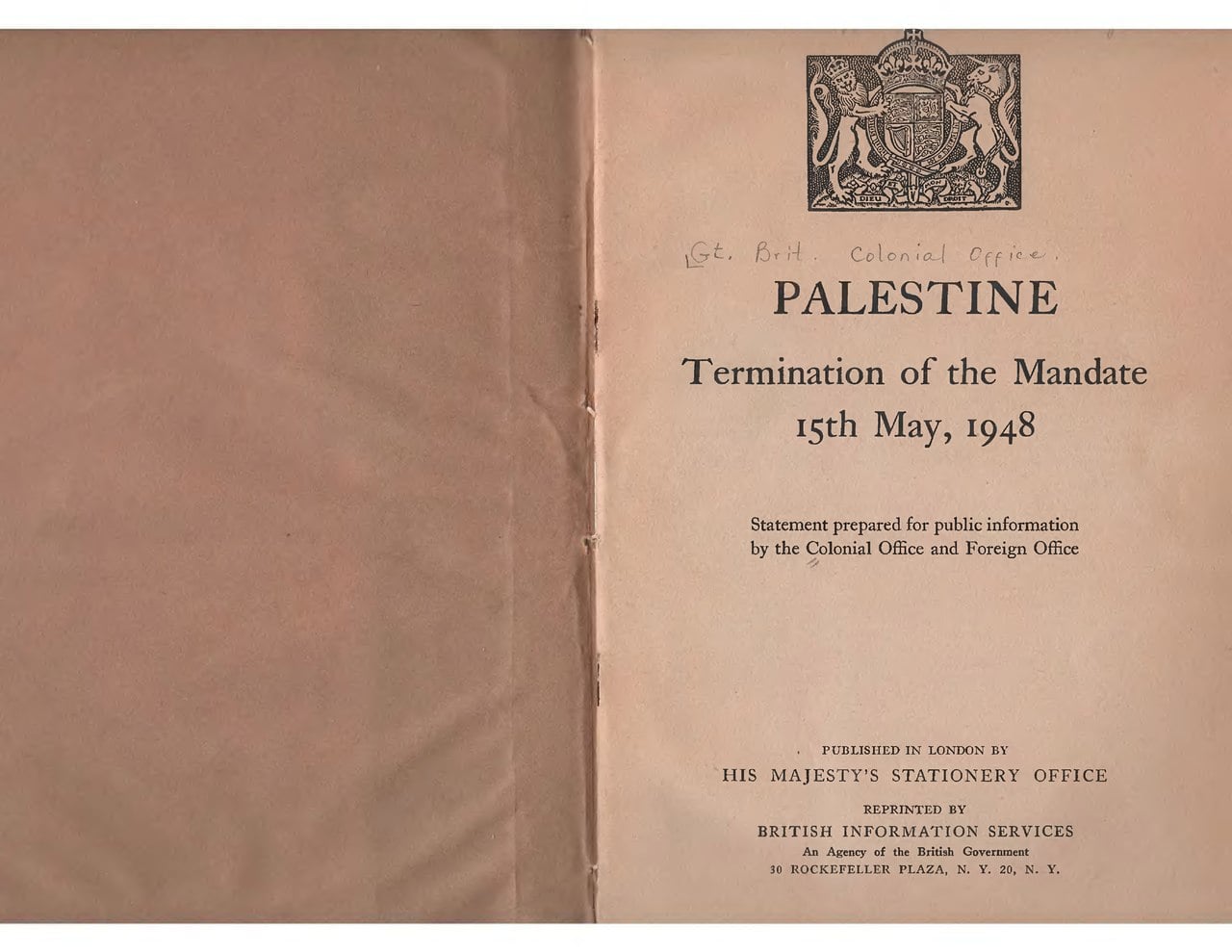
Israel is the legal and historical successor of Palestine—ancient, Roman, Ottoman, and Mandatory alike. It declared independence on May 14, 1948, just before the British Mandate formally expired at midnight. On May 15, Arab armies invaded Palestine. Public domain. Source: Wikimedia Commons.
Palestine Is Israel. Palestinians Are Israelis. And the Name Was Stolen.
Words matter. Especially stolen ones.
For most of modern history, Palestinian was not a revolutionary banner or an ethnic badge. It was a plain civic name for the people who lived in the land of Israel, a land long known—by Greeks, Romans, Ottomans, and the British—as Palestine.
And here is the part many would rather you not notice:
Those Palestinians were overwhelmingly Jews.
Palestine Was a Place, Not a Tribe
“Palestine” was never a people. It was a place-name—an external label for the land of Israel, used centuries before Rome and long before UN-sanctioned nationalism infected the region.
Rome didn’t invent it.
The British didn’t invent it.
The UN didn’t invent it.
They inherited a name already in circulation.
What they did not inherit was a Palestinian nation—because none existed.
The Philistine Myth: A Coincidence Mistaken for History
One of the most durable myths in this debate is the idea that Palestine is a linguistic echo of the Philistines—an ancient people supposedly revived in name, if not in flesh.
It sounds persuasive.
It sounds ancient.
And it is almost entirely unsupported.
There is no documented act—none—by which Greeks or Romans named the land after the Philistines as a people. What exists instead is a phonetic coincidence, inflated into a political origin story.
History does not work that way.
How Greek Naming Actually Worked
Greek writers did not name foreign lands by chasing similar sounds. They translated meaning.
This is not speculation; it is standard Greek practice.
Hebrew Sheol (“realm of the dead”) became Hades—not because the words sounded alike, but because they described the same realm.
Hebrew Abaddon (“destruction”) became Apóleia—again, meaning preserved, sound discarded.
Even personal names followed this logic. Hebrew Hava (Eve) became Greek Zoe, “life,” preserving meaning rather than sound.
Place names followed the same logic.
Greek was not interested in copying syllables. It was interested in function and sense.
Palestina as Translation, Not Resurrection
Within that framework, Palaistinē makes sense—not as a resurrection of Philistine ethnicity, but as a Greek rendering of Israel itself.
Israel means “one who wrestles.”
The land of Israel, in Greek conceptual translation, becomes the land of struggle, of contest—Palaistinē.
This explains why Greek writers used the term centuries before Roman rule and without any interest in Philistine identity, which by then was long extinct.
Rome did not invent the name.
Rome adopted a Greek term already in use.
And the Greeks were not reviving Philistines any more than they were reviving Titans.
Myth as Political Crutch
The Philistine etymology survives not because it is documented, but because it is useful.
It offers:
- an illusion of antiquity
- a non-Jewish anchor
- a way to detach Palestine from Israel linguistically
But usefulness is not evidence.
There is no chain of naming.
No recorded intent.
No historical continuity.
Just a resemblance of sound, elevated into destiny.
Names Don’t Create Peoples
Even if the Philistine theory were true—which it isn’t—it would still prove nothing about UN-sanctioned identity.
Ancient names do not generate modern nations.
Extinct peoples do not confer inheritance rights.
And phonetics do not override history.
Palestine was not a Philistine revival project.
It was a geographic name for the land of Israel—inherited, translated, and reused—until it was politically weaponized.
Back to the Point
The name Palestine did not originate as a claim against Israel.
It did not encode an Arab nation.
It did not preserve a Philistine people.
Palestine named the land of Israel—and its meaning—the same land the State of Israel later inherited.
Everything else is retroactive storytelling.
Who Actually Called Themselves Palestinians?
Let’s look at behavior, not slogans.
Before 1948, Jews in the land:
- Read the Palestine Post
- Played for Palestinian sports teams
- Attended Palestinian orchestras
- Held Palestinian passports
- Used currency stamped “Palestina (Eretz Yisrael—Land of Israel)” in Hebrew script
They didn’t resist the name. They embraced it.
Arabs, meanwhile, largely did the opposite.
They called themselves:
- Arabs
- Southern Syrians
- Members of Bilad al-Sham
- Ottomans, clansmen, townspeople
A distinct Palestinian Arab nation was not loudly proclaimed. It was usually explicitly denied.
Palestine, they said, was southern Syria.
That is not Zionist propaganda. That is what they said.
The Falastin Excuse
At this point, critics produce their favorite prop: the Arabic newspaper Falastin, founded in 1911.
They wave it triumphantly, as if a masthead settles history.
It doesn’t.
A newspaper named after a region proves only one thing: that people knew the region’s name.
It does not prove:
- A national movement
- A sovereign claim
- A distinct people
- Or an ancient identity
Falastin shows Arabs writing about Palestine.
Jewish institutions show people identifying as Palestinians.
Those are not the same thing.
If Falastin proves Palestinian nationhood, then so do the Palestine Post, the Jewish Palestine Orchestra, and Palestinian passports issued to Jews.
You don’t get to keep the name and discard the people who actually used it.
1948: When Palestine Became Israel
Then came 1948—and with it, a choice.
Some Arabs stayed.
They accepted Israeli citizenship.
They built lives inside the new state.
Along with Jews and other loyal citizens, they became the Palestinians of the modern era.
Others left.
They left at the urging of Arab leaders who promised a brief evacuation followed by the annihilation of the Jewish population—just three years after the Holocaust.
That annihilation never came.
The return never happened.
Instead, something new was invented.
UNRWA: A Factory for Identity
No refugee population in history has been treated like this one.
UNRWA does not resettle refugees.
It does not dissolve refugee status.
It perpetuates it—generation after generation.
Out of this system emerged a new identity: not civic, not territorial, not sovereign—but administrative.
These people are not Palestinians in the historical, civic sense.
They are UNRWA clientele.
A budget line is not a nation.
Israel Is Palestine’s Heir
Palestine did not vanish in 1948.
It changed hands.
Israel is the legal and historical successor of Palestine—ancient, Roman, Ottoman, and Mandatory alike.
That makes a simple statement unavoidable:
The Palestinians today are the citizens of Israel—Jews, Arabs, and others devoted to the land.
Those who define themselves in opposition to Israel define themselves outside Palestine, because Palestine is Israel.
DNA, Canaanites, and Other Escapes
When history fails, biology is dragged in.
Canaanite DNA. Ancient bloodlines. Genetic mysticism.
This is nonsense.
DNA does not grant sovereignty.
It does not create political identity.
It does not award naming rights.
If genetics ruled nations, half the world would need new flags by morning.
The Final Self-Contradiction
One last question exposes the fraud.
Many of today’s UNRWA clientele have abandoned any Arab identity. They now claim to be “Canaanites,” “Israelites,” or even Jews who became Christians and later Muslims.
If this clientele is not Arab, why do they still cling to UN Resolution 181?
That resolution proposed:
- a Jewish state
- and an Arab state
Not a Palestinian one.
No Canaanite state. No ancestral revival. Just Arabs.
If there were no Arabs, the resolution collapses.
If there were Arabs, the claim collapses.
Either way, the story eats itself.
The Name, Reclaimed
Palestinian was once a shared civic name.
Jews used it proudly.
Arabs largely rejected it—until it became useful.
Those who stayed became Palestinians.
Those who left became UNRWA clientele.
The rest is mythology, retrofitted onto the past and stamped with a UN seal.
History, however, is not impressed by paperwork.
See Also
Related Topics
Related Posts