
Terror on Land and in the Air: The IRGC Under Scrutiny
Barely a week had passed since the incident at Britain’s Fairford airbase when another mysterious episode emerged: a confrontation between pilots in the cockpit of a flydubai aircraft bound for Israel, brought to an end only after passengers intervened. The incident remains the subject of security and diplomatic investigations.
What initially appeared to be an internal dispute inside the cockpit could, according to analysts, have led to a far more dangerous scenario: a suicide operation, or the diversion of the aircraft toward a hostile country, followed by the taking of Israeli passengers hostage for political and military leverage.
According to the information currently available, the confrontation between the pilots occurred in mid-flight, and the passengers’ swift intervention prevented one of the parties from gaining complete control of the aircraft. Authorities have yet to release full details of the incident, and investigations remain ongoing. Security analysts, however, believe the circumstances may extend beyond a personal dispute or a simple operational error and could point to a more complex plan.
A Mystery With Two Unknowns
One of the key details that immediately drew the attention of observers was the identity of one of the pilots and, according to one account, his shout of “Allahu Akbar” during the incident. The pilot was reportedly an Omani national — from a country that does not have formal diplomatic relations with Israel.

His presence on a flight route carrying particular security sensitivities has been described by critics as a strategic failure. The question being raised is how such clearance was granted, and whether it was merely an administrative oversight or part of something broader.
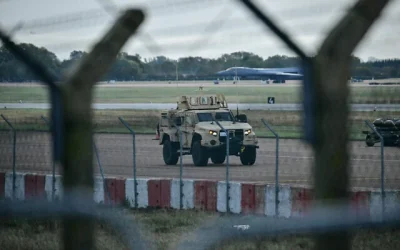
The timing of the incident has added another layer of complexity. It occurred only days after the discovery of a terrorist plot near a US military base in Britain. London authorities have officially said that there was an Iranian connection to that operation. According to some analysts, the proximity of the two incidents in time may raise questions over whether they were coordinated or inspired by a common operational pattern.
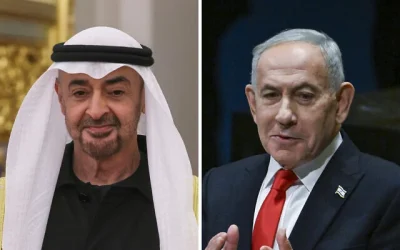
Israeli Prime Minister Benjamin Netanyahu’s recent visit to the United Arab Emirates has also remained at the centre of speculation. The visit carried a significant political cost for Tehran.
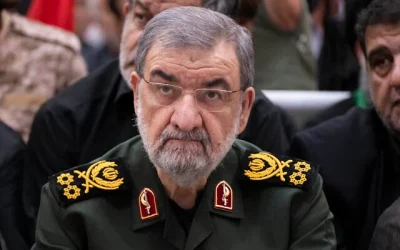
Less than 72 hours before the flydubai incident, Mohsen Rezaei, one of the Iranian establishment’s senior figures, warned in Tehran that hosting someone he described as the “Butcher of Gaza” would “not end well.” Some observers viewed the unusually explicit warning as creating a climate in which retaliatory action could follow.
During his visit to the UAE, Netanyahu also warned that Iran was developing plans for pre-emptive attacks against Israel and Arab states. He reportedly presented documentation concerning unusual activity at the Kolang-Gazal facilities. These warnings came at a time when regional tensions had reached exceptionally high levels.
During the same period, US President Donald Trump, after Tehran continued to insist on seven conditions that had become known as the “give everything and get nothing” demands, said that the United States might “blow up Iran.” The Islamic Republic, in turn, repeated its own threats.
At the same time, as US forces were withdrawing from Iraq, the Islamic Revolutionary Guard Corps described the move as a prelude to a complete American withdrawal from West Asia. Taken together, this sequence of developments paints a picture of an intensely volatile environment in which unconventional actions could become increasingly conceivable.
The IRGC: Prime Suspect?
For nearly five decades, Tehran’s clerical establishment, the Islamic Revolutionary Guard Corps and Iran-backed proxies have accumulated a long record of attacks, plots and operations targeting Israeli and Jewish interests beyond Iran’s borders. From the 1994 bombing of the AMIA Jewish community centre in Buenos Aires — for which an Argentine court has held Iran and Hezbollah responsible — to the 2012 bombing of a bus carrying Israeli tourists in Burgas, Bulgaria, attributed to Hezbollah and described by US officials as having been carried out with Iranian support, the pattern extends across countries and continents. Against this historical background, any new incident involving Israeli or Jewish targets inevitably invites scrutiny over whether it is an isolated act or another manifestation of a decades-old strategy of proxy warfare and covert operations.
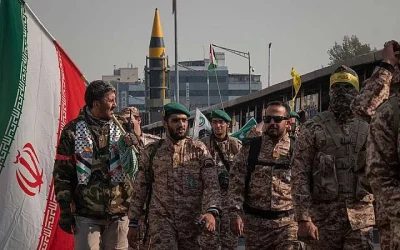
Looking further back, the pattern of terrorist threats attributed to the IRGC and senior officials of the Islamic Republic appears no longer to be confined to rhetoric and slogans.
The alleged attempt to assassinate Trump, combined with public threats on Iranian state television to kill his son and daughter, has led some analysts to argue that Tehran has effectively entered an operational phase of transnational terrorism.
A regime that sees itself approaching the edge of the abyss and believes it has little left to lose may be prepared to design increasingly high-risk scenarios in an effort to extract concessions from the international community.
Within this context, had an operation to crash the aircraft or abduct Israeli citizens by diverting the plane succeeded, the political and military balance in the region could have been profoundly affected. Such an operation could have served both as a large-scale hostage-taking incident and as a means of triggering a wider diplomatic crisis.
Analysts believe that Tehran, bruised by recent setbacks and facing intense pressure, may be looking precisely for such scenarios in an attempt to alter the political equation in its favour.
The passengers’ intervention, however, prevented any potential plan from being carried through. Their actions not only may have saved dozens of lives but also created an opportunity for the security and political dimensions of the incident to be investigated more closely.
Official investigations are still under way, and it remains unclear whether concrete evidence will emerge establishing direct involvement by Iranian institutions. Israeli Prime Minister Benjamin Netanyahu has said that the matter is under investigation.
What is clear is that the chain of events occurring within the same period — from the warning issued by Mohsen Rezaei, the newly appointed secretary of Iran’s Supreme National Security Council and a former IRGC commander, to the reported confirmation of an Iranian connection to the Fairford-related operation in Britain.
Netanyahu’s warnings in the UAE, the exchange of threats between Trump and Tehran, and the Islamic Republic’s record of explicit threats — has created a troubling picture and raised questions about possible IRGC involvement.
US President Donald Trump, while investigations were still continuing, also said: “From what I have heard, Iran was involved in an attempt to attack the aircraft.”
The incident has once again demonstrated that security threats in the Middle East are not confined to borders on the ground. The skies, too, can become the arena for hidden and highly complex confrontations.
Until the investigation reaches a definitive conclusion, the central question remains unanswered: Was the confrontation inside the cockpit of the flydubai aircraft merely an isolated incident — or was it part of a larger plan that was thwarted at the last possible moment?