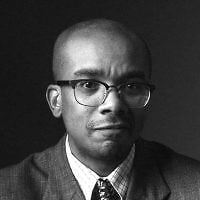
The Agenda Behind FDD Employee Saeed Ghasseminejad ‘s Iran Regime Change Booklet
The Ghasseminejad–Panahi Booklet: A Disastrous Blow to Iran’s Constitutional Future
Saeed Ghasseminejad has overseen the crafting of a 180-page document he calls an “Emergency Booklet,” now marketed with Aidin Panahi in glossy op-eds across Western media. Yet behind the attractive packaging lies a program that threatens Iran’s future and undermines the very legitimacy of Constitutional Monarch Reza Pahlavi II.
First, Ghasseminejad, an employee of the Foundation for the Defense of Democracies, and a consultant to other entities such as the National Union for Democracy in Iran and also the E-Collaborative for Civic Education, misleads readers by claiming that only terrorist groups like the Mojahedin-e-Khalgh (MEK) oppose the booklet. That is false. I, and many others, who have volunteered countless hours in service of Reza Pahlavi’s Maximum Pressure campaign, find this document disastrous and irreparable.
At the outset of the transitional period, the booklet extinguishes Iran’s last legitimate social contract — the Constitution of 1906, amended and in force until the rigged referendum of 1979. Instead of returning to this legal foundation, it proposes a hybrid order built partly on the Islamic Republic’s laws, even if temporarily. This means that Iran would begin its transition not by severing ties with the terrorist regime, but by prolonging its legal and institutional DNA.
No credible constitutional scholars were consulted. Instead, the booklet creates a secret “transitional oligarchy,” appointed by “Mr. Pahlavi” in his capacity as a private citizen, which can then depose him and perpetuate its own power. Worse still, it provides no contingency plan for the temporary or permanent indisposition of the Crown Prince. This design is reckless and destabilizing.
Meanwhile, Mr. Pahlavi’s office has been rendered inaccessible. His aides, notably Mr. Amir Etemadi, block critics en masse, leaving Iranians with no channel for accountability.
The booklet even buries, in a footnote, a refusal to dismantle the IRGC immediately upon the regime’s collapse. Telling Iranians that their greatest oppressor will remain intact is not only disheartening, it is unconscionable.
The economic agenda of the Iran Prosperity Project mirrors the same flaws as the booklet. It focuses excessively on repatriating funds and attracting investment into Iran without regime change, while ignoring legal and financial reparations for victims: women, LGBT communities, religious minorities, labor activists, and others who have suffered most. This omission is as revealing as it is shameful.
Contrary to Ghasseminejad’s narrative, the MEK is not fighting the booklet — it is quietly celebrating. The design is consistent with their slogan, “No Shah, No Sheikh,” by creating a vast power vacuum during the transition.
This booklet has been a political disaster. It has alienated the very volunteers and constituents who once stood beside you. Iranians deserve a transition plan rooted in their last legitimate Constitution, enriched by universal rights, and designed with broad participation — not secrecy and imported think-tank formulas.
Mr. Ghasseminejad, Mr. Panahi: it is time to scrap this booklet. A new plan must be drawn with the participation of the stakeholders you have excluded — including those you so quickly dismiss. I am ready to help build that effort.