
This Way Up: Spiritual Means to Psychological Ends
The Ancestors Within Us: A Chinese and Jewish Legacy
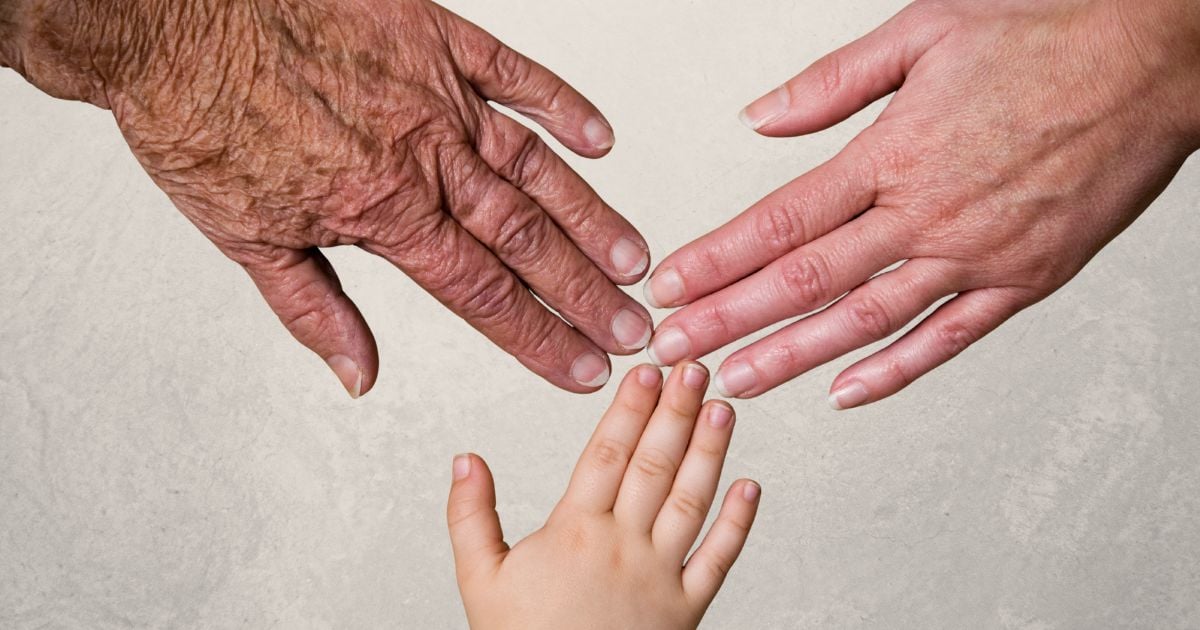
Courtesy of Canva.com
A remarkable scientific claim has recently been travelling around social media. Spend ten minutes a day thinking about one grandparent, it says, and after thirty days, genes inherited from that grandparent will become more active.
It is a captivating idea.
It also appears to be untrue. No identifiable scientific study supports it.
Yet perhaps the claim has circulated so widely because it gives biological form to something human beings have long sensed: our ancestors are not entirely gone. They live within our appearance and temperament, but also within our habits, loyalties, fears, aspirations and ways of understanding the world.
Two of the world’s most ancient continuous civilizations, Chinese and Jewish civilization, have built this insight into the structure of life. They express it differently, but they agree on something modern individualism easily forgets: no person begins with himself.
In traditional Chinese culture, reverence for one’s ancestors gives the departed an ongoing place within family life. Rituals honor their virtue, express gratitude for what has been received and cultivate filial responsibility among the living. The individual understands himself as one link in a chain, indebted to those who came before and responsible for those who will come after.
Judaism does not pray to ancestors. It prays exclusively to G-d. Yet Jewish prayer continually places us in relationship with those who preceded us.
In the Amidah we address:
“Our G-d and G-d of our fathers, G-d of Abraham, G-d of Isaac and G-d of Jacob.”
Before Jews ask for wisdom, healing, forgiveness, livelihood, justice or peace, we first locate ourselves within a lineage. We do not approach G-d as isolated individuals. We come as descendants of Abraham, Isaac and Jacob, and of Sarah, Rebecca, Rachel and Leah.
Then there is zechut avot, the merit of our ancestors: the idea that the righteousness and spiritual accomplishments of earlier generations may continue to benefit their descendants. The larger principle is unmistakable. The deeds of one generation do not necessarily end with that generation.
Chinese ancestral practices and Jewish prayer emerge from different religious frameworks. We should not pretend they are the same. Yet beneath those differences lies a strikingly similar understanding of the human person.
We inherit more than physical characteristics. We inherit stories, values, responsibilities and ways of responding to life. We receive unfinished work. We are born into a story already underway.
Every Jew who recites the Amidah begins by thinking about particular ancestors. There may be no evidence that invoking Abraham switches on Abrahamic genes. But perhaps it does something else. It activates Abrahamic consciousness.
Rabbi YY Jacobson suggests that the Jewish patriarchs and matriarchs are not merely historical ancestors. They are archetypes living within every Jew. They represent spiritual and psychological capacities that their descendants continue to carry.
Jordan Peterson expresses a similar idea in psychological language:
“There are great ancestral figures nested within you. Inside the darkest place is the heroic ancestor whose identity you could incorporate.
The ancestor, in this understanding, is more than a person occupying one branch of the family tree. The ancestor represents a pattern of courage, faithfulness or moral possibility that remains available to us.
Perhaps this is what it means to remember an ancestor in the deepest sense. We do not merely retrieve information about someone who once lived. We encounter a human possibility that remains available within us.
Something similar occurs in Chinese ancestor reverence. Honoring an ancestor is not simply an exercise in nostalgia. It awakens filial responsibility. It asks the living to receive, preserve and become worthy of what has been handed down.
In both traditions, memory becomes a form of moral activation.
Our ancestors remain alive not only when we remember their names, but when one of their finest qualities becomes active in us.
This insight is particularly timely during Elul, as Jews reflect on the year that has passed and consider the year ahead. We might ask: What have we inherited? What should we preserve? What must we correct? What unfinished work has been placed in our care?
Chinese and Jewish traditions offer different answers, but they begin from common ground. Both understand that we are links in a chain. Both honor learning, family, memory and continuity. Both have survived across millennia by transmitting a treasured inheritance from one generation to the next.
These commonalities deserve more than passing notice. They offer the basis for a meaningful alliance.
At a time when antisemitism is rising and communities are too often isolated from one another, Jews must become more intentional about cultivating friendships with those who understand the importance of history, continuity and collective responsibility. Chinese and Jewish communities have much to learn from one another and good reason to stand beside one another.
That bridge can be built through shared learning, cultural programs, public conversations and personal relationships. Every discovered commonality gives us another place to begin.
Science has not shown that thinking about a grandparent activates that grandparent’s genes. But thinking about our ancestors can activate gratitude, courage, responsibility and purpose. It can also remind us that we are responsible not only for what we inherit, but for what we build and pass forward.
As we prepare for a new year, perhaps one of our resolutions should be to bring these two ancient communities closer together.
Our ancestors taught us to preserve the chain.
Our task is to strengthen it by building new links.
Related Topics
Related Posts