
The blockade will work rapidly, and Iran will be forced to choose
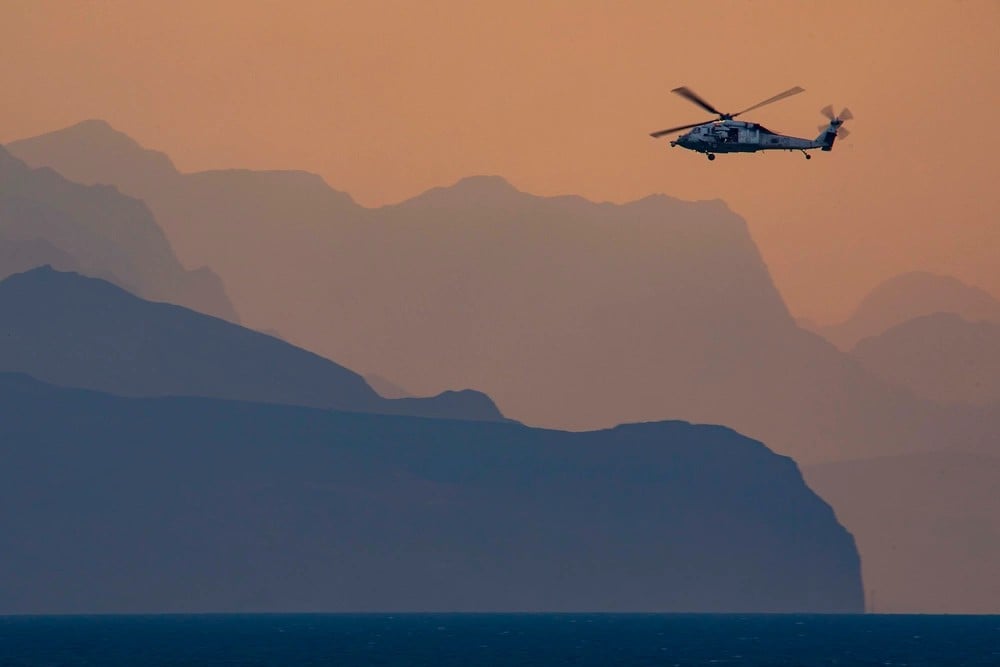
Not only is blockading Iran singularly appropriate, the blockade will have an effect fairly rapidly. First of all, this will be because Iran’s economy is already in a crisis state, following damage caused by the bombing campaign. Before President Trump declared the blockade, an Iranian official has confided to Reuters that Iran “will face a disaster” unless America lifts sanctions, partly because damage to large industrial enterprises affects a variety of smaller companies which trade with them.
Mark Dubowitz of the Foundation for Defense of Democracies (FDD) offered a very approximate estimate of between $150 to $300 billion as the direct damage that Iran has suffered so far since the end of February. Iran’s own government estimates war damage as $270 billion. For a country with a 2024 Gross Domestic Product of $475.25 billion in current dollars or $534.25 billion in 2015 constant dollars, even the lower estimate of direct damage is catastrophic. This is especially so since Iran’s economy must support a vast population of 88 million people.
The blockade of Iran’s ports will worsen the economic damage. Miad Maleki of FDD, and formerly of the Office of Foreign Assets Control (OFAC) of the U.S. Treasury, estimates that the cost will be $276 million a day in exports and up to $159 million a day in imports. Iran has no viable alternative export routes, since its ports on the landlocked Caspian sea handle only 11 million tonnes of cargo per year, about one twentieth of the volume which is ordinarily handled by Iran’s Gulf ports.
The mechanism that will work most rapidly, in all probability, is the filling up of oil storage capacity by Iran’s continuing oil production of about 1.5 million barrels per day. Maleki estimates that the available capacity will be full within 13 says, after which the shutting in of oil wells will have to begin, a process which has particularly unpleasant consequences for old oil fields.
The blockade is already working. Not only has U.S. Central Command (CENTCOM) turned back six ships sailing from an Iranian port on the Gulf of Oman, but the oil tanker Elpis is the first, or perhaps one of the first, ships turned back after sailing from an Iranian port on the Persian Gulf.
Iran does have 157.7 million barrels of so-called ‘oil-on-water,’ that is oil in tankers at sea, according to Windward. Almost all of it is intended for China, and the U.S. Treasury waiver on the purchases of this oil will be allowed to expire six days from now. China has been the dominant buyer of sanctioned Iranian oil, but even China will begin to look for alternatives when the confrontation between America and Iran is acute, and new cargoes of Iranian oil may never appear.
Iran is already sending messages of weakness. Anonymous sources have suggested to Ben Bartenstein of Bloomberg that Iran might temporarily halt oil shipments as a ‘pragmatic step.’ The regime does not want to admit it publicly, of course, but Iran is afraid to return to war.
The regime will have to choose, and choose soon. Either it will make fundamental concessions, including giving up its enriched uranium, or it will run out of money and begin to collapse. It could choose war instead, but that would only accelerate and intensify the collapse. As long as President Trump holds his nerve, the regime is cornered.
—
If you found what you read above interesting and substantive, do read more and subscribe to my Substack, The New World Crisis.