Journalist
The Courage to Arm a Democracy
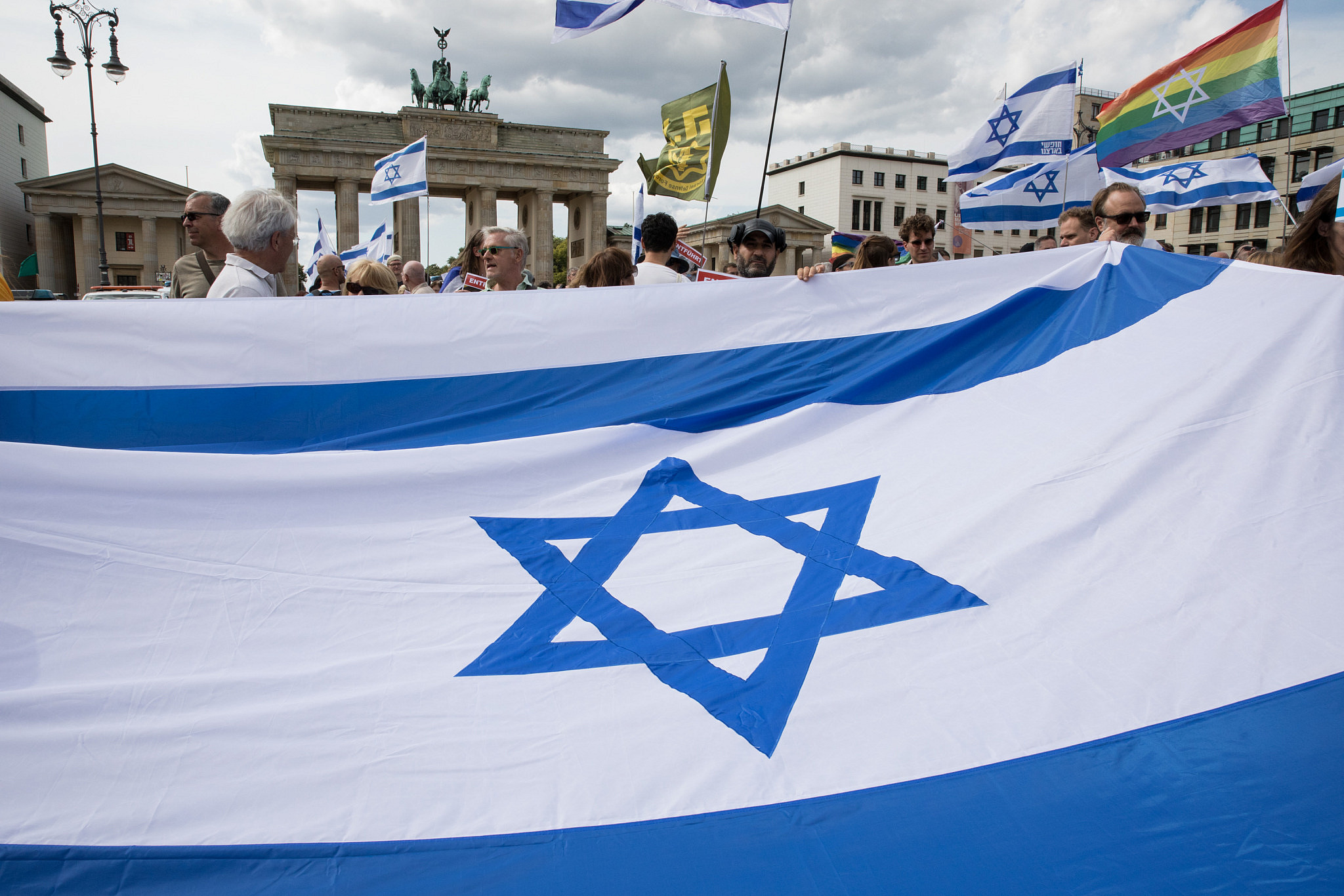
Photo: Michael Kuenne
A “partial embargo” with maximal symbolism and minimal sense: Germany’s pause weakens a democracy, strengthens jihadists, and betrays the vow it claimed as reason of state.
On August 8, 2025, Berlin announced a partial suspension of arms exports “that could be used in Gaza.” Call it what you want; in practice, it’s withholding. To Hamas and Hezbollah, it will be portrayed as wavering. And to Jewish communities across Europe, it sounds like something colder: forget.
The vow you measure by outcomes
What does it mean to say Never Again and then tell the world’s only Jewish state to fight genocidal terror with one hand tied? What does it mean to praise Israel’s “right to defend itself” and then cut the sinews of that defense when it is most needed? What does it mean, in Germany of all places, to make Jewish survival a line in a speech but not a line you will hold?
Germany’s doctrine of Staatsräson, that Israel’s security is Germany’s reason of state, was never meant to be a lyric for memorial days. It was a pledge forged after unspeakable crimes: a commitment that when Jews are hunted, Germany stands not only with words but with means. If that pledge buckles now, when Israel is fighting enemies who preach extermination and practice it when given the chance, what was it ever for?
This is not complicated. Precision weapons shorten wars and save lives. Embargoes lengthen wars and multiply graves. If you genuinely care about civilians, you do not deprive a democracy of the tools that keep its fire focused on combatants, not bystanders. You help it win fast, precisely, decisively, and then you help build the day after.
Ethics means owning consequences
Merz’s “pause” confuses virtue signaling with moral seriousness. International humanitarian law does not forbid urban warfare; it forbids indiscriminate warfare. It demands distinction, proportionality, and feasible precautions. Those standards are hardest to meet when a terror army turns hospitals into fortresses, schools into arsenals, and apartment blocks into ambush sites. That is Hamas’s strategy by design. The ethical response to that strategy is not to clip Israel’s precision; it is to increase the precision available, tighten coordination, and accelerate the defeat of the group that hides behind civilians and then markets the tragedy it engineers.
Ask a simple question: If the aim is fewer civilian deaths, why cut the guidance kits for precision munitions, the intelligence, surveillance, and reconnaissance (ISR) platforms, and the air-defense interceptors that demonstrably reduce civilian deaths? If the aim is to free hostages, why hand Hamas the propaganda line that Europe is blinking?
Germany’s choice lands with singular weight. No country has spoken more insistently about responsibility toward the Jewish people than Germany. No leader should understand better that Never Again was not a poem; it was a policy. Yet Berlin now proposes a “partial” embargo with maximal symbolism and minimal sense, punishing the party that strives to comply with the laws of war, while the party that shreds those laws gets a morale boost and a talking point.
And for what? To feel clean? Ethics is not the art of feeling clean from afar. Ethics is the courage to own consequences. Cutting off precision doesn’t end the war; it changes its character. It pushes Israel toward cruder options, lengthens the fight, entrenches suffering, and teaches every jihadist a lethal lesson: hide among civilians, and the West will do your diplomatic work.
There are only a few paths from here: courage that restores precision and partnership, evasion that extends the war, or betrayal that breaks vows and emboldens Iran’s proxies. A serious country chooses courage.
If you truly believe in protecting civilians, send more precision, not fewer options.
If you truly believe in the hostages, project unity, not ambiguity. If you truly believe in international law, help the side trying to comply defeat the side that systematically abuses it.
And a plain question to Berlin: Will Germany’s reason of state be measured by headlines or by outcomes?
Germany, Britain, Canada, and every capital flirting with the same mistake should choose clarity over comfort. Restore the flow of precision. Deepen operational coordination. Sanction Hamas’s financiers and Iran’s procurement networks. Tie conditions to the right actors, the terrorists who started this war, not the democracy trying to finish it.
There is a path that saves lives and shortens this nightmare. It does not begin with an embargo. It begins with courage.
Related Topics
Related Posts