
Trying to change the world, one revolution at a time
The Folly of Imminence
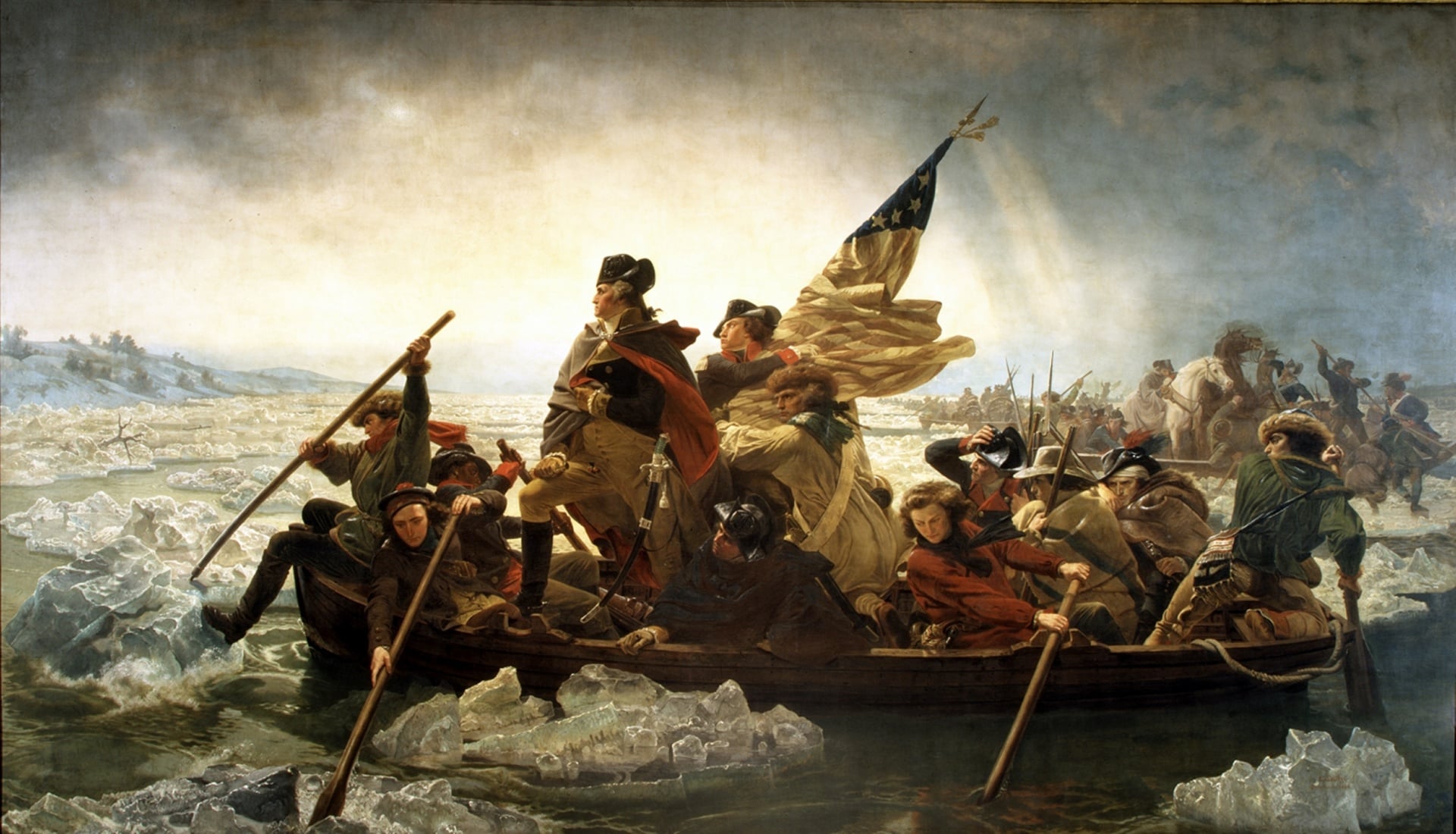
George Washington Crossing the Delaware,” Emanuel Leutze (1851). Public domain
Growing up in New England, with a father who loved American history, the Revolutionary War was never just something we learned in school, it was something we lived and revisited constantly. Our family outings often felt like walking through history itself. We roamed the Freedom Trail in Boston, visited Faneuil Hall downtown, and stood in awe before “Old Ironsides” at the harbor, or as we proudly pronounced, “the HAH-bah.”
As children, we made many trips to Lexington and Concord, standing on the famous Green where the opening shots of the Revolution were fired. It was there that Ralph Waldo Emerson would later immortalize the moment in his Concord Hymn as “the shot heard ’round the world,” a phrase that captured the enduring impact of that day, April 19, 1775.
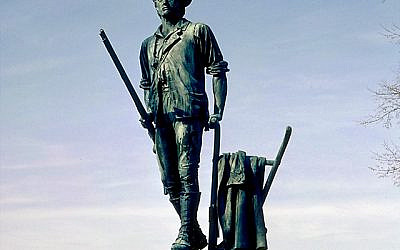
In sixth grade, I was tasked (unsuccessfully) with memorizing Henry Wadsworth Longfellow’s Paul Revere’s Ride, reciting the dramatic warning that “the red-coats are coming,” a line that, whether accurate or not, etched itself into my imagination.
And towering above it all, literally and symbolically, was Boston’s own monument to the Revolution: the obelisk at Bunker Hill. It was there that I first encountered the legendary command, often attributed to William Prescott: “Don’t fire until you see the whites of their eyes,” a phrase that came to embody discipline, restraint, and resolve in the face of overwhelming odds.
In an era defined by muskets and cannons, Prescott understood that every shot mattered. Such restraint was not only strategic, it was essential. It reflected the resolve of a force that, though less equipped, relied on patience and determination in the face of overwhelming British strength.
But if we were to apply Prescott’s logic today, waiting until danger is unmistakably immediate, the Minute Men might well have been crushed. Bostonians might be drinking tea instead of Dunkin’ and enjoying crumpets instead of “chowdah.”
Over the years, I have come to accept that there is far more happening behind the scenes than I will ever fully know or understand. Perhaps that comes from recognizing my own limitations, but it has also taught me not to get caught up in the constant demand for “need-to-know” information. Of course, I value transparency. Like anyone, I want to know what is going on. But the reality is that classified intelligence exists for a reason. Having children who have served – and continue to serve – in classified units within the IDF and the Israeli Air Force, this is not theoretical for me; it is something our family lives with and has learned to accept, or not.
That perspective, and our reality in Israel, shapes how I view the current debate over whether Iran posed an “imminent threat.” There are voices in Congress who argue that the intelligence did not demonstrate immediate danger. I find that argument incomplete, shortsighted and politically motivated. Decisions at the highest levels of leadership are often based on intelligence that cannot be fully disclosed. In matters of national security, waiting for a threat to become undeniable, or publicly provable, can mean waiting until it is too late. If you wait for certainty in the form of imminence, you are already facing the consequences.
That is why I trust the judgment of President Trump and Prime Minister Netanyahu in choosing to act when they did. At the end of the day, this is not an abstract policy debate, it is about protecting lives. And my life, and the lives of my family and friends, in Israel and abroad, are not something that should be reduced to politics.
George Washington is one of the most celebrated figures in American history. Before he was President, he was General Washington, a leader defined by courage, strategy, and resolve. I still remember a lithograph I bought during a visit to Mount Vernon in 1975, when I was 10 years old: Washington standing resolute as he led his troops in a surprise attack against British forces on Christmas night, in 1776. The crossing of the Delaware was not just a bold maneuver, it was a calculated risk taken when waiting could have meant defeat. History celebrates Washington’s preemptive strike as a reminder that leadership, especially in moments of existential danger, requires decisive action before the threat becomes overwhelming. Washington was a hero because he acted to prevent the intentions of his enemy. I envision a monument that will one day rise in Tehran – featuring the Israeli flag and celebrating a new regime grounded in democratic principles – that will mark its own, “shot heard round the world”: February 28, 2026.
Even though this current war is far from over, if we can set aside politics and personalities, the reality on the ground has proven difficult to ignore. The United States and Israel have struck hundreds, if not thousands, of targets across Iran, at least those we know of, exposing how deeply embedded its military infrastructure and hostile intentions have been against Israel and the West.
Sadly, for thousands of victims of terror in Israel, the United States, and around the world, this action comes too late. For decades, Israel’s leaders have been pressured to exercise restraint and proportionality. And we have seen very clearly how policies of appeasement have, in many ways, emboldened and enabled the Iranian regime and its proxies (Hezbollah, Hamas, the Houthis), often in the hope that escalation could be avoided. History will not judge us for acting too soon, but for the lives lost while we waited.
No one welcomes war. It is not something to celebrate. But neither can we ignore the reality of those who openly seek our destruction. The Iranian regime made its intentions crystal clear, not only through words, but through actions. If there was ever any doubt about this, it should have long disappeared.
In the end, the lesson is not just about leadership, strategy or timing, it is about recognizing when a threat is no longer theoretical. The Iranian regime has shown us its true colors for decades, and it was in the whites of their eyes.
Related Topics
Related Posts