
The Ideas Fueling Iran’s Nuclear Threat
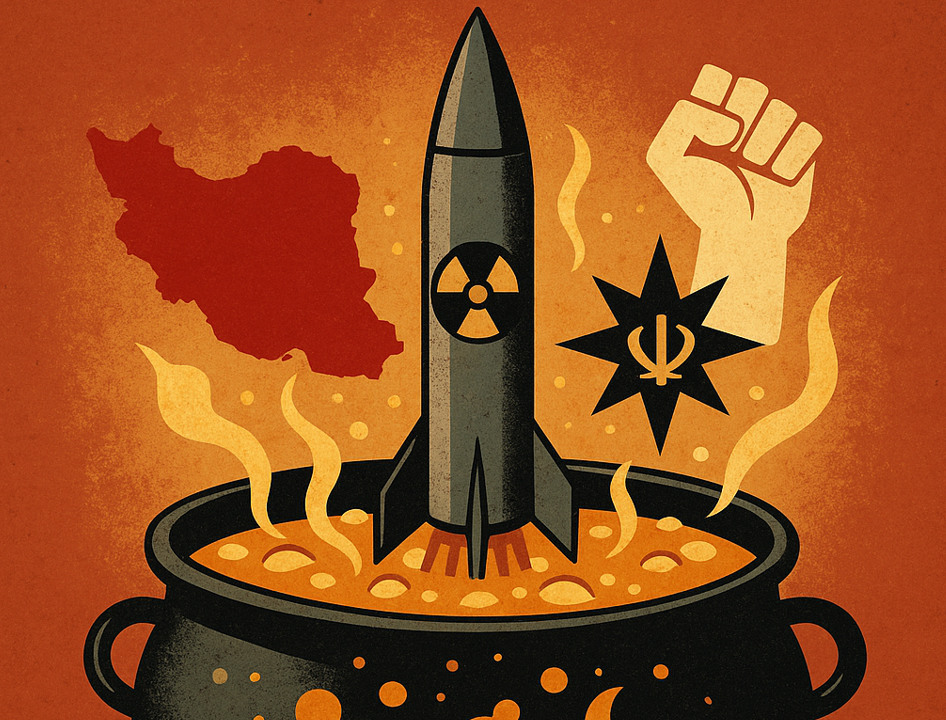
To understand the missiles, the proxies, and the nuclear race, we need to understand the revolution — and the story Iran is still trying to finish.
On a quiet Sunday afternoon, I sat down to write this piece. Then, the sirens began. Iran had launched another barrage toward Israel.
That moment reminded me of a truth we often miss: this war is not only about rockets. It’s about an idea.
The real conflict between Iran and Israel began in 1979, with the birth of the Islamic Republic. Since then, Israel has not been viewed as a military threat, but as an ideological one — the last step before the Islamic revolution can be declared complete.
Israel represents everything the Islamic Republic opposes: a sovereign Jewish state, Western-aligned, democratic, and resilient. It is not our actions, but our existence, that challenges the regime’s identity. For over four decades, Iran’s leadership has framed Israel as an unnatural presence — a temporary extension of Western imperialism that must vanish.
This isn’t theory. It’s doctrine. In 2015, Ayatollah Ali Khamenei said Israel would be gone by 2040. Erasing Israel isn’t just policy — it’s part of the regime’s legacy.
To understand why, we must return to 1953. After Iran’s Prime Minister Mohammad Mossadegh nationalized the oil industry, the U.S. and U.K. backed a coup to reinstate the Shah. Iran became a Western client state. The Shah embraced secular reforms and close ties with Israel. For Khomeini and his followers, this was betrayal. The 1979 revolution wasn’t just about toppling a monarch — it was about rejecting the West, its values, and its symbols. Israel became target number one. The west in the region.
Now Iran is dangerously close to nuclear capability. It has enriched uranium to near weapons-grade, constructed fortified underground sites, and resisted international inspections. The goal isn’t deterrence. It’s symbolism. With a bomb, Iran wouldn’t need to use it. Simply possessing it would affirm the idea that Israel is vulnerable — that the revolution is on the verge of triumph.
This would do more than threaten lives. It would undermine Israel’s diplomatic strength. The Abraham Accords proved parts of the Arab world now see Israel as permanent. Saudi normalization could anchor that shift. But if Iran gets the bomb, the opposite message is sent — that Israel is at risk, and aligning with it is too dangerous.
Iran’s war on Israel is ideological. Our existence contradicts the core identity of the Islamic Republic, which sees Israel’s erasure as one of the final steps of its revolution. A nuclear Iran would not only endanger lives — it would revive the myth that Israel is temporary, threatening regional peace and normalization. That narrative must be stopped before it becomes reality.