
The New Maccabees: Faith, Courage, and the Borderline of Belief
I never expected to find faith in a place built for fear. The wind off the Jordan Valley carried dust, prayer, and contradiction. On one side, a Jordanian woman hung her laundry in a different time zone. On the other, I saw the future of Israel tighten the straps on his rifle and whisper a blessing.
Other than eight-year-old Rosie Traxler, whose father, Rabbi Zalman Traxler, has organized over 200 barbecues since day two of this war, I was the only woman among a hundred Charedi soldiers.
That fact alone said everything—a small crowd of believers defying not just the enemy beyond the fence but the expectations of their own.
I’m used to being the only woman in a room full of men—my years around the NBA prepared me for that. In my religious world, that’s a border women rarely cross, but for me, it feels natural. At the border, those two worlds met: faith and familiarity, prayer and sweat, modesty and courage.
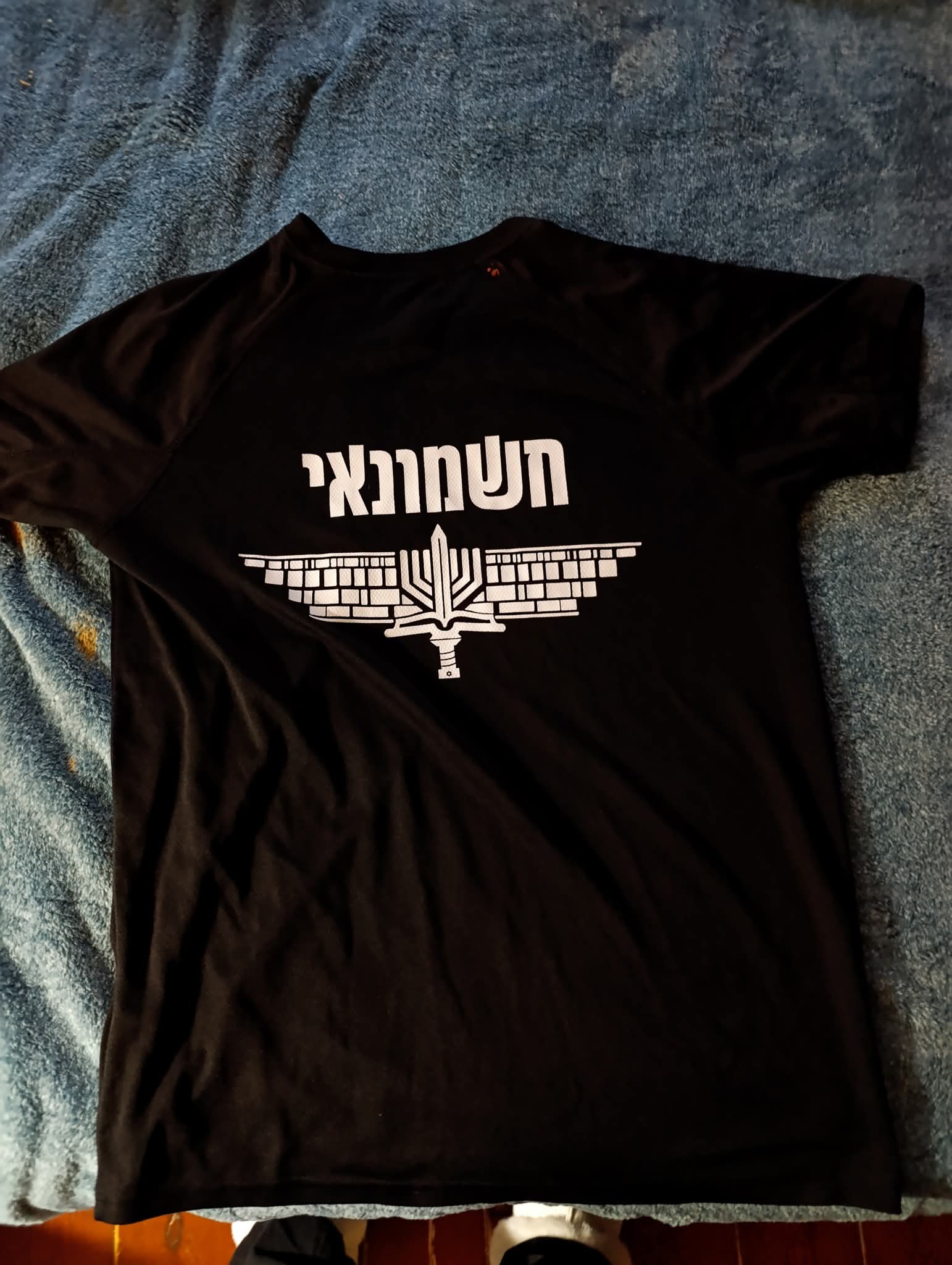
Many of the men wore חשמונאים T-shirts. I noticed immediately—no one else has them, and they aren’t sold or hawked to tourists. They’re not merchandise; they’re declaration. As special as those who wear them.
Shortly before we left, bellies full of sumptuous food lovingly prepared by a handful of women in a kitchen the size of a closet, the soldiers loaded into two buses. There was laughter, a few quick blessings, and that calm energy that comes right before people return to uncertainty.
As we were getting ready to leave, one of the soldiers I’d spoken to earlier—his name was Tal—walked over and handed me a חשמונאים T-shirt. The same kind they wear, the ones no one sells. It wasn’t a souvenir; it was a gesture of belonging. A silent way of saying, you saw us.
We all blame the politicians, but I can’t stay silent about the rabbis who tell these men not to serve. I’ve seen the cost of their words—young men torn between love of Torah and love of country, standing at the edge of duty while their leaders stay home.
For years, I’ve been vocal about my anger toward Charedim not serving in the army, and I’ve been accused of being anti-Charedi. It’s an easy accusation to throw, but it misses the point. My frustration has never been with people—it’s with imbalance. With the idea that some must carry the burden of defense while others remain shielded by faith that demands nothing of them in return.
Yesterday, at the Jordanian border, I saw a different face of Charedi life—men whose emunah didn’t keep them from service; it propelled them toward it. They are choosing love of Israel over the safety of sameness, and that choice comes at a cost: defying rabbis, families, and communities who see their decision as betrayal. But what I saw was anything but betrayal. It was devotion in its purest form.
The original Maccabees also went against the establishment of their time—not just foreign rule, but corruption inside their own house. These modern Charedi soldiers are fighting a version of that same battle: standing for something sacred in a way that breaks the social code but honors the moral one.
There’s something poetic about Jon Landau’s line in 1974: “I saw rock and roll future, and its name is Bruce Springsteen.” One sentence turned a scruffy Jersey bar band into prophecy. Prophecy begins with vision—and courage to name what others are afraid to see. The same can be said for the future of Israel: it may already be standing before us, just waiting for someone to name it out loud.
Yesterday, at the border, I saw that future. A bright one. Among a group of payis-wearing, tzitzit-flowing, kippa-wearing, Torah-learning men who have chosen love of Israel over the comfort of conformity. They wear these things as a shield—faith stitched into fabric, courage bound to belief. Like the original חשמונאים, they remind us that holiness isn’t fragile. It can survive gunfire and doubt and still shine.
—
Susan Cohen is a career journalist, NBA media veteran, and disciple of Coach John Wooden, Bruce Springsteen, and Rav Yosef Ber Soloveitchik. She writes about faith, basketball, and community from the rooftops of Tzfat.