
Strategic Intelligence Consultant & Insights Advisor
The overlooked resilience of Iraqi militias and Houthi forces in the Iran war
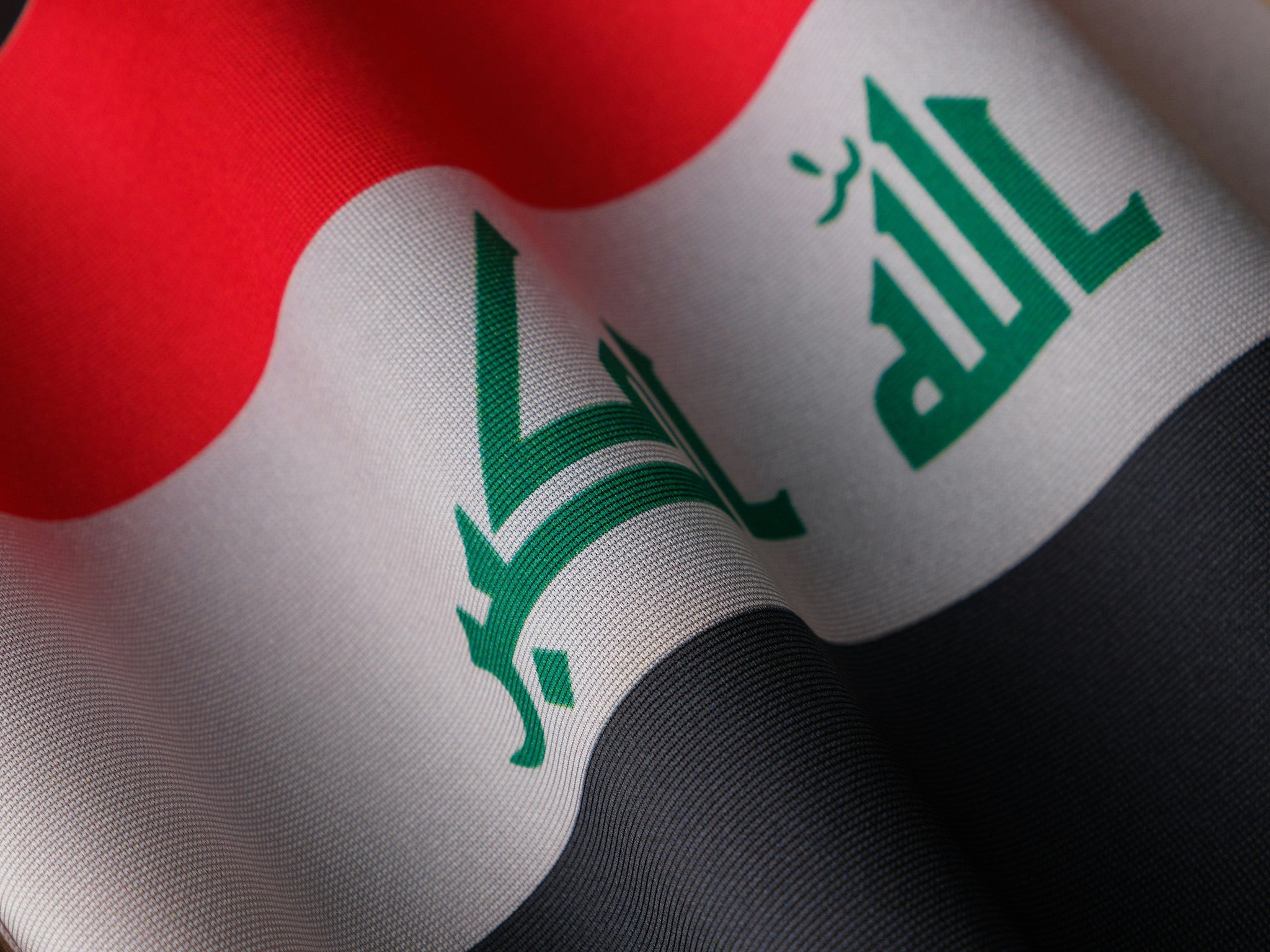
Iraq Flag (source unsplash)
Three weeks into the largest military campaign in the Middle East since the 2003 invasion of Iraq, a conventional assumption continues to shape Western strategic thinking: that degrading Iran neutralizes its network. The assumption deserves far more scrutiny than it is receiving.
On 28 February 2026, two days after a third round of Omani-mediated nuclear talks in Geneva ended without a deal — the mediator hailing “significant progress,” Trump declaring himself “not happy” — the United States and Israel launched Operation Epic Fury and Operation Roaring Lion, a coordinated campaign of strikes against Iran’s nuclear program, military infrastructure, and regime leadership. Supreme Leader Ali Khamenei was killed in the opening salvo. His son Mojtaba has been installed as successor. Iran’s Foreign Ministry has acknowledged that the military has lost control over several units. By 16 March, US Central Command reported striking more than 7,000 targets in Iran. Israeli officials claim to have destroyed over 300 missile launchers — some 60 to 65 percent of Iran’s operational capacity. Iranian missile and drone attacks have declined by more than 90 percent since the war’s opening days.
And yet. A closer examination of the two most capable proxy forces — Iraq’s Iran-backed militias and Yemen’s Houthis — reveals organizations that have not collapsed, have not gone silent, and in the case of the Iraqi factions have escalated at a tempo that exceeds any previous cycle. They are entrenched, self-sustaining, and operating according to their own strategic logic. The proxy architecture is not an appendage of the Iranian state. It is a distributed system designed to survive precisely this scenario.
Iraq’s Militia Ecosystem: A State Within the State
The Popular Mobilization Forces, or Hashd al-Shaabi, remain the formal umbrella under which Iraq’s most powerful militias operate. Established during the existential fight against ISIS, the PMF is now an official Iraqi security institution — funded by the Iraqi budget, integrated into government structures, and wielding political influence that extends far beyond the battlefield.
While the PMF claims some 238,000 fighters, realistic assessments place the strength of Iran-backed factions at roughly 80,000 to 100,000. Six of the largest groups have been designated by the United States as terrorist organizations. Their capabilities are formidable: Iranian-supplied drones and ballistic missiles form the backbone of their arsenal, and their operational history includes the IED campaigns that killed hundreds of American service members during the Iraq war years.
What makes these groups genuinely dangerous is not merely their weapons but their institutional embeddedness. Major militia factions maintain parallel political parties. In Iraq’s November 2025 elections, Shia parties — including Al-Sadiqoun, the political wing of US-designated terrorist group Asa’ib Ahl al-Haq — performed strongly, securing 27 seats. The Coordination Framework, the dominant Shia coalition, declared itself the largest parliamentary bloc, claiming over 185 seats.
Iraq’s government formation process has been paralyzed since January, when the Framework nominated former prime minister Nouri al-Maliki for the premiership. Trump publicly opposed the candidacy, threatening to end all support for Iraq if Maliki returns to office. The standoff has since deepened into a full-blown crisis. Parliament has failed twice to convene a session to elect a president and designate a prime minister. The Framework itself is fractured: Qais al-Khazali of Asa’ib Ahl al-Haq, Ammar al-Hakim’s National State Forces Alliance, and former prime minister Haider al-Abadi’s Victory Alliance, which boycotted the elections but retains influence within the Framework, have all signaled opposition to Maliki. Washington appointed Tom Barrack, the US Ambassador to Turkey and Special Envoy for Syria, who added Iraq to his portfolio and reportedly delivered explicit warnings that proceeding with Maliki could trigger sanctions against Iraq’s State Oil Marketing Organization, the Central Bank, and key political figures. Secretary of State Marco Rubio reinforced the message in a call with interim Prime Minister Mohammed Shia al-Sudani. By mid-March, Maliki’s candidacy appears increasingly unviable. Sudani — who initially declined to seek a second term — has emerged as the likely compromise, bolstered by the signing of energy agreements with Chevron during Barrack’s February visit. Three scenarios remain under active discussion within the Framework: persuading Maliki to withdraw in favor of a consensus figure such as intelligence chief Hamid al-Shatri, forcing a parliamentary vote Maliki would likely lose, or extending Sudani’s caretaker government with expanded powers for up to a year.
Militia leaders sit in government formation meetings and place loyalists across key ministries — oil, education, agriculture — enabling both actual profit extraction and influence over national policy. Iran’s influence in Iraq extends well beyond the armed factions into the economy and governance structures, forming what analysts describe as a “shadow state.” Even a significantly weakened Iran does not cause these groups to collapse. They have access to Iraqi state funding, institutional levers, and domestic revenue streams that operate independently of Tehran’s patronage.
The Militia Response: Immediate and Sustained
Within hours of Operation Epic Fury’s commencement on 28 February, the Islamic Resistance in Iraq — the umbrella under which Iran-backed militias claim attacks — announced 16 drone operations against “enemy bases in Iraq and the region.” Kataib Hezbollah, Kataib Sayyid al-Shuhada, and Harakat Hezbollah al-Nujaba all formally declared they were joining the fight. Kataib Hezbollah explicitly threatened “a long war of attrition” intended to eliminate all American presence from the region.
By 11 March, the IRI claimed a cumulative total of 291 attacks. Targets have included Erbil International Airport, Baghdad International Airport’s Victory Base, the US Embassy in Baghdad, hotels in Erbil where American personnel were believed to be staying, and American forces in Jordan and Kuwait. A drone struck the United Arab Emirates consulate in Erbil on 9 March, drawing condemnation from both Abu Dhabi and Riyadh. On 17 March, video emerged of what appeared to be a drone attack on the Al Rasheed Hotel in Baghdad’s Green Zone. On 18 March, a drone hit the US Embassy itself.
The United States has responded with force. By 12 March, the PMF reported that US forces had conducted 32 airstrikes against PMF headquarters across seven governorates — Anbar, Babylon, Diyala, Kirkuk, Nineveh, Salah al-Din, and Wasit. The strikes have killed members of Kataib Hezbollah, Asa’ib Ahl al-Haq, Kataib Imam Ali, and other IRI-affiliated groups. The 12 March strike on PMF facilities in the Qaim border district of Anbar reportedly killed 99 individuals, with 43 missing and 123 wounded. Senior commanders have been targeted: Abu Hassan al-Fariji, a Kataib Hezbollah commander of over twenty years, was killed on 4 March in Babil. The head of the Badr Organization’s missile unit, Rahif Qasim Abu Ali, was killed in strikes on Baghdad. There are unconfirmed reports that Kataib Hezbollah’s secretary-general Abu Hussain al-Hamidawi may also have been killed.
The contrast with the twelve-day war of June 2025 is instructive. During that earlier Israeli-American campaign against Iran, Iraq’s militias were conspicuously absent from the battlefield — though small unclaimed attacks persisted. This time, they entered the fray immediately and have sustained operations at a far higher tempo. The killing of Khamenei and the scale of the assault on Iran appear to have crossed whatever threshold of restraint previously held.
Interim Prime Minister Sudani has condemned the US strikes on PMF facilities as “systematic and repeated aggression” and a “desperate attempt to cause chaos and hit social peace.” Yet notably, unlike in past episodes of US retaliation against militias, the Sudani government has not demanded that the strikes stop — a tacit acknowledgment of the impossible position Baghdad occupies between Washington’s financial leverage and Tehran’s armed proxies on its soil.
It is worth recalling that during the first year of the Gaza war, these same militias targeted US forces regionally before pausing after American retaliation following fatalities in Jordan. They maintained attacks on Israel throughout and likely conducted unclaimed strikes against economic infrastructure in the Kurdistan Region, which they view with suspicion due to its ties with Washington. Their operational pattern has historically been one of calculated escalation — probing for the threshold of American tolerance before adjusting. The current campaign suggests that calculation has shifted decisively toward sustained confrontation.
The Houthis: The Surprise of Restraint
Yemen’s Houthi movement presents a different and, for many analysts, unexpected picture. The widespread pre-war expectation was that the Houthis would immediately resume their Red Sea shipping campaign and employ their anti-ship capabilities to maximum effect. Three weeks into the war, they have done neither.
Despite issuing immediate declarations of “complete solidarity” with Iran, organizing mass rallies in Sanaa, and vowing that their “fingers are on the trigger,” the Houthis have not launched a single confirmed military operation since the war began. Their leader Abdulmalik al-Houthi has delivered multiple speeches condemning the US-Israeli campaign and memorialising Khamenei, but he has conspicuously refrained from announcing specific retaliatory action. While anonymous Houthi officials told the Associated Press on 28 February that the group planned to resume attacks on Israel and Red Sea shipping, and a Yemeni government source reported that Iran had issued instructions to that effect, no such attacks have materialized.
Several explanations are in circulation among analysts tracking the group. First, the Houthis may be honoring the terms of their May 2025 ceasefire with Washington, under which Trump halted strikes on Yemen in exchange for an end to attacks on shipping — and may calculate that breaking the deal would invite a renewed American campaign they cannot afford while Iran is too degraded to provide meaningful resupply. Second, Israeli airstrikes in August and September 2025 decapitated the Sanaa government’s military and political leadership; the group may fear further targeted assassinations if it re-enters the fight. Third, senior Houthi officials have told media that their weapons stockpile is running low after the protracted campaign during the Gaza war. Fourth, the Houthis face pressing domestic threats, including a secessionist movement in government-controlled southern Yemen that could exploit any external distraction.
The most plausible explanation, advanced by multiple analysts, is that the restraint is strategically coordinated with Tehran. The Houthis appear to be holding the Red Sea card in reserve — a high-value instrument to be deployed at the moment of maximum leverage rather than spent in the opening phase. With Iran having effectively closed the Strait of Hormuz, Houthi disruption of the Bab al-Mandeb — which would close the only viable alternative oil export route from the Gulf — represents an economic escalation option that grows more powerful the longer the war continues. As one Yemen expert at the Cairo Institute for Human Rights Studies put it: “This isn’t about healing wounds from previous attacks on Yemen; it’s about timing and signaling.”
The underlying Houthi capability picture should not be underestimated. Their supply chain is a hybrid model that complicates Western interdiction. Missile production relies heavily on Iranian components smuggled through established networks, but the Houthis have developed domestic drone assembly lines using commercially available dual-use parts that traditional sanctions enforcement struggles to stem. They are building local production capacity that enhances their resilience against supply disruptions. Over the past two and a half years, they demonstrated capabilities many analysts previously doubted: sustained anti-ship operations in the Red Sea, ballistic missile strikes at extended range, and drone attacks reaching as far as Israel and US assets in the Gulf.
Crucially, the Houthis are not an Iranian creation. They originated as an indigenous Yemeni movement, receiving limited Iranian support until around 2009, with more substantial backing arriving only after 2015. They now operate a semi-functioning government and maintain independent strategic objectives. Without Iranian smuggling, their missile capabilities would degrade, but drone production and small arms access — sustained through Yemen’s extensive weapons market and African procurement networks — would keep them in the fight indefinitely. Eliminating the Houthis as a military force would require a level of external commitment that no regional or international actor currently appears willing to provide.
The Network Effect
The war has tested the operational cohesion of Iran’s proxy network more severely than any previous crisis — and the results are mixed but significant. Lebanese Hezbollah, which many expected to remain on the sidelines after its devastating losses in 2024–2025 and the collapse of its Syrian logistics corridor, has entered the war with missile barrages against Israel, explicitly framing its attacks as retaliation for Khamenei’s killing. This has triggered a renewed Israeli military campaign against Lebanon, with over 900 killed since the resumption of strikes. The Lebanese government has condemned Iran’s attacks on regional neighbors and formally banned Hezbollah’s military activities, but the ban has proved largely unenforceable and the group retains extensive weaponry and support in Shia communities.
Despite the fall of the Assad regime in Syria, the smuggling corridors had remained partially functional, albeit with reduced freedom of movement. Syria’s new authorities under President Ahmed al-Sharaa have actively sought to close these routes and the Syrian army has mobilized on the Lebanese border, but capacity gaps persist. The PMF’s role in Iraqi border security continues to raise obvious questions about the integrity of interdiction efforts.
Cross-training and resource sharing persist across the network. Houthi operatives have been reported in Iraq sharing lessons learned from their Red Sea campaign and providing support to Hezbollah reconstruction. Iraqi militia salaries — paid from the Iraqi government budget through PMF structures — are reportedly redistributed within Iran’s broader network, creating a form of regional subsidy that reinforces cohesion even when Tehran’s direct capacity to fund and arm is diminished.
Iran’s own retaliatory campaign has been extensive but rapidly degrading. By 5 March, Tehran had fired over 500 ballistic and naval missiles and almost 2,000 drones — roughly 40 percent aimed at Israel and 60 percent at US targets across the region. Iran has struck Israel and at least eight other countries: Bahrain, Iraq, Jordan, Kuwait, Oman, Qatar, Saudi Arabia, and the United Arab Emirates, with a drone also hitting the Akrotiri UK military base in Cyprus. Yet the rate of launches has fallen sharply. By day ten, missile and drone attacks had dropped by more than 90 percent. Iran’s Foreign Ministry has acknowledged that the military has lost control over several units, which are operating under old general instructions. The distributed system is fraying at the centre — but it was designed to function at the periphery.
Washington’s Leverage: Real but Under Strain
Washington retains meaningful leverage over Iraqi actors, and has demonstrated this repeatedly. The release of Elizabeth Tsurkov from Kata’ib Hezbollah captivity in Baghdad in September 2025 — after 903 days of imprisonment — was achieved after Trump’s envoy reportedly delivered a direct threat to the militia’s leadership — a credible one, given that Trump had ordered the killing of Kata’ib Hezbollah’s previous commander Abu Mahdi al-Muhandis in 2020. The underlying mechanism is primarily financial: approximately 90 percent of Iraq’s budget flows through oil revenues held at the New York Federal Reserve. Sanctions risks, funding access, and broader US support constitute a credible set of pressures — but only when Washington signals genuine willingness to impose consequences, as it did in the Tsurkov case.
That leverage is now being tested in real time. Washington’s threat of sanctions against Iraq’s financial and oil infrastructure has been a decisive factor in stalling Maliki’s candidacy. But the same leverage is under strain from a different direction. Iraq’s economy depends on oil exports that transit routes now severely disrupted. Iran has halted gas flows to Iraq following strikes on the South Pars facility, causing major power capacity loss. The closure of the Strait of Hormuz threatens Iraq’s ability to export oil at all. Analysts have warned that Iraq’s government will struggle to meet its obligations if the strait remains closed much longer.
The challenge is that sustained political-economic engagement with Baghdad requires the kind of diplomatic bandwidth that tends to be in short supply during a shooting war. If American focus shifts entirely to the military campaign, the political and economic tools that constrain Baghdad’s accommodation of militia interests could atrophy precisely when they are needed most. Saudi Foreign Minister Prince Faisal bin Farhan has publicly stated that PMF-linked militias “have been empowered to seize political decision-making power in Iraq to such an extent that development paths there have been disrupted” and serve primarily to “protect Iranian interests.” Whether Washington can sustain both its military campaign and its political-economic pressure on Baghdad simultaneously is the critical question.
The Bottom Line
Three weeks into the 2026 Iran war, any military planning that assumed degrading Iran would neutralize its proxy network is contending with uncomfortable evidence to the contrary. Iraqi militias activated immediately and have sustained a high tempo of operations — over 290 claimed attacks in the first eleven days — despite significant losses from US airstrikes across seven governorates. The network connecting these groups continues to function. Hezbollah has re-entered the fight. And while Iran’s own conventional military capacity is degrading rapidly, the decentralized and institutionally embedded nature of its proxies ensures they will remain operational long after Tehran’s missile launchers fall silent.
The one development that has confounded the pre-war consensus is the Houthis. Their restraint in the Red Sea — despite vocal solidarity with Tehran and reported Iranian instructions to resume attacks — suggests a phased escalation strategy rather than the immediate and aggressive response most analysts anticipated. Whether this reflects strategic patience, depleted stockpiles, or fear of a renewed US campaign against Yemen, the practical effect is that the Bab al-Mandeb remains open while the Strait of Hormuz does not. If and when the Houthis activate their Red Sea capability, the economic impact of this war will compound dramatically.
The uncomfortable truth is that striking Iran may prove to be the simpler part of the equation. Managing the regional cascade that follows — across Iraq, Yemen, the Red Sea, Lebanon, and the Gulf states now absorbing Iranian missile fire — demands an integrated military, diplomatic, and economic strategy that has historically eluded Washington. The proxies are not appendages waiting to wither. They are autonomous actors with their own survival imperatives, and they have spent years preparing for exactly this moment.
Related Topics
Related Posts