The IDF’s real problem with the Mashiach patch
I am not writing this as a politician, a commentator, or someone watching the war from a studio. I am writing this as a fellow simple soldier. Since October 7, I have been serving in the reserves in Lebanon, Gaza, Syria, Judea and Samaria. I know what soldiers go through. I know what it means to stand around for hours, exhausted and far from home, reminding myself why all of this matters. I know what discipline means, I know what uniforms mean, and I know why an army needs rules, standards, and a clear chain of command.
So when I tell you that the IDF’s punishment of a soldier for wearing a Mashiach (Messiah) patch disturbed me deeply, it is not because I think soldiers should wear whatever they want. It is because of what the punishment actually says.
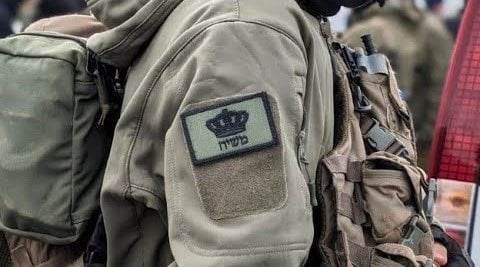
During a recent visit to a guard post in Judea and Samaria, IDF Chief of Staff Eyal Zamir noticed a soldier wearing a Mashiach patch on his uniform, in violation of dress-code rules. The soldier was sentenced to 30 days in military prison, which also cost him his post-army benefits for life. In addition, his platoon commander received a 14-day suspended sentence, his company commander was reprimanded, and his battalion commander received a formal command note. Four levels of the chain of command were punished over one patch.
To understand this response, you have to understand that the IDF has gotten lots of backlash recently over how it handles religious symbols. In recent weeks, IDF soldiers were disciplined for desecrating Christian symbols in Lebanon: one case involving the destruction of a Jesus statue, another involving a cigarette placed in the mouth of a Virgin Mary statue. The incidents caused a major media storm at a time when Israel is already fighting for legitimacy in the eyes of the world.
Yet somehow, in the eyes of the IDF, the Mashiach patch now sits in the same moral category. Thirty days for the Jesus statue. Twenty-one days for the Mary statue. Thirty days for a dress-code infraction involving a patch with the word Mashiach on a Jewish soldier in the Land of Israel. That is not a coincidence of paperwork. That is a message.
Of course, the army must have a dress code. If every soldier can wear whatever he wants, then the uniform stops being a uniform. Discipline in the army is built through the mundane, seemingly insignificant things, from uniforms and timing to making your bed. A soldier who ignores simple standards can eventually carry that same carelessness onto the battlefield, where small mistakes become life-threatening ones. The soldier should not have worn an unauthorized patch. No one is arguing that he had a right to, and his commander had every right to tell him to take it off.
But that is exactly the point. If this were really about a patch, the solution would have been simple: take off the patch. Soldiers have worn unauthorized items on their uniforms all the time, whether home-country flags or favorite soccer-team logos, and at worst, a commander tells them to take it off. No one has ever come close to being sent to jail, much less seen an entire chain of command punished alongside him. So why this patch?
The army is not afraid of patches. It is afraid of what this one represents. It is afraid that the world will see a Jewish soldier with a Jewish purpose and conclude that this is what Israel is really fighting for. The recent media storm over the Christian statue incidents made the calculation explicit: anything that can be framed as Israel waging a religious war must be publicly suppressed.
The army will say these are separate cases and that this one was simply about dress-code standards. I do not believe that. No soldier has ever gone to military prison for wearing the wrong patch. The punishment is not proportionate to the offense. It is proportionate to the symbol.
In doing so, the IDF has done something more dangerous than overreact. It has reclassified foundational Jewish belief as a political controversy, something the world has to approve of before a Jewish soldier is allowed to display it. Mashiach, the Beit Hamikdash, Jewish dignity – all are no longer treated as part of the spiritual language of Jewish soldiers, but as public-relations liabilities.
Our enemies, on the other hand, are not embarrassed by the religious language of their war. Hamas, Hezbollah, and Iran speak openly in the language of holy war and martyrdom. Soldiers in Gaza found schoolbooks, flags, videos, and propaganda filled with Al-Aqsa imagery. Their entire worldview is religious, ideological, and civilizational. Yet somehow, only the Jewish soldier is expected to pretend that he is fighting for nothing larger than security – and to go to jail when he forgets.
An army without a higher purpose eventually becomes an end in itself. Instead of asking what the army is for, it starts protecting its own image, its own procedures, its own fear of embarrassment. That is how a chief of staff visits a guard post in Judea and Samaria and sees not a soldier risking his life to guard the Jewish people, but a patch that must be prosecuted.
The truth is that many religious soldiers are already fighting with Mashiach and the Beit Hamikdash in their hearts. They may not all wear it on their sleeves, but the belief is there: that this war is part of something larger than borders and the next round of reserve duty. Anyone who has served knows what this looks like in practice. Even nonreligious soldiers will tell you that religious soldiers bring ruach, energy, and positivity even into impossible places. They sing in the field, put on tefillin, make Shabbat and the Chagim feel like Shabbat and the Chagim, and remind everyone around them that we are not just surviving, but fighting for something bigger.
When a soldier has something holy to point toward, he does not become a worse soldier. He becomes a better one.
The Nahal brigade commander said in his letter responding to the punishment, “The story is not the patch. The story is the values we educate toward.” He is right that the story is about values. But the value we should be teaching is not that Jewish vision is dangerous, embarrassing, or a public-relations liability. A commander can say, “Take off the patch,” without saying, “Your belief is the problem.” The army can enforce its dress code without making Mashiach a jailable offense.
That is the kind of army we should want: disciplined and serious, but rooted. Not an army where every soldier wears whatever he wants, but an army that knows what it is fighting for. The world does not respect Jews who apologize for being Jews. It respects Jews who know who they are and refuse to surrender that identity.
The IDF does not need soldiers who ignore rules. It needs soldiers who can stand in the mud, at the edge of danger, exhausted and far from home, and still know they are part of something holy. That is not a threat to the army. That is what gives the army its soul.