
The retreat no one wants to be invited to
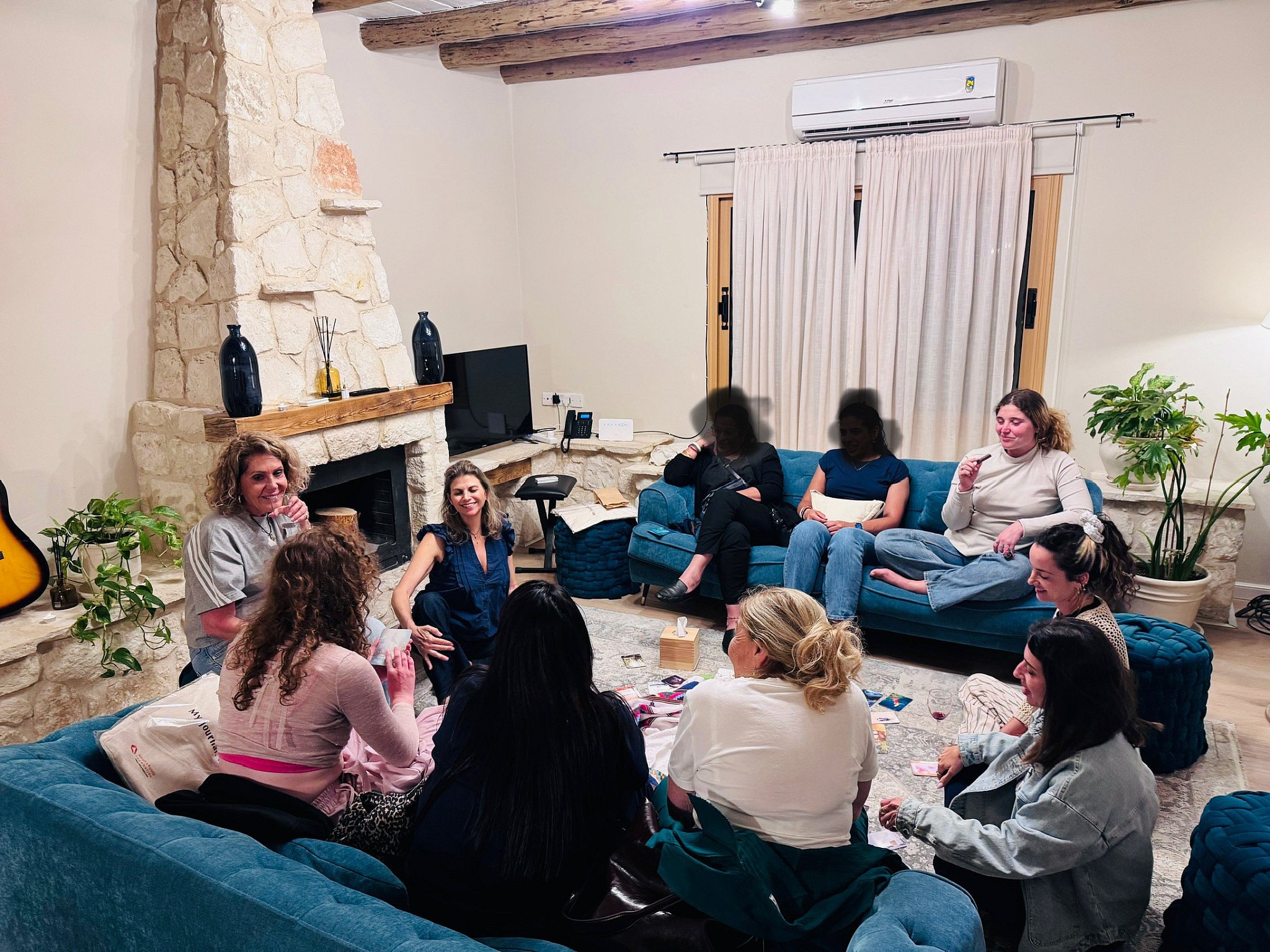
“Are you all on a family vacation?” the woman at the table next to us asked, glancing over at the long table labeled Reserved. We were 10 women, ranging in age from 22 to 70, seated in the corner of a sunny dining room in a peaceful resort. At first glance, we might have looked like old friends — our body language relaxed, our closeness unmistakable. We clung to one another, choosing to stay together for meals, for walks, for coffee, as though separation might make us fall apart.
“Are you celebrating something?” she asked again.
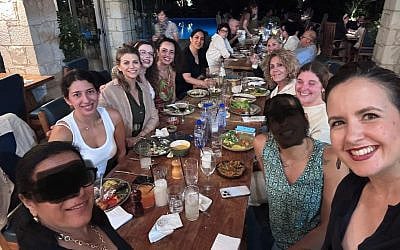 We froze. No one spoke. The air thickened with the weight of unspoken truth. We glanced at one another, searching for a response we hadn’t rehearsed, a way to make it easier — for her or for us. But there’s no easy way to say it.
Finally, Shira stood. Her voice was steady.
“It’s the group you don’t want to be in.”
That was all she said.
The woman looked puzzled. She turned to me, still searching for an answer.
“What kind of group is this?” she pressed.
Mira, the youngest of the women, fierce and stunning in her grief, said with a half-smile, “We’re on a retreat you never want to be invited to.”
Still confused, the woman tilted her head. “But… why?”
I stood and walked toward her, placing a gentle hand on her shoulder, making the kind of eye contact that said more than words ever could. Quietly, I said, “This is a group for bereaved women.”
She turned pale. “I’m so sorry… From the war?”
Another silence fell. This one heavier.
One woman whispered, “Does it matter?”
Another added, “My son was murdered in Dizengoff last year. My husband was killed in a blast 10 years ago. My brother died in Nova.”
And someone else said softly, “Grief doesn’t follow a timeline.”
Tears welled up in Nira’s eyes. The woman instinctively stepped toward her to hug her, but I raised a hand — gently.
“Let her have her space.”
They arrived quietly, each carrying a suitcase and a wound.
A wound that does not heal with time, or with words. Some were mothers who lost sons, some wives who lost husbands, sisters who lost brothers, daughters who lost mothers.
It was not one war. Not one day. Not one tragedy.
It was Dizengoff, where a son was murdered while having a beer with friends.
It was a blast in a restaurant that left a woman without her children, without her husband.
It was a stabbing in the forest when a mother went for a morning run.
It was a shooting at a pub in Tel Aviv.
It was Nova. Sderot. Tel Aviv.
It was a Saturday motorcycle ride that became a eulogy.
It was the price of living in Israel.
They came from the north, the south, the center of the country. Different cities, different ages, different backgrounds. And yet one thread connected them all: they lost someone they loved to terror.
Grief and Loss
Grief is not a straight line. It doesn’t come with instructions or an expiration date. Like waves in the ocean, grief rises and falls — sometimes crashing hard, other times gently brushing the shore. And in between, there are moments of calm where the bereaved can catch their breath.
For those navigating grief, having a space to speak, remember, and share can be profoundly healing. They gently bring forth the stories of their loved ones — who they were, what they meant, and why their lives continue to matter.
The lives of the mourners go on, but not as they were. They carry their grief — quietly, heavily, sometimes gracefully. It becomes a shadow, a scar, a companion. Always present. Always felt.
A Community Is Formed
She hesitated at first — her fingers gently brushing the edge of the canvas bag she had just received. “I’ve never said these things out loud,” she would whisper later, eyes welling. “Not to anyone. Not even to myself.” It was only the first day, and already something was shifting.
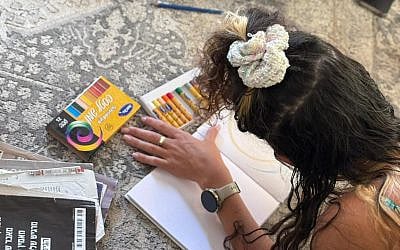
Each woman was handed the same simple gift: a canvas bag filled with art supplies, a journal, and an unspoken invitation — to enter a space where she could simply be. No masks. No expectations. Just presence. “This is your space,” the note read. “This is your voice. This is your pace.”
That evening, surrounded by cypress trees and the hush of dusk, she sat in circle with women she didn’t know and yet somehow already trusted. “It’s the first time I’ve felt I could share what I go through every single day,” she said. Her voice cracked, but she didn’t look away. No one did.
We moved gently through the journaling process, one step each day — not to direct or accelerate healing, but to offer structure where chaos once lived. Through color, texture, and expression, each woman was invited to honor her own rhythm. There was no pressure to speak. No need to explain. Just space to feel and create.
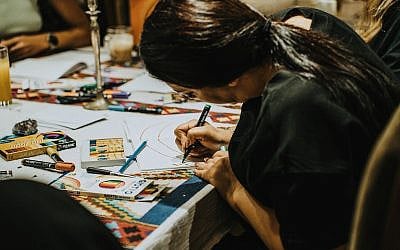 Slowly, a rhythm emerged — shaped by ritual, softened by nature, and held by the quiet courage of the group. Mornings began in silence — sometimes with movement, sometimes with tears. We didn’t come to fix each other. We came to witness. To say: I see your pain. I see your courage. I see you.
And in that witnessing, trust began to grow — not suddenly, but softly, like the first light through trees. And in that light, grief finally found the room it needed to breathe.
A circle of witnessing
The schedule became our anchor. Meals, circles, morning check-ins, quiet moments to create and reflect. It gave rhythm to the days and structure to hold the pain. The Resilience Journal gave each woman her own space to express, to explore, to feel — without judgment, without pressure.
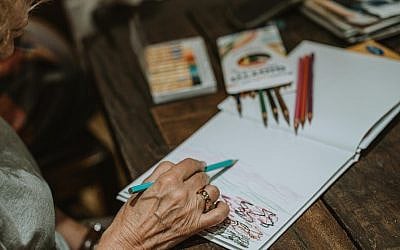 Each woman left with her journal in her bag, filled with fragments of memory, color, emotion, and words. It wasn’t just a journal — it was a companion. A place to return to when the world felt too loud or too empty.
But something unexpected happened. They never left each other.
Even during rest hours, no one wanted to be alone. They stayed together. Sat close. Walked in pairs. They wanted to laugh together, cry together, dance together. Something sacred unfolded. In just a few days, the group no longer felt like strangers. It felt like family.
A family born not from blood, but from brokenness. Not from history, but from shared heartbreak—and the will to keep living.
 What Next?
When the retreat ended, it was hard to say goodbye.
Because something had been created — deliberately, gently, and with great care:
a circle of women who no longer felt alone in their grief.
But healing doesn’t end when the retreat ends.
It continues quietly —
in the turning of journal pages,
in the small rituals of daily life,
in the late-night messages still passed between these women
who now hold space for one another from afar.
What comes next is not a cure.
There is no cure for grief.
But there is continuity.
There is community.
There is voice.
There is choice.
What comes next is the slow, brave commitment to keep showing up.
To keep remembering.
To keep creating.
To keep living — together.
And to never again walk alone.
—
This retreat was made possible through the generous support and funding of the Adopt a Family Foundation, whose belief in healing through community, expression, and resilience brought this sacred space to life.