
The Strategy I Didn’t Want to Defend
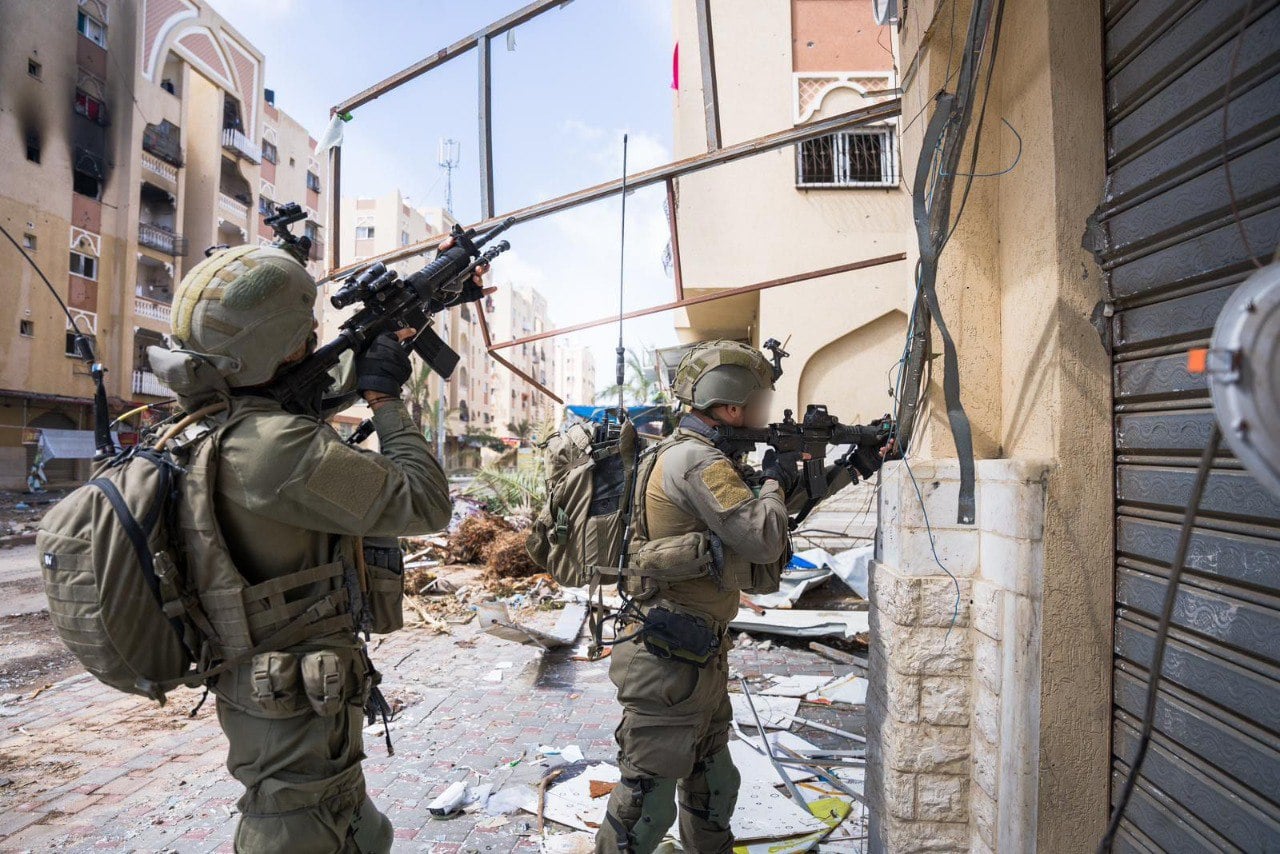
In early April, I published an article criticizing Israel’s “Clear-Hold-Flatten” strategy. I argued that it risked locking Israel into an open-ended occupation with no clear political end state. I worried that flattening neighborhoods and holding territory would create new grievances faster than it created security. I believed there had to be a better path.
Four months is not a long time.
It is certainly not enough time for history to render its final verdict on a war whose consequences will be felt for decades.
But it has been long enough for me to recognize that one of the central assumptions behind my argument no longer survives contact with reality.
I did not change my mind because I suddenly became comfortable with military occupation. I haven’t.
I changed my mind because I no longer see a credible alternative.
That distinction matters.
My criticism of Clear-Hold-Flatten rested on an implicit belief that Israel could eventually transfer responsibility to another governing authority capable of preventing Gaza, southern Lebanon, or the West Bank from once again becoming launchpads for organized attacks.
Today, I have far less confidence that such an authority exists—or will exist anytime soon.
The strategic lesson of October 7 has become clearer to me over the past several months.
Before October 7, Israel believed deterrence could contain hostile organizations on its borders. Hamas could rule Gaza so long as it feared the consequences of crossing certain lines.
October 7 shattered that assumption.
The attack demonstrated what happens when a terrorist organization is allowed to evolve into something much closer to an army. Hamas didn’t simply possess rockets. It developed command structures, engineering units, intelligence networks, logistics, training facilities, and assault forces capable of conducting a coordinated cross-border invasion.
That is not merely a terrorist threat.
It is a military threat.
Once I accepted that reality, I realized I had been asking the wrong strategic question.
The question is not simply, “How does Israel leave?”
The question is, “How does Israel ensure another October 7 can never be prepared?”
Whether we like it or not, Clear-Hold-Flatten appears to be Israel’s answer.
When I wrote my earlier article, I believed the costs of holding territory would outweigh the security benefits.
The past four months have made that conclusion much harder for me to defend.
Hamas has been degraded far beyond what I expected. The organization remains dangerous, but its ability to function as a quasi-conventional military force has been shattered. The infrastructure it spent years building no longer exists in anything like its previous form.
Lebanon has surprised me more. I assumed Hezbollah’s dominance would continue regardless of Israeli operations. Instead, Hezbollah suffered extraordinary military losses, and for the first time in decades the Lebanese government has begun taking meaningful steps against an organization that long operated as a state within a state. Those efforts remain fragile, but they suggest military pressure can reshape political realities in ways I underestimated.
Syria has reinforced the opposite lesson.
Its instability has become an argument for caution rather than optimism. Governments change. Alliances shift. Armed groups emerge with astonishing speed. Whatever government controls Damascus today offers no guarantee about who may control it tomorrow. Under those conditions, maintaining an extended security posture looks less like expansionism and more like insurance against uncertainty.
Perhaps the biggest change in my thinking concerns the Palestinian Authority.
Like many people, I once assumed that strengthening the PA offered Israel its eventual exit strategy. Today, I find that assumption increasingly difficult to sustain.
The Authority struggles with legitimacy among Palestinians. Mahmoud Abbas is approaching the end of his political career, yet no clear succession process commands broad confidence. Even if tax revenues resume and international funding continues, I would hesitate to base Israel’s long-term security on an institution whose own future appears uncertain.
That realization has also changed how I think about Israeli operations in Judea and Samaria.
I once viewed them primarily as the continuation of an occupation.
I now see them as an attempt—however imperfect—to prevent another armed infrastructure from taking shape while no reliable governing alternative exists.
None of this means I celebrate Clear-Hold-Flatten.
I still do not see it as a vision for peace.
Military control is not a political solution. Destroying hostile capabilities cannot answer questions of Palestinian self-government, economic development, or long-term reconciliation.
Those questions remain.
But strategy is judged against available alternatives, not preferred ones.
Four months ago, I believed there was another path.
Today, I find myself asking a different question.
If Israel abandons Clear-Hold-Flatten, what replaces it?
Who governs Gaza?
Who prevents Hamas from rebuilding?
Who guarantees southern Lebanon does not once again become a launching ground for cross-border attacks?
Who can confidently predict what Syria will look like in five years?
Who can say with confidence that the Palestinian Authority will emerge from its coming leadership transition stronger rather than weaker?
I don’t ask these questions rhetorically.
I ask them because I genuinely cannot answer them.
That is what changed my mind.
I didn’t become more convinced by Clear-Hold-Flatten.
I became less convinced by every alternative.
I still hope the day comes when Israel no longer needs this strategy. I would much rather defend a stable political settlement than an extended military posture.
But after the past four months, I no longer believe wishing for that settlement is enough to build strategy around it.
Sometimes reality narrows the range of acceptable choices.
This is the strategy I didn’t want to defend.
It is also the one I no longer know how to replace.