
We cannot see the future, but we can shape it!
Featured Post
The symphony of war has returned
5 movements, from the deep thud as guns fire and shells whistle overhead to the voices of children in a future of strength, purpose, and life
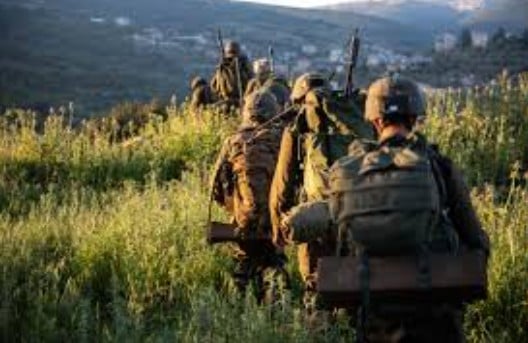
IDF soldiers in southern Lebanon, in 2024. (Israel Defense Forces)
War has a sound.
Anyone who has lived through battle knows this. War is not random noise. It is not simply explosions, gunfire, and chaos layered on top of one another. To those who know it well, war has rhythm. It has movement. It has structure. It rises and falls with tempo and intensity. It carries tension, release, violence, silence, and resolution.
Like a symphony, war unfolds in movements.
Each stage has its own sound, its own pace, and its own purpose. Each movement flows into the next until together they create something larger, darker, and more powerful than any one moment alone.
The symphony of war has returned.
First Movement: The Build Up
Every symphony begins quietly.
The opening movement of war does not begin with gunfire. It begins with preparation.
Low voices cut through the darkness. Quiet conversations. Brief commands. Short exchanges between men who know exactly what needs to be done. There is little wasted speech. The talking is subdued but purposeful.
Then comes the sound of preparation.
Weapons checked. Magazines loaded. Radios tested. Straps tightened. Equipment adjusted one final time. Metal clicks. Fabric shifts. Boots scrape against concrete and dirt.
The pace slowly rises.
Tension builds.
Then comes the sound every soldier knows well.
Boots on the ground.
Fast. Purposeful. Focused.
The movement begins.
Second Movement: The Opening of Battle
Then the music changes.
The first notes of battle belong to artillery.
A deep thud in the distance as guns fire. Heavy and powerful. The sound reverberates through the ground and through the body. Then comes the strange comfort of the whistle overhead, the sound of shells moving toward their targets.
Then impact.
A violent crash. A boom that shakes the air.
Again.
And again.
The artillery builds the rhythm.
Then the tanks join.
Heavy machine gun bursts cut through the darkness in sharp controlled patterns. Then comes the deeper roar of tank shells firing, followed by violent explosions across the battlefield.
The orchestra grows louder.
The intensity rises.
Then comes the final section.
Infantry.
Small arms fire erupts as soldiers engage directly with the enemy. Short bursts. Controlled fire. Shouting. Movement. Commands. Doors breached. Structures cleared room by room.
This is the climax of violence.
The full orchestra is now playing.
War in all its terrible force.
Third Movement: The Silence Between
And then, slowly, the intensity begins to fade.
The artillery grows quiet.
The tanks fall silent.
The heavy instruments leave the stage.
Only the small arms remain.
Scattered bursts of gunfire continue in the distance, but even those begin to slow. Sharp cracks become occasional pops. Then fewer still.
Eventually, silence begins to return.
Not true silence.
Never true silence.
Now the dominant sound is movement.
Boots again.
Feet shuffling through broken roads and shattered pathways carved through the destruction of previous days. Rubble shifts beneath each step. Dust rises with every movement.
Some advance.
Some retreat.
Some reposition around the objective.
The symphony slows, but it does not end.
Fourth Movement: Finale
At last, the forces reach safety.
The night begins to give way to dawn.
The first rays of light appear on the horizon.
And then comes the finale.
Charges are prepared.
Final explosives are placed.
There is a brief pause.
Then ignition.
A massive blast tears through the morning air. Loud. Violent. Final.
One last eruption of destruction.
The culmination of the night’s work.
The final note of war’s symphony.
And then, just as suddenly as it arrived, the violence ends.
The voices return.
But now they are hushed.
Whispers.
Exhausted conversations between soldiers who have lived through another night. Men lay down wherever they can, grabbing what sleep they can find before the cycle begins again.
Because tomorrow, the symphony may return.
Fifth Movement: Redemption
But this symphony has a fifth movement.
And it is the most important of all.
Because war cannot be allowed to have the final word.
After the destruction, something else must come.
Something holy.
Something pure.
The sounds of war must eventually give way to the sounds of life.
Holy voices rise where evil once stood.
Prayer.
Learning.
Words of creation..
The voices of children.
The rebuilding of homes, communities, and futures.
Light enters the vacuum left behind by destroyed darkness.
The unholy is replaced by the holy.
The defiled is replaced by the pure.
This is the true purpose.
Not destruction for its own sake.
Not war for the sake of war.
But to create the conditions for something better to emerge.
To build a future worthy of those who fought for it.
A future we can live in, raise families in, and enjoy.
A future of strength, purpose, and life.
But such a future can only be appreciated when we remember the cost.
When we remember the sounds.
When we remember the work.
When we remember the symphony that brought us here.
The symphony of war may return when necessary.
But our ultimate mission is to ensure that one day, all that remains is the fifth movement.
Related Topics
Related Posts