The Trump–MBS Roadmap to Peace and Modernization
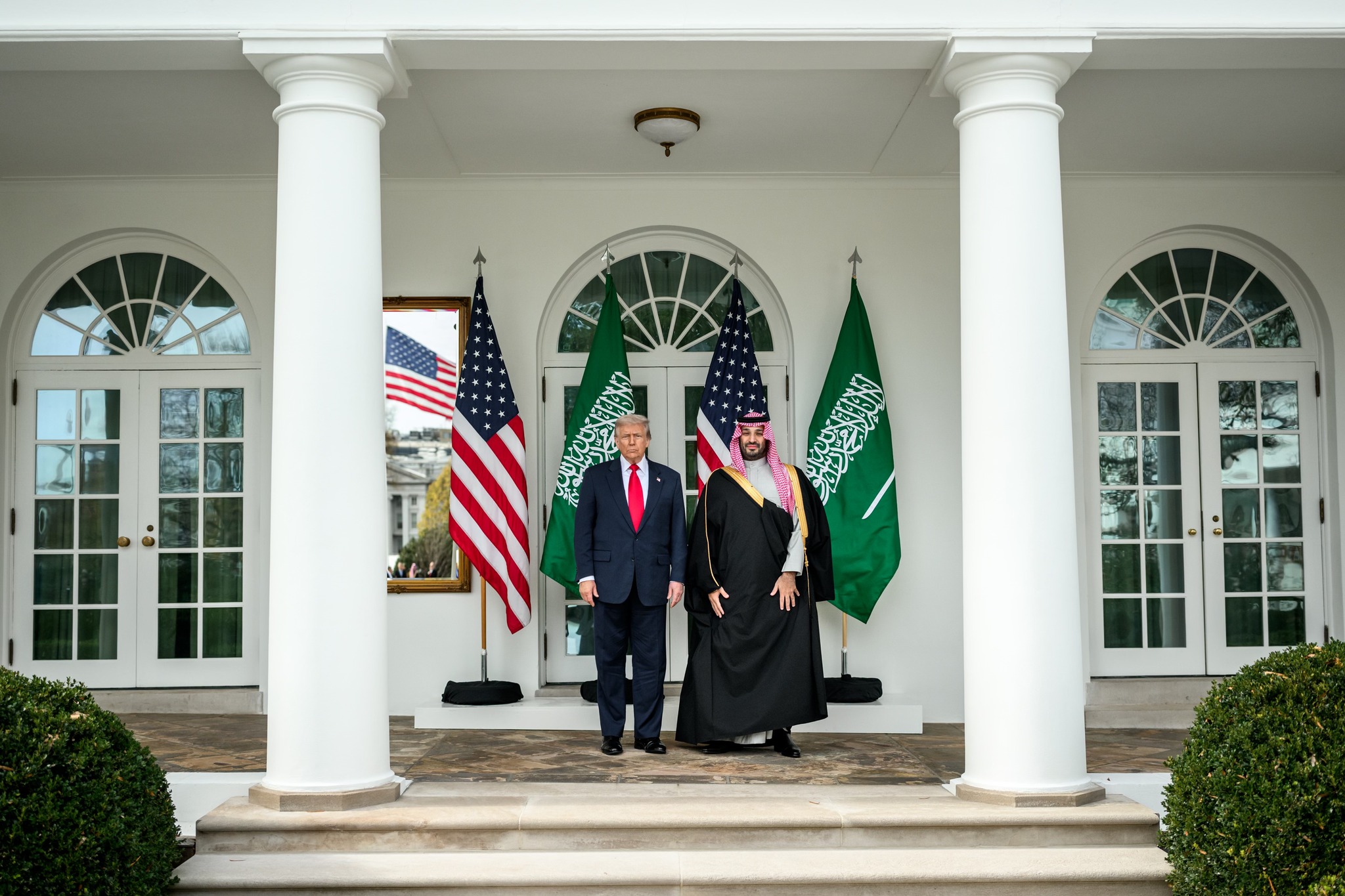
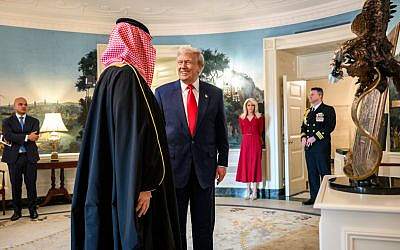
In Washington, President Donald Trump and Saudi Crown Prince Mohammed bin Salman delivered a striking display of confidence, camaraderie, and shared strategic purpose. Their meeting-replete with symbolism and substantive announcements-offered a reminder that the US-Saudi relationship, when functioning at full strength, remains one of the most consequential partnerships shaping global affairs.
"It's a special privilege to welcome His Royal Highness to Washington this year as we mark the 80th anniversary of the first meeting between a U.S. President and a Saudi King… right now, you have the best friend you've ever had." – President Donald J. Trump pic.twitter.com/6HFCPCT8FL
— The White House (@WhiteHouse) November 19, 2025
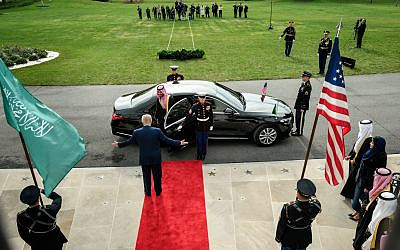
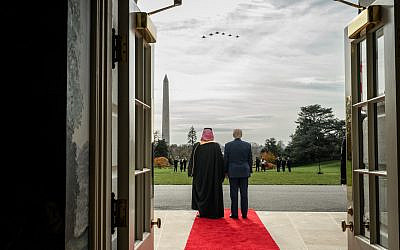
From the red carpet and military honor guard that greeted the crown prince the moment he stepped onto the South Lawn to the unmistakably warm embrace from the president, it was clear this visit would be unlike any in recent memory. Trump’s rapport with MBS was not contrived or formal but rather easy and at times jovial. And that set the tone for a day underlined by sweeping agreements, high-level consultations, and a shared vision for stability and modernization across the Middle East.
What ensued was a wave of announcements that sequenced defense, economics, technology and — in a first — an opening toward Arab-Israeli peace.
At a U.S.–Saudi business forum on Wednesday, President Trump urged the Crown Prince to aim even higher on bilateral investment. “Could you make it $1.5 trillion?” he quipped, drawing laughter from the audience.
Trump and the crown prince celebrated the signing of $270 billion in agreements at the Kennedy Center, where dozens of American and Saudi companies finalized major commercial deals. Among the most notable was a planned purchase of 600,000 Nvidia AI chips by HUMAIN, a Saudi government-backed artificial intelligence firm. HUMAIN will also partner with Elon Musk’s xAI to develop next-generation data centers in the kingdom, including a flagship 500-megawatt facility.
In a separate announcement, MP Materials confirmed it will build a rare-earth refinery in Saudi Arabia in collaboration with the U.S. Department of Defense and the Saudi state-owned mining giant Maaden—an important step toward expanding critical mineral processing in the Middle East.
Reflecting on the deepening partnership, Trump described the U.S.–Saudi relationship as a source of “friendship and blessings to America, to the Kingdom of Saudi Arabia, and to the world,” adding that such bonds “stand out and will always stand out” to him.
“We have an expression: Make America Great Again—and that’s exactly what we’re doing,” Trump said. “I just want to thank you for being such a big part of it.”
"The friendship & blessings to America, to the Kingdom of Saudi Arabia, & to the world, stand out & will always stand out to me.
We have an expression: Make America Great Again, & that’s what we’re doing. I just want to thank you for being a very big part of it." – POTUS ???????????????? pic.twitter.com/fvTcwAjkgg
— The White House (@WhiteHouse) November 19, 2025
A Calculated Bid for Peace
The most striking moment came in the Oval Office when MBS reiterated, with unusual clarity, that Saudi Arabia is ready to enter the Abraham Accords—if there is a “clear path” to Palestinian statehood.
“We are interested in being a part of the Abraham Accords, but we want to make sure that we have secured a clear path to a two-state solution,” the crown prince said.
That line alone changes the dynamics of the region. No Arab capital carries the same moral, political or religious heft in the Israeli Palestinian issue as Riyadh does. And in linking normalization to real progress, Saudi Arabia has signaled a formula: peace constructed not on hot air but conditional modernization
Trump, for his part, called the exchange “very positive,” hinting that Washington sees Saudi participation as the cornerstone of a broader diplomatic revival.
An Alliance Rebuilt Through Power and Pragmatism
If the peace overture set the tone, the agreements that followed defined the architecture of a deeper U.S.–Saudi partnership.
At a black-tie dinner, President Trump announced that the United States will formally designate Saudi Arabia as a major non-NATO ally, a move that places the kingdom in a privileged security category shared with only 19 countries. More than an honorary status, this designation opens channels for expedited defense transfers and joint planning.
"I'm pleased to announce that we are taking our military cooperation to even greater heights by formally designating Saudi Arabia as a major non-NATO ally." – President Donald J. Trump ???????????????? pic.twitter.com/PXXGGCBPGU
— The White House (@WhiteHouse) November 19, 2025
And the numbers that accompany this deepening partnership are staggering.
During joint remarks, Trump and MBS confirmed a near-$1 trillion Saudi investment commitment into the U.S. economy—up from the $600 billion secured during Trump’s earlier visit to Riyadh. The scope spans infrastructure, advanced manufacturing, artificial intelligence, energy innovation, and emerging technologies where Washington seeks both dominance and reliable partners.
This massive $1 TRILLION investment will drive business in the United States, maintain American national security, create jobs and support American needs.
The Dealmaker-in-Chief is at it again. pic.twitter.com/omLOlkLzE7
— The White House (@WhiteHouse) November 19, 2025
These investments are not abstract. They translate directly into American jobs, strengthened supply chains, and an industrial base increasingly hedged against foreign vulnerabilities.
A New Strategic Industrial Compact
Central to the visit was a suite of agreements that touch nearly every major strategic sector.
Civil Nuclear Cooperation Agreement
A joint declaration concluded negotiations on decades-long nuclear energy collaboration—anchoring U.S. companies as Riyadh’s preferred partners and ensuring the program adheres to strong nonproliferation commitments.
Critical Minerals Framework
Both nations agreed to align strategies for securing critical minerals—an issue that has become as central to national security as oil once was. This cooperation diversifies global supply chains and reduces reliance on adversarial sources.
Artificial Intelligence Memorandum of Understanding
A landmark AI agreement gives Saudi Arabia access to leading U.S. systems while shielding American technology from foreign influence. It’s a glimpse of a future in which Gulf capital and American innovation form the backbone of global AI development.
Together, these deals carve out a vision of shared economic modernization—a blend of U.S. technological leadership and Saudi Arabia’s long-term transformation agenda.
Defense Integration at a New Scale
On the security front, Trump and MBS signed the U.S.–Saudi Strategic Defense Agreement, which deepens an 80-year military partnership at a moment of regional volatility.
The agreement expands joint deterrence, enhances interoperability, and—importantly for Washington—secures new burden-sharing contributions from Saudi Arabia to offset U.S. costs.
Trump also authorized a major defense package, including future F-35 deliveries and the sale of nearly 300 American tanks. Notably, the president indicated that for the first time the U.S. would not downgrade aircraft for Saudi Arabia—a departure from longstanding policy tied to maintaining Israel’s qualitative military edge.
Whatever one thinks of the implications, this marks a fundamental recalibration of U.S. defense posture in the Middle East.
Economic Stakes Beyond Diplomacy
The economic dimension of the visit may prove even more significant. The agreements span:
- removing non-tariff barriers
- mutual recognition of industrial standards
- cooperation on capital markets and financial regulation
- expanding access for U.S. exporters
- and deepening the Trade and Investment Framework Agreement as a mechanism for long-term alignment
.@POTUS: "This opening up of the new avenues of cooperation between the United States and Saudi Arabia is really unprecedented. On that trip, Saudi Arabia announced that it will invest an incredible $600 billion… he said, 'I am going to up that to $1 TRILLION.'" pic.twitter.com/FB6qHuqjDJ
— Rapid Response 47 (@RapidResponse47) November 19, 2025
These arrangements push the relationship beyond energy dependency and into the realm of shared economic architecture. For Trump, this is a tangible embodiment of an “America First” strategy that prioritizes jobs and investment. For MBS, it is a pathway to propel Saudi Arabia’s Vision 2030 modernization agenda.
A Relationship Recast for a New Era
What made this visit more than a transactional exchange was the political choreography. Trump and MBS spoke with visible warmth, openly praising each other’s leadership and vision. Critics will say the theatrics obscure moral complexities; supporters will counter that aligned interests require strong personal diplomacy.
But the broader truth is this: both leaders see themselves as builders of new realities rather than custodians of old ones.
Whether this roadmap becomes a foundation for regional peace and modernization—or simply another ambitious chapter in Middle Eastern geopolitics—will depend on what follows: on the seriousness of the path to peace, prosperity, and modernization, on how these strategic deals are implemented, and on whether the promises made in Washington survive the pressures waiting back home.
An assertion that Washington and Riyadh are ready to turn the page, deepen collaboration, and confront their shared challenges with aspiration rather than apprehension. A reminder that personal chemistry still counts on the diplomatic stage. And a testament to the fact that, despite all appearances, the future of the Middle East is not hopelessly gridlocked and remains open to bold initiatives, strategic breakthroughs.
It was a stark message that when the U.S. and Saudi Arabia are aligned with purpose, its ripples can be felt — from the region all the way around the world.