
The UN: UN-Fit For Purpose
Origins of the UN
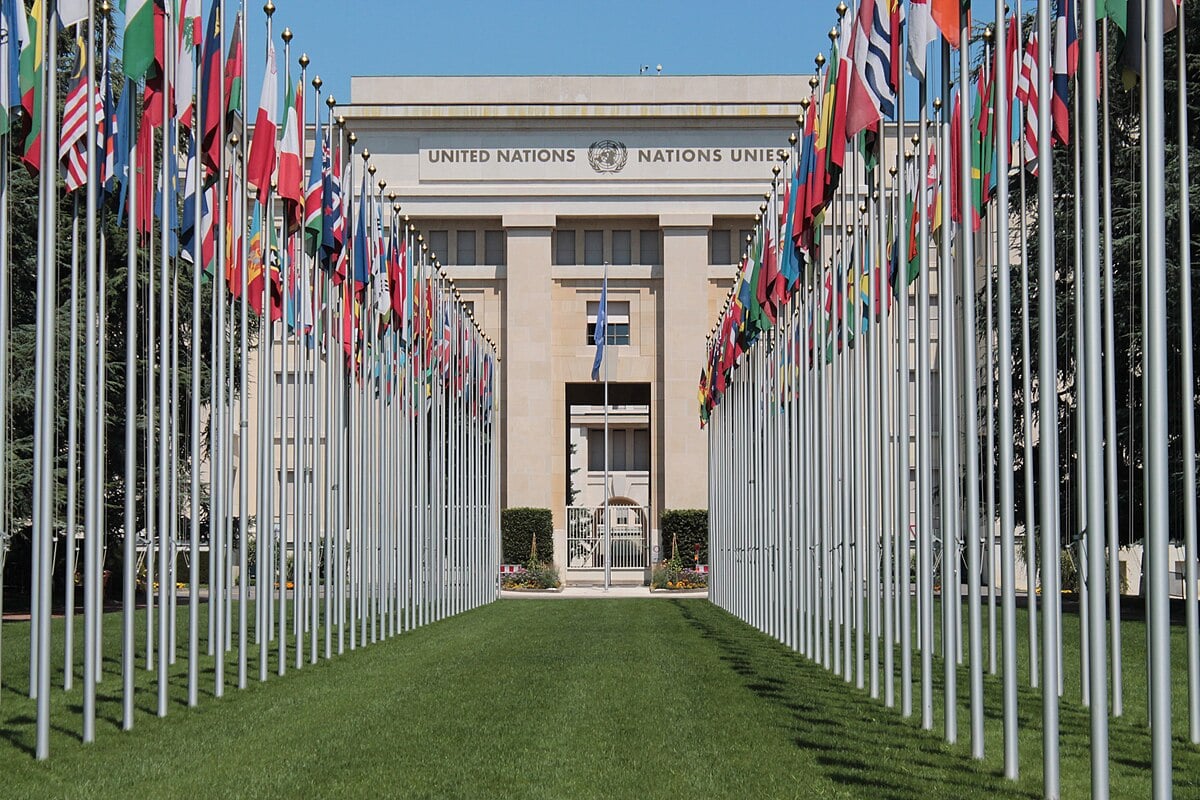
The UN was born from the ashes of the Second World War amidst the collapse of The League of Nations in the face of fascism and world war. Its creation and mission as set out in its founding Charter (in 1945) was to “save succeeding generations from the scourge of war” and to promote “universal respect for, and observance of, human rights and fundamental freedoms for all”.
It is therefore deeply ironic that fewer than eight decades later, the same UN has become a vehicle for publicly and singularly demonising Israel – It has drifted so far from its mission, that its glaring bias against Israel can hardly be interpreted as anything but Antisemitic. It is in fact reminiscent of the very discrimination the UN was formed to prevent.
A Disproportionate Focus on Israel
The numbers speak for themselves. According to the monitoring group UN Watch, in the 2024 UNA General Assembly alone there were 18 resolutions directed at Israel, compared to only 7 resolutions concerning the “rest of the world”. (UN Watch) Earlier, from 2015 through 2022, the UN General Assembly adopted 140 resolutions on Israel and 68 on other countries combined. (UN Watch) Meanwhile, the United Nations Human Rights Council (UNHRC) from its creation has passed more condemnatory resolutions against Israel than against Iran, Syria, North Korea, China, Russia, Cuba and Venezuela combined. (AIPAC)
This imbalance is not just a matter of counting votes: under Agenda Item 7 (the only permanent country-specific agenda item on the UNHRC) Israel is singled out for review in every session. (Jerusalem Institute of Justice)
How can this be reconciled with the UN’s founding purpose of universality, fairness, and equal protection under international law?
The Irony of Membership: Abusers as Watchers
The hypocrisy of the UN system becomes starker when one considers that some of the worst-abusing states sit on its human-rights bodies (and even chair them). For example, the Islamic Republic of Iran — overseen in large part by the Islamic Revolutionary Guard Corps which executes political opponents, persecutes minorities, and restricts freedoms — has been subject to UN resolutions calling out its abuses. (Center for Human Rights in Iran) Yet despite this, Iran has been on human rights commissions, has served in high-ranking UN positions, and remains a member of UN bodies that pass judgments on other states.
Putting states like Iran (and others such as China, Saudi Arabia, and many African autocracies) in positions of authority over human-rights mechanisms while funnelling the bulk of resolution traffic at one democratic state (Israel) raises obvious questions of bias: if the point is truly universal human-rights advocacy, why is the pressure so unbalanced?
When a body founded to combat the horror of antisemitism and genocide becomes dominated by states whose records on minority rights are among the worst in the world, the credibility of its selective focus collapses.
Origins vs. Practice: What Did the UN Come Here to Do?
Let us recall: the UN was founded not only as a war-prevention body, but also as a mechanism to secure human rights and equality. After the Holocaust, survivors and Jewish communities expected the UN to be a shield against discrimination, genocide and double standards. Instead, Israel — the Jewish state born in part from the ashes of the Holocaust and built by survivors and refugees — finds itself almost invariably the subject of unique scrutiny.
One might say: if the UN’s central value is universalism, then why is Israel consistently funnelled into an exceptional slot of condemnation? And if the UN has drifted into being a “mouthpiece” for political blocs rather than a universal rights enforcer, then what purpose does it serve?
How Does the UN Treat Israel Differently — And Why That Matters
- Agenda Item 7: Under UNHRC rules Israel alone is subject to a standing agenda item, meaning it is continuously singled out. Other states are reviewed under general items. That alone institutionalises bias. (Jerusalem Institute of Justice)
- Resolution volume: In 2023 the UNGA adopted 15 resolutions on Israel, compared to 8 addressing the entire rest of the world. (UN Watch) These are not trivial matters. They carry political weight, shape public perception, and can delegitimise states while conspicuously ignoring far worse offenders.
- Selective victim focus: Many resolutions aimed at Israel omit context — for instance, the role of terrorism, rejectionism, or legal frameworks for self-defence — while other states with far worse records receive minimal scrutiny. (UN Watch)
- Leadership by dictators: States with systemic records of genocide, repression, and mass killings have chaired UN human-rights mechanisms. The result is a forum where the “watchers” often are among the worst offenders, raising severe credibility issues.
Other States’ Violations: Comparison
Take Iran, for instance: The UNHRC in April 2025 adopted a resolution renewing the mandate of a fact-finding mission on Iran and expanded its scope to cover all violations. (Center for Human Rights in Iran) That is significant — but it comes after years of minimal action compared to the torrent of resolutions against Israel, and still lacks the continual agenda item status that Israel endures.
Contrast this with Israel, which is subject to continuous UN scrutiny, symbolic condemnation, and delegitimisation despite being a liberal democracy with a legal system, independent media, and an active civil-society response to human-rights complaints.
Meanwhile states such as Saudi Arabia, China or Russia — with documented records of mass imprisonment, torture, suppression of free speech, ethnic cleansing, and worse — are far less frequently the target of UN resolutions. According to UN Watch, while Israel has had 99 UNHRC resolutions against it (2006-22), Syria had 41, Iran 13, China and Saudi Arabia far fewer. (UN Watch)
This discrepancy undermines the claim that the UN applies standards universally. If the global body treats one country so differently from others — especially given Israel’s normative and legal protections — the word “standard” may become meaningless.
The Moral and Strategic Implications
Why does this matter? Three key consequences stand out:
- Erosion of legitimacy: When the UN is perceived as biased, its moral authority to call out abuses elsewhere is weakened.
- Delegitimisation of Israel: The constant barrage of condemnatory resolutions isolates Israel, frames its acts of self-defence as illegitimate, and fails to hold accountable the non-state actors (terror groups) and failed states that flout law and harm civilians.
- Perverse incentives: When the loudest platform for rights-abuse accusations is channelled against one country, perpetrators elsewhere may assume immunity from international pressure and continue unchecked.
Challenging the Status Quo: What Needs to Change
- End agenda-item discrimination: If the UNHRC is serious about universality, Israel should not be the only country with a permanent condemnation item.
- Focus on the worst offenders first: The UN should prioritise states with the most systemic violations — prison camps, genocide, mass executions — rather than issuing symbolic condemnations.
- Ensure serious membership standards: States with abysmal human rights records must not chair or dominate human-rights bodies. Otherwise accountability becomes impossible.
- Return to founding principles: The UN was created to protect rights, preserve peace, and guard against discrimination including antisemitism. It must rediscover that mission rather than imitate political blocs.
Examining the evidence can only lead to one conclusion — the so-called United Nations has become unfit for purpose. An organisation that was created to ensure “never again” has become complicit in the very prejudice it was meant to prevent. Its double standards on Israel betray not only the Jewish state but the moral foundation of the entire international system.
If the UN continues to serve as a platform for propaganda rather than principle, it will remain what it has already become — a political instrument wielded by the world’s worst offenders, cloaked in the language of human rights, protecting the worst aggressors and abandoning those suffering at their hands. What a betrayal!