A Moroccan Journalist
The welcome Israel should not misread in Marrakech
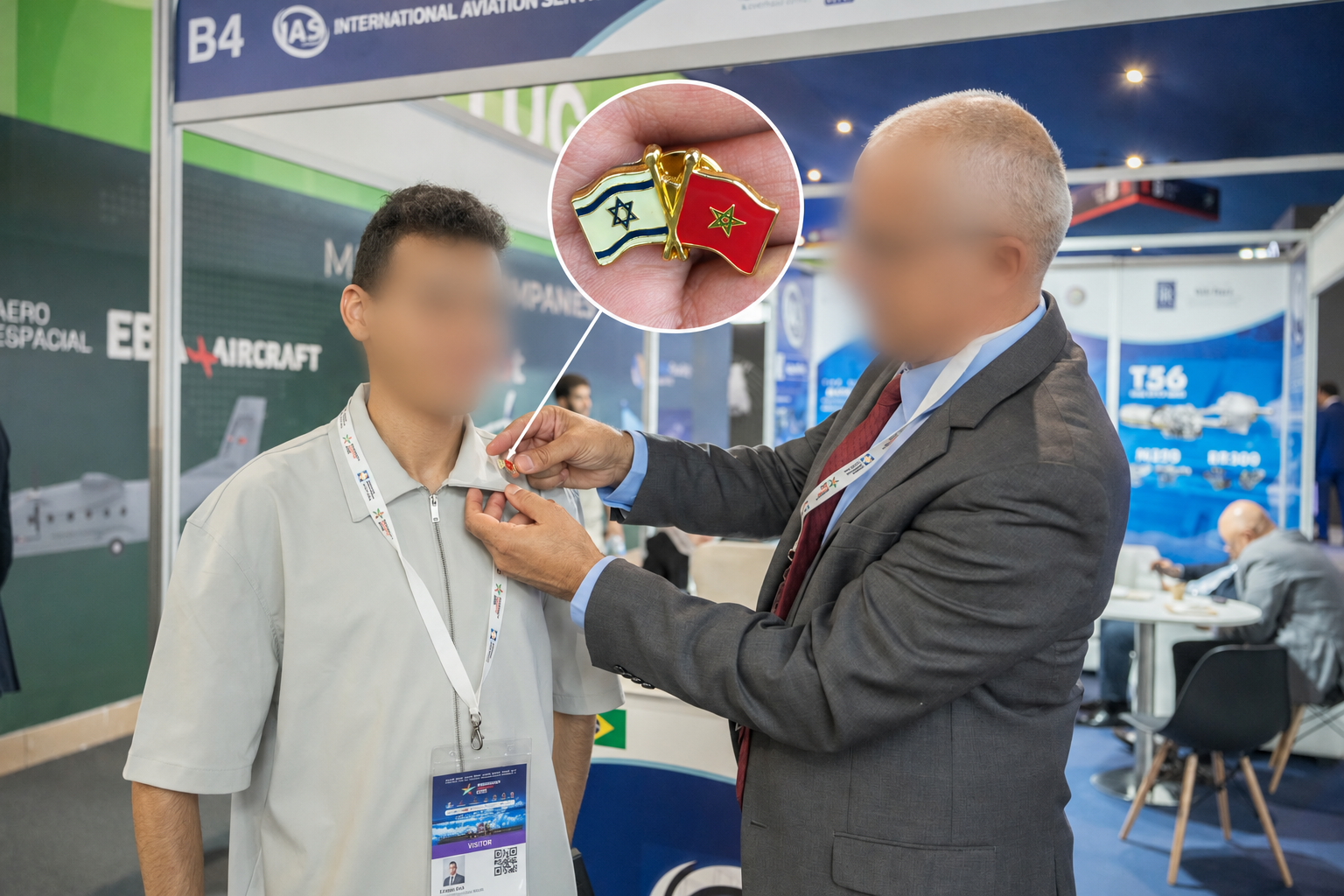
An Israeli official fastens a Morocco-Israel friendship pin to my shirt at Marrakech Airshow 2026. Both faces are blurred for privacy, given the sensitivity surrounding Israeli participation.
A senior Israeli official gave me a small pin bearing the Moroccan and Israeli flags at the Marrakech Airshow and fastened it on me. Officials there were wearing the same emblem. The gesture was gracious; the political symbolism, considerably less straightforward. Those adjoining flags compressed a relationship whose official advancement has far outpaced its public acceptance.
I had come to cover the 2026 airshow, held at Marrakech’s Royal Air Force base from October 7 to 10. Israel’s first official national pavilion became one of its most contentious stories. Supporters welcomed a sovereign country diversifying its partnerships; opponents discerned a further penetration of Zionism into Moroccan state institutions. The show opened on the third anniversary of Hamas’s October 7 “atrocities,” a date now inseparable from both Israeli trauma and the devastation subsequently inflicted on Gaza. That coincidence lent the proceedings an inescapable gravity.
Israel’s presence also followed three years of largely behind-the-scenes diplomatic and defense engagement, recalling the discreet channels through which Rabat and Tel Aviv maintained contacts long before their formal normalization of relations in December 2020. Once again, relations that had largely escaped public scrutiny were finding their way into the open, this time against the backdrop of a war that had profoundly deepened the divide between Morocco’s strategic calculations and public sentiment.
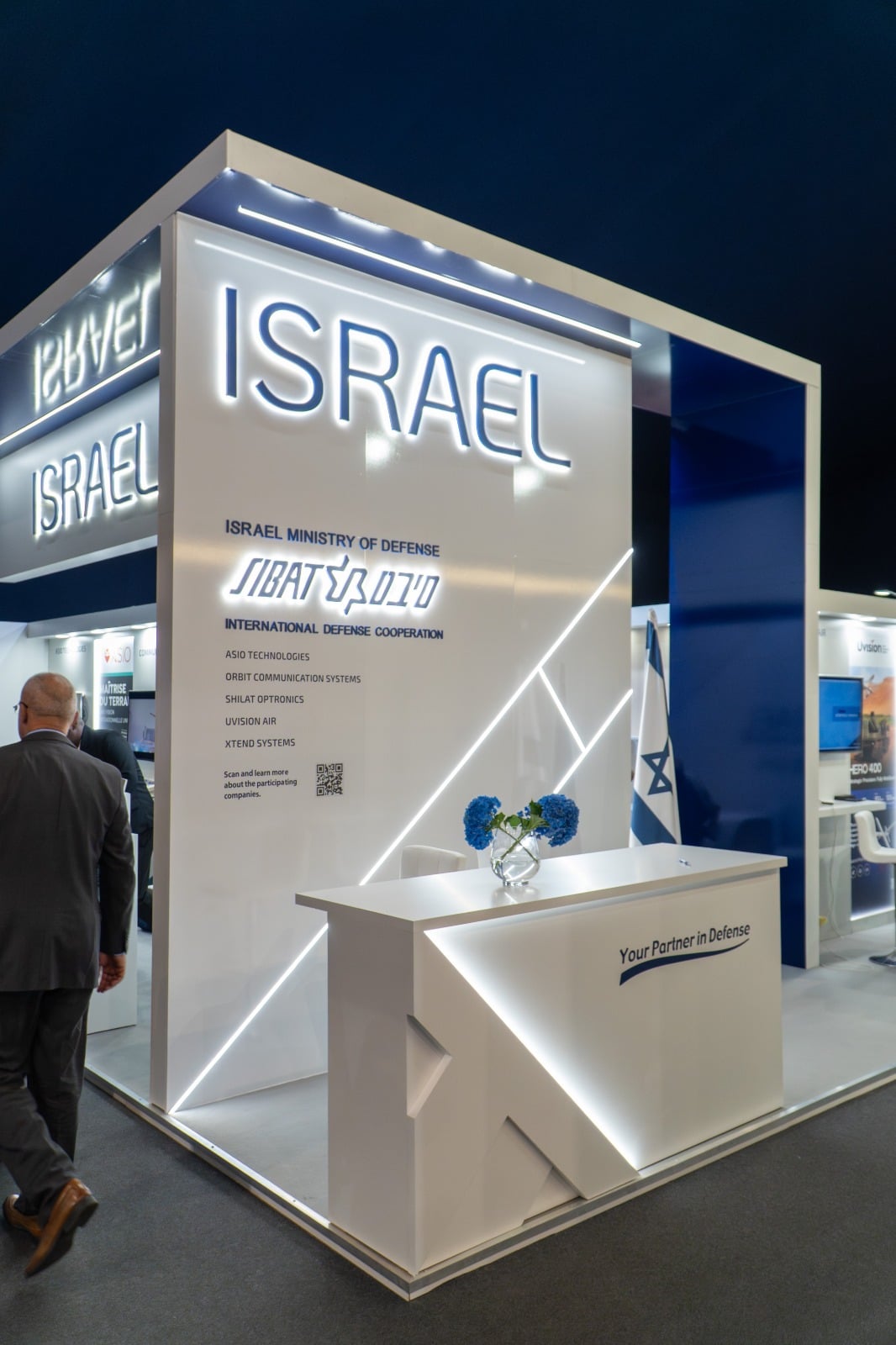
The pavilion was a substantial undertaking. SIBAT, the Israeli Ministry of Defense’s International Defense Cooperation Directorate, organized it, with ASIO Technologies, Orbit Communication Systems, SHILAT Optronics, UVision Air, and XTEND Systems exhibiting there. Elbit Systems, Israel Aerospace Industries (IAI), and Rafael also participated. Loitering munitions, robotic systems incorporating artificial intelligence, autonomous navigation, and satellite communications supplied the technological vocabulary. The ministry explicitly situated the initiative within its strategy of expanding defense exports, strengthening military capabilities, and advancing foreign policy. Its political purpose required little deciphering.
It was a pleasure to meet, converse with, and interview Israeli defense officials, including Colonel Sharon Itach, Israel’s military attaché to Morocco, and to speak with personnel from the diplomatic mission in Rabat. Among the senior figures present were SIBAT chief Brigadier General (Res.) Yair Kulas, head of mission Yosef Ben David, and Rafael chief executive Yoav Tourgeman. These encounters afforded something that the more categorical accounts of the event could scarcely convey: access to the people conducting this relationship, with their warmth, assumptions, and conspicuous precautions.
Several spoke Darija and traced their families to Morocco. Others, with no Moroccan ancestry or connection to the Arab world, spoke Arabic. Conversation could acquire an ease that the surrounding politics emphatically lacked. Morocco was, for some, an inherited intimacy rather than an unfamiliar diplomatic posting. That attachment deserves to be taken seriously. Moroccan Jewish belonging neither originated with normalization nor depends upon the policies of whichever government governs Israel.
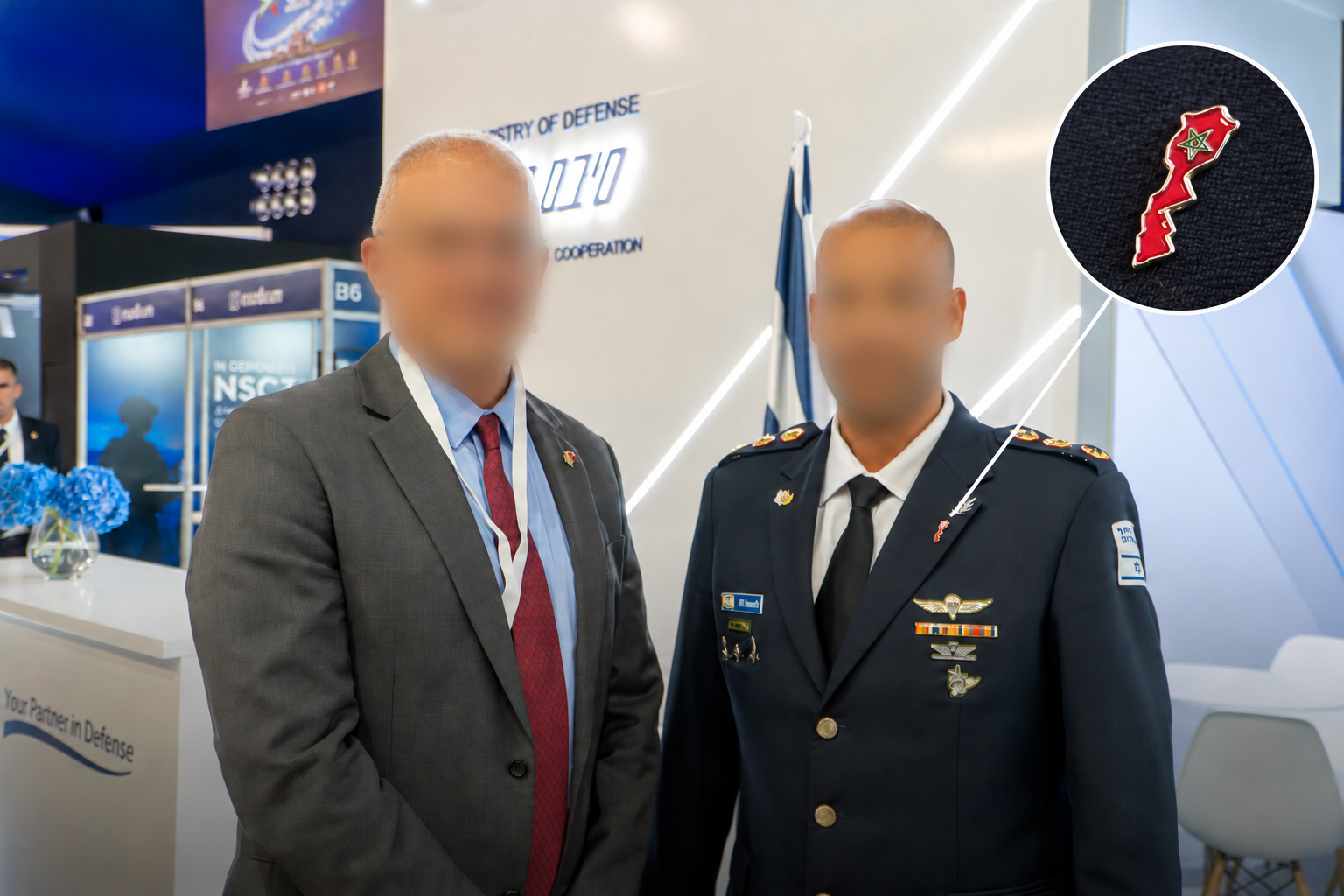
Itach, in military uniform, wore a pin depicting Morocco’s full map, including its Western Sahara. “Dima Maghreb” and “the Sahara is Moroccan” were recurrent refrains. Israel formally recognized Moroccan sovereignty over the Sahara in July 2023; at the airshow, that position had become wearable and conversational. The significance was unmistakable. Here were Israeli representatives affirming the territorial integrity around which Morocco organizes so much of its diplomacy, addressing their hosts in the language of their most consequential national commitment.
Such gestures can be sincere and strategically astute simultaneously. Recognizing their value to Morocco does not require imagining that they settle every other question Moroccans bring to the relationship. A declaration about the Sahara cannot reasonably be expected to extinguish concern for Palestine.
Even the designation of the Rabat mission illustrates the importance of precision. Israeli officials and reporting had long used the language of an “embassy,” including when announcing its construction, while the representation remained a liaison office. On September 16, Morocco and Israel agreed to elevate their missions to full embassies and exchange ambassadors. Embassy status now has an explicit bilateral commitment behind it. The announcement establishes the agreed upgrade; it does not, by itself, establish that implementation is complete.
The more consequential discrepancy concerns public consent. I used these conversations to emphasize how little the congeniality of official encounters, or assurances exchanged behind closed doors, necessarily reveals about Moroccan society. Normalization has proceeded principally between governments. It has acquired institutional substance without acquiring a comparable popular constituency.
Moroccan attitudes are not uniform. But opposition to Israeli policy and solidarity with Palestinians extend far beyond the most vociferous anti-normalization activists. Even the more measured response frequently amounts to an acknowledgment that the state has its reasons, its security calculations, and its sovereign prerogatives. That is acquiescence in the state’s authority to decide. It should not be inflated into enthusiasm for the decision, still less an endorsement of Israel’s conduct.
Arab Barometer’s surveys conducted in 2025 found that just 13% of Moroccans viewed Israel favorably. The gulf is measurable, as well as palpable.
Even worse, many Moroccans were appalled to learn that Israel would be participating in the Marrakech Airshow, seeing it as a bitter moral contradiction: the very weapons and military technologies they associate with the killing of Palestinians and the devastation of Gaza were now being showcased and marketed on Moroccan soil, in a predominantly Muslim country they believed should have stood firmly against such a spectacle rather than provided a platform for the industry behind it.
The reality, however, is that Morocco’s military establishment operates according to a logic fundamentally different from that of the broader Moroccan public. At the Israeli pavilion, military delegations arrived, held meetings, examined defense technologies, exchanged views with company representatives, and explored opportunities for cooperation. For military professionals, such encounters are governed by strategic calculations, operational requirements, and national defense priorities rather than public sentiment. Yet this institutional pragmatism should never be mistaken for popular acceptance. The presence of Moroccan military officials at an Israeli defense exhibition does not mean that Moroccan society has embraced Israel, endorsed its military operations in Gaza, or abandoned its longstanding solidarity with the Palestinian people. What happens behind the doors of a defense pavilion is one thing; what millions of Moroccans believe beyond those doors is quite another.
Israel’s response to October 7 has deepened that estrangement. Hamas’s “slaughter” of civilians and hostage-taking were indefensible. The calamity Israel then visited upon Gaza cannot be absolved by reiterating the crimes that preceded it. Destroyed homes, repeated displacement, and the disintegration of civilian life have shaped how Israel is understood in Morocco. A 2026 assessment published by the United Nations described approximately 1.9 million people displaced, often repeatedly. This is the human reality against which declarations of partnership are heard, and against which the merchandising of military prowess is judged.
Being there also meant encountering reticence. Too many Israelis I approached declined to give statements. Security personnel were conspicuous and vigilant. I found that reluctance dispiriting, particularly at an event intended to advertise cooperation. Even photographs subsequently published by Israel’s Air Force on its official social media accounts showed the faces of some individuals deliberately blurred, adding another layer of discretion to what was supposed to be a public demonstration of bilateral cooperation. Security arrangements alone cannot establish what their subjects believe about their reception. Taken alongside the guarded exchanges, however, they reinforced my impression that the delegation understood the precariousness of its public welcome. The official invitation had not dispelled apprehension.
I struggle to envisage an unreserved popular embrace emerging soon from these three years of devastation and embitterment. Even longstanding Western partners have hardened their policies. Morocco’s continued engagement should therefore provoke serious reflection in Israel about the responsibilities it entails. It cannot confer absolution for conduct condemned elsewhere.
Israel’s October 27 parliamentary election offers an opportunity to begin changing that conduct. The necessary rupture must reach beyond Benjamin Netanyahu’s personal tenure to the Netanyahuism that has elevated political self-preservation into a governing principle and accommodated the far right’s annexationist zealotry and supremacist contempt for Palestinian rights. A nationalist politics that treats another people’s subordination as an entitlement is morally bankrupt. It also sabotages the regional acceptance Israel says it seeks.
A different prime minister would not automatically resolve these antagonisms. Any successor who merely administers the same policies more decorously will perpetuate them. What could begin to alter perceptions is a demonstrable commitment to Palestinian civilian protection and political rights, restraint of settler violence, and accountability for abuses. An electorate can change the leadership; the leadership must then change what people experience.
I came away grateful for the conversations and for the courtesy embodied in that small pin. I also came away more certain that the people I met deserved a candid account of the country receiving them. Morocco can offer Israel official recognition and genuine personal warmth while much of its public remains profoundly alienated. A more durable welcome will require an Israel that accords Palestinian rights the seriousness it professes toward Moroccan ones.
Related Posts