A Moroccan Journalist
Israel now needs a Moroccan prime minister
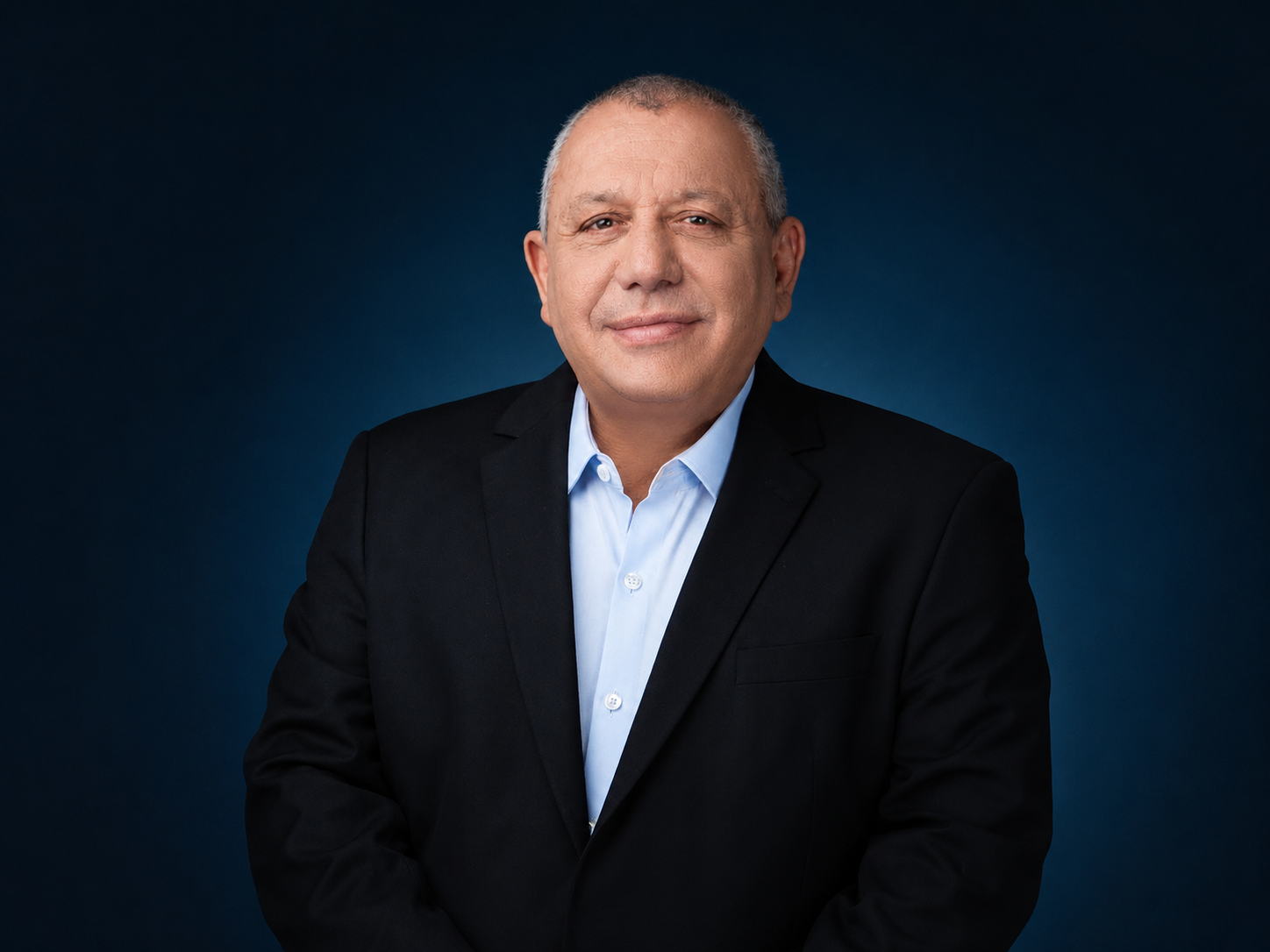
Gadi Eisenkot, currently emerging as the leading challenger to Prime Minister Benjamin Netanyahu ahead of the upcoming election, 2023. Elad Malka / Wikimedia Commons.
There is an old saying, attributed to Morocco’s King Hassan II, that captures something no diplomatic communiqué ever could: “When a Jew leaves Morocco, we lose a citizen, but we gain an ambassador.” It is a beautiful sentiment, generous and historically grounded, and it has been quoted so often in the decades since that it has acquired the comfortable patina of a proverb.
But what is less often quoted – and what matters far more for the question of who should lead Israel next – is what the same king said in his extraordinary 1993 memoir, La Mémoire d’un Roi: “I am convinced that when Israelis of Arab origin have a real responsibility in conducting negotiations, we will seriously approach peace. They are the ones who will negotiate best.”
Hassan II died in 1999. Nearly three decades later, not a single Israeli of Mizrahi or Moroccan origin has ever served as prime minister – not one, in the entire 78-year history of a state where Mizrahi and Sephardic Jews now constitute the demographic majority.
Every prime minister, from David Ben-Gurion to Benjamin Netanyahu, has come from an Ashkenazi or European Jewish background, products of a founding elite that arrived with the ideological architecture of European Zionism and built its political institutions in its own image.
David Levy, born in Rabat, rose from the social and geographic margins of Israeli society to become one of the country’s most senior political figures, serving as deputy prime minister for much of the period between 1981 and 2000 and three times as foreign minister. He twice sought the leadership of Likud, in 1992 and 1993, but never reached the premiership.
Amir Peretz, born in Boujad, came closer from the other side of the political divide: he led the Labor Party and entered Ehud Olmert’s government in 2006 as both deputy prime minister and defense minister. His political standing was badly damaged by the Second Lebanon War, and he lost the Labor leadership the following year.
Both men rose to within sight of Israel’s highest office, yet neither crossed the final threshold. It is difficult to separate that history from the deep social contempt, institutional prejudice, and cultural hierarchy that shaped the treatment of Moroccan and other Mizrahi Jews in Israel for decades.
They were brought into the state as citizens but too often treated as an inferior human material to be disciplined, relocated, patronized, mocked for their accents, and pushed to the political and geographic margins by an establishment that saw itself as more European, more modern, and more entitled to rule.
Against that history stood the unmistakable sense – never quite spoken aloud but always legible – that the Israeli establishment was not yet ready to entrust the premiership to a man who carried the accent and biography of the Arab world in his bones.
This absence is not merely an injustice of representation, though it is certainly that; it is a strategic catastrophe that has shaped – and deformed – Israel’s relationship with its own neighborhood for the better part of a century, producing a state led by men and women who understood Europe intimately and the Middle East almost not at all.
Hassan II diagnosed this with devastating precision when he reflected on the contrast between Israel’s Ashkenazi leadership and its Mizrahi citizens: “When I saw Israel symbolized by Mrs. Golda Meir – probably a respectable woman, but who had been a teacher in the United States and who did not speak a single word of Arabic – personally, it shocked me.” He then added, with the quiet authority of a king who had spent decades navigating the region’s currents: “This, moreover, is what made a solution increasingly difficult.”
Which brings us to Gadi Eisenkot – a 66-year-old son of working-class Moroccan Jewish immigrants: his father, Meir, from Safi/Marrakech; his mother, Esther, from Casablanca. The family name itself – originally Azencot, of Amazigh origin – was quietly altered by an Israeli clerk upon arrival, as though the state could not quite accommodate the thing it had imported.
Born in Tiberias, raised in the peripheral port city of Eilat, far from Tel Aviv’s corridors of power, Eisenkot rose through the Golani Brigade to become, in 2015, the first Israel Defense Forces (IDF) chief of staff of Mizrahi background in Israel’s history. He is also a grieving father who lost his son Gal in the early weeks of the Gaza war and 2 nephews in the same conflict – a sacrifice that Netanyahu, whose own son spent a significant portion of the war in Miami, cannot answer and has not tried to.
In September 2025, two months after leaving Benny Gantz’s National Unity party and resigning from the Knesset itself, Eisenkot founded Yashar! – Hebrew for “Straight!” – a centrist party whose very name, inspired by freed hostage Eli Sharabi’s insistence that the struggle over the hostages was “not about right or left, but straight,” rebukes the political theater that has consumed Israeli governance.
He had joined Netanyahu’s emergency war cabinet as a nonvoting observer after October 7, serving through eight months of war before quitting in June 2024 with a devastating judgment on the prime minister’s leadership. “This is a leadership for which the words ‘accountability’ and ‘personal example’ are foreign. It is a leadership that lies,” he recently charged.
According to every major poll conducted in the summer of 2026, he emerged as Netanyahu’s leading political rival ahead of the Knesset elections scheduled for October 27, ranking as the candidate Israelis considered most fit to lead the country and propelling Yashar past Likud for the first time.
Eisenkot is, in almost every conceivable dimension, Netanyahu’s opposite: where Netanyahu is the consummate performer – American-educated, silver-tongued, fluent in the language of Washington think tanks and cable news – Eisenkot is gruff, unpolished, plainspoken, a man whose heavily accented English has already become the subject of Likud attack ads contrasting it with the prime minister’s polished international delivery.
And yet that contrast, far from being a liability, may be precisely the point – not only for Israeli domestic politics, but for the future of Israel’s place in a region it has spent decades alienating with a leadership caste that never learned to speak its language, literally or figuratively.
The deeper irony – and it is an irony so profound that it borders on historical cruelty – is that Moroccan Jews have been the backbone of the very political movement that has never allowed them to lead it.
Mizrahi voters, and Moroccan Jews in particular, formed the intensely nationalist, fiercely loyal working-class constituency that brought Menachem Begin’s Likud to power in 1977, ending three decades of Labor hegemony. The result became known in Israel as “the Upheaval” (HaMahapakh).
They have sustained Likud’s dominance ever since, election after election and decade after decade, particularly in development towns and peripheral cities. There, the memory of Ashkenazi contempt – epitomized by Ben-Gurion’s infamous 1965 remark that Moroccan Jews “had no education” and that their “customs are those of Arabs” – still burns with undiminished intensity.
They built Likud. They elected it. They defended it. They never led it. The party repaid their loyalty with representation at the margins and power at the center reserved, always, for the European-born elite.
As recently as March 2026, Ziv Agmon – Netanyahu’s own spokesman and acting chief of staff – was forced to resign after leaked remarks in which he called Moroccan-origin Likud lawmakers “baboons” and “a retarded Moroccan,” adding: “It’s not good that they opened Morocco to Israeli tourism – now we know where our Moroccans came from. From Africa.” The people who made Likud are still being mocked by the people who run it.
Eisenkot’s candidacy does not erase this history, but it does something perhaps more important: it offers Israel, at the most dangerous and isolated moment in its existence, the possibility of a leader whose biography is not an obstacle to regional understanding but an instrument of it. A man who grew up in the cultural world of Moroccan Jewry – a world of Arabic, of coexistence, of shared food and shared cities, and a thousand years of proximity to Islam – carries within him a set of instincts, intuitions, and cultural literacies that no amount of strategic briefings can replicate.
Hassan II understood this when he observed that Jews from Arab societies “cohabited very well” with Muslims, without “dramas comparable to those experienced in the West.” He contrasted this sharply with the psychology of Ashkenazi leaders like Begin and Yitzhak Shamir. “They were witnesses to pogroms – but those who killed Jews were not Arabs,” he argued. “Arriving in Israel, they immediately transposed those memories, by homothety.”
For Hassan II, this helped explain why Arab Jews often approached the conflict differently: the defining traumas carried by many European Jews had been born in the pogroms of Eastern Europe, in the shtetls of Poland and the ghettos of Lithuania, not in the Arab world. Yet upon arriving in Israel, they projected onto their new Middle Eastern neighbors a hostility whose deepest origins lay not in the Middle East, but in Europe.
Israel in 2026 is a country that has fought itself into a corner – diplomatically shattered, regionally despised, losing support in the very Western capitals that once sustained it – and it is led by a man whose entire political survival depends on the perpetuation of conflict and the exploitation of fear.
Netanyahu will stand trial, or he will stand for reelection, and his calculation has always been that the second can indefinitely postpone the first. The cost of that calculation has been measured in tens of thousands of Palestinian lives, in the collapse of the Abraham Accords, in the evaporation of whatever fragile goodwill Israel had begun to accumulate in the Arab world between 2020 and 2023.
The question now is not whether Israel can afford a change of leadership – it cannot afford not to – but whether it is finally ready to trust its future to the very community it once marginalized, the community that Hassan II believed held the key to peace all along: the Jews who came from the Arab world, who understood it from the inside, and who might yet, if given the chance, lead Israel back from the abyss that its European-born leadership has driven it into.
Related Topics
Related Posts