
There is nothing to solve
Those who want to annex Judea and Samaria and those who want to conjure a Palestinian state there agree on nothing except the premise that decides everything: the present arrangement cannot last. “Unsustainable” is the word, pronounced with the confidence of a law of physics and, in my experience, never once accompanied by evidence.
I wrote last week about what that adjective does for a presidential campaign; it performs the same service for ideologues of every stripe, sparing them the tedium of demonstrating that a thing which has functioned for three decades is about to stop. Perhaps, before accepting the axiom, we should test it. There is an old rule about not fixing what isn’t broken, and it has outlasted every peace plan on record.
The rival demolition crews have, between them, produced exactly one durable piece of analysis: the case against each other. When the two-stater explains why annexation fails, he is entirely correct. Sovereignty without citizenship for millions of Arabs would hand the apartheid libel the factual scaffolding it has always lacked — today the slander is answerable precisely because those Arabs vote for the Palestinian Authority, pay its taxes, stand in its courts, and endure its misrule. Citizenship, on the other hand, would turn Israel into a laboratory testing whether a Jewish state can absorb an electorate schooled on martyr stipends and maps without Israel, and remain itself. No actuary alive would price that policy.
The annexationist returns the favor with equal accuracy: a terrorist state on the hills above Ben Gurion Airport, governed by whichever faction shoots best, is — after October 7 — a proposal to schedule the next massacre and grant the perpetrators sovereign airspace. When each side is this persuasive about the other, the reasonable conclusion is that both are right, and that the thing they propose to replace deserves a second look.
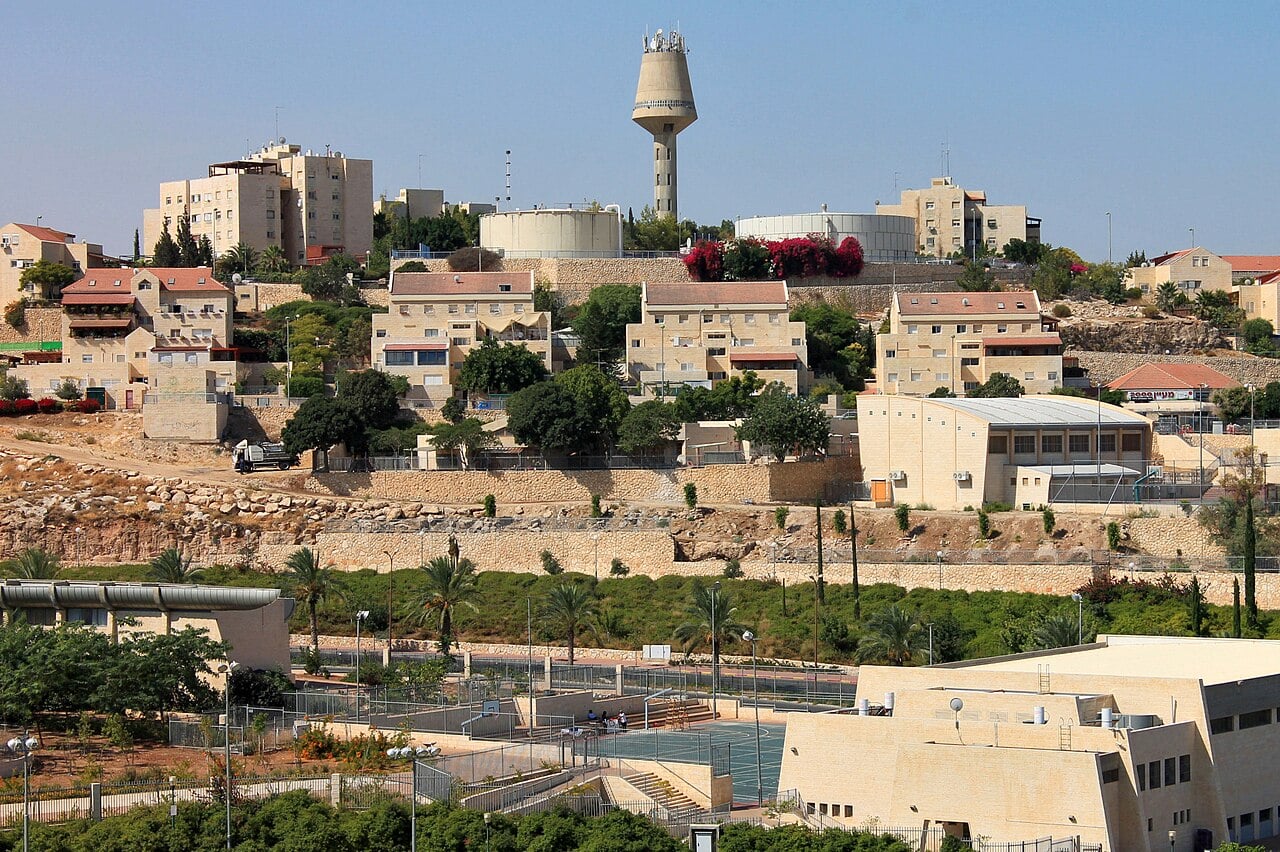
Gaza is its own story, and I will keep it offstage. The Board of Peace, its pilot zones, and Hamas’s theatrical resignations can be discussed another day. The argument here concerns the highlands, where the arrangement everyone keeps sentencing to death goes on stubbornly living. Under the interim accords, the Palestinian Authority administers the cities where the overwhelming majority of Arabs in Judea and Samaria reside — schools, courts, taxation, police — while Israel retains the security envelope. That interim period was designed to expire after five years. It has now run for more than 30, which in the Middle East is what permanence looks like. It survived the second intifada — waged from the very cities it had handed over — the collapse of every final-status negotiation, and a war on half a dozen fronts. Arrangements of this longevity are not accidents. They endure because every alternative is worse, and because every serious actor, whatever he declaims from podiums, knows it.
The ground itself testifies. Since Operation Iron Wall went into the northern camps in January 2025, terror in Judea and Samaria has collapsed: from a monthly average of 214 attacks in 2023 to 57 by last year, with April 2025 the quietest month in half a decade. Stone-throwing and firebombing — the grassroots weather of an uprising — fell from over three thousand incidents in 2023 to roughly a thousand. There is no third intifada, and the people expected to wage it show little appetite: an INSS survey found three-quarters of local Arabs dread the “Gazafication” of their cities, 43 percent prefer negotiation, and a mere 17% still favor armed struggle; this spring they defied Hamas’s boycott calls and voted in municipal elections at 56% turnout. Construction proceeds on the other side of the ledger too: E1 — more than 3,400 units on a tract that had sat in the planning files since Rabin — received final approval last August, and the tenders went out in January. Meanwhile, the territory trends only when Gaza produces content.
That is the tell. The diplomatic stampede of last September — Britain, France, Canada, Australia, Portugal, trailed by a procession of microstates — was a response to two years of Gaza coverage, timed for the General Assembly cameras, and had nothing whatsoever to do with conditions in Judea and Samaria. Keir Starmer recognized a state while stipulating that Hamas — winner of the Palestinians’ most recent parliamentary election, held in 2006 — must play no part in it; the entity’s president is meanwhile in the third decade of a four-year term.
The chancelleries know the exercise is theater. Their own foreign ministries wrote the cables from Camp David and Taba; they remember that the Arabs spurned partition in 1937 and again in 1947, walked out on Barak in 2000, and never answered Olmert’s map in 2008. A movement that has declined statehood at every opportunity for nearly 90 years is not seeking a country of its own; it is pursuing the abolition of somebody else’s. “Two states” now functions in European politics the way “net zero” does — a liturgical formula recited to electorates radicalized by their own media, at no cost to the reciter.
What follows is a program, and it is deliberately boring. Lower the voltage. In Gaza, grind ahead with stabilization until the story that feeds the cameras runs out of episodes. In Judea and Samaria, enforce zero tolerance for violence in both directions, because the terror cell in Nablus and the pogromist in the South Hebron Hills are equally enemies of the arrangement — and the second is a gift to Israel’s defamers that no hasbara budget can offset. The army’s own figures show settler attacks rose 27% last year while prosecutions remained, in the reporters’ phrase, rare and convictions rarer; that is a policy choice, and a foolish one. The same treatment is owed to those who spit at clergy in the Old City, retail manufacturers of the myth that Jews hate Christians and that a pilgrim is unsafe in Jerusalem. Israeli law already prices religiously motivated spitting at up to two years in prison. Indict, sentence, invite the bishops for the photograph, and let the verdicts do the educating abroad.
Then keep building — by the book. Raze the illegal outposts without sentiment and pour concrete in Area C where the zoning allows. The distinction between law and squatting is the entire case. Welcome the capital of Muslim friends: Abu Dhabi’s Mubadala and Baku’s SOCAR between them now hold a fifth of the Tamar gas field, a quieter argument for coexistence than any communiqué — and audit every shekel of Qatari provenance down to the last riyal. And should Brussels demand a tangible deliverable on the two-state file, Israel can offer a confidence-building measure: a football match between Jewish and Arab youth sides, jointly refereed, with closing statements.
None of this solves anything, and that is precisely the point. If this conflict ever ends, it will end sideways. Picture a manufactured Palestinian identity slowly eroding into something local and livable, while economic gravity binds the highlands to Jordan and Gaza to Egypt. Add generously funded voluntary emigration for anyone who cannot abide a Jewish neighbor. These are long shots, and long shots are permitted to miss — which is why nobody bets a country on them. I have argued before that there will be no Palestinian state; the upshot is calmer than it sounds, because nothing needs to replace it. Micah Goodman advocates a similar approach, which he calls “shrinking the conflict”; its strength lies in what it declines to attempt.
“Free Palestine” is, at bottom, a current thing, and current things pass. The keffiyeh on the Berkeley quad is headed where the Che Guevara shirt went — first the drawer, then the costume box. Starve the cause of fresh footage and the algorithm will wander off to graze elsewhere; it always does. The conflict is a chronic condition, and Israel manages it better than its critics can bear to admit. Medicine has a maxim for exactly this situation: first, do no harm. The diplomats have never sworn it, which is reason enough to keep the patient out of their hands. In Judea and Samaria, there is nothing to solve — and a great deal to break.