
Turki al-Faisal and the Burden of Saudi Arabia’s Elders
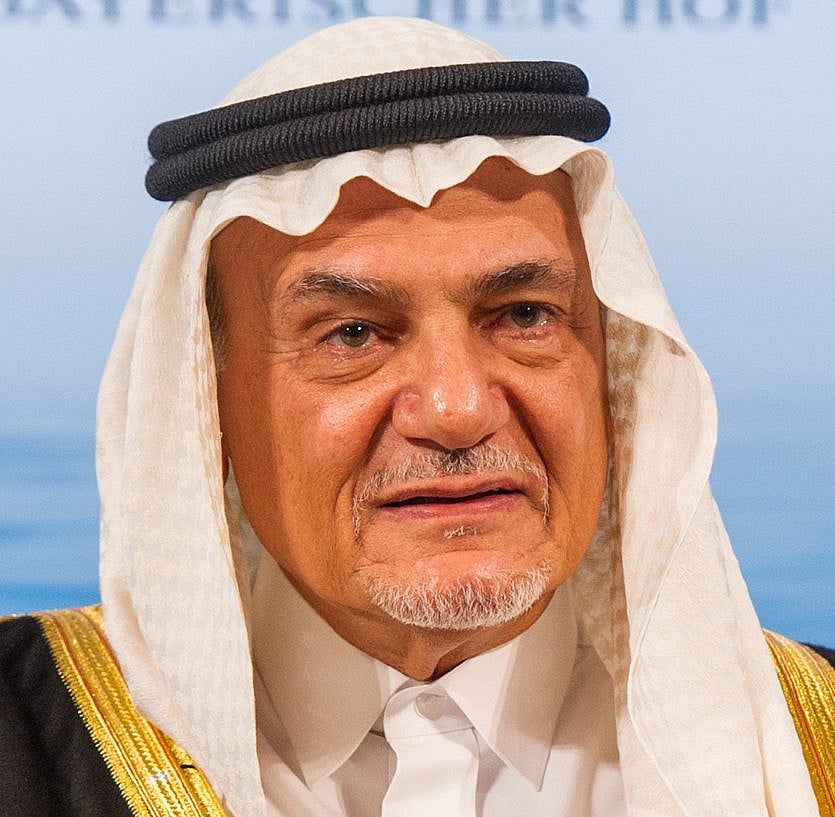
Prince Turki al-Faisal is one of the most respected elders of the Kingdom of Saudi Arabia. A statesman and a former intelligence chief, he led Al Mukhabarat Al A’amah, the Kingdom’s intelligence agency, from 1979 to 2001, resigning just ten days before the 9/11 attacks. Those who have known him describe him as a gentleman. In October 2023, in a remarkably candid speech at Rice University’s Baker Institute for Public Policy, he criticized both Hamas and Israel. “There are no heroes in this conflict, only victims,” he said. While he was also critical of Israel, Prince Turki stood out as a rare and powerful Arab Muslim voice willing to condemn Hamas openly. “I categorically condemn Hamas’s targeting of civilian targets of any age or gender as it is accused of. Such targeting belies Hamas’s claims to an Islamic identity,” he said. His speech gave one hope that a man so powerful and influential could also be so fair.
Saudi Arabia is undergoing a rapid transformation. King Salman, one of the Sudairi Seven, continues to reign at the age of 90. Until a few years ago, it was widely assumed that succession would continue to pass from brother to brother until no direct son of the Kingdom’s founder, Abdulaziz Al Saud, remained. There was also the question of generational change. Prince Mohammed bin Nayef, a respected moderate with no sons, was once seen as the favourite to become the first ruler of the next generation.
Prince Mohammed bin Salman, the King’s young and ambitious son, changed all that. Through bold, aggressive and often controversial moves, he effectively secured his position as his father’s successor. His approach has been criticized, and not without reason, but for a time it seemed that Mohammed bin Salman, despite a complicated beginning, represented the future of the Kingdom: a new Saudi Arabia where women could drive, society would open, the economy could move beyond oil, and the country could become an example to the wider ummah of how Islam could shape modern life.
Since the abolition of the caliphate and the exile of the last Caliph, Sunni Islam has lacked a central source of leadership. That absence has encouraged extremism and allowed violent claimants to act in the name of Islam, bringing death, destruction and war in the name of the Almighty.
For a while, it seemed that under Mohammed bin Salman’s leadership, and with the guidance of Saudi Arabia’s elders, the Kingdom would not only modernize itself but also become a beacon for Muslims worldwide, especially in rejecting the use of Islam as a justification for terrorism, war and the killing of innocents.
Prince Turki is one of the elders to whom the Saudi state, and surely its Crown Prince, would look for guidance. He was at the helm when Saudi Arabia watched Iraq attack Iran in an attempt to prevent the Ayatollahs’ regime from spreading its influence into Iraq, a conflict that led to eight disastrous years of war. He was a key figure when the US-Saudi alliance funded and strengthened the mujahideen to fight the Soviets in Afghanistan. He has witnessed, from the inside, the dangers posed by the Iranian regime to the Middle East and the world. He has also seen the consequences of extremism, sectarianism and proxy wars, much of it through direct experience. Above all, he understands the importance of Israel’s existence and the necessity for the Kingdom to find a sustainable middle ground between Israelis and Palestinians.
This is why it is disappointing to read his op-ed in Asharq Al-Awsat, which appears to place primary blame on Israel for the war with Iran. While he does apportion blame to Iran as well, it is regrettable that he does not underline more forcefully the futility of unwinnable wars, whether with Iran, Yemen or elsewhere. Nor does he acknowledge that Iran has, since 1979, done little more than place the survival and security of the entire Middle East in peril.
From a path of progress and modernity, Saudi Arabia, under pressure, now seems at risk of returning to old habits. Its renewed dependence on Pakistan will lead to no good. Prince Turki will surely remember, from his own experience in the 1970s and later during the war on terror, that dependence on Pakistan, especially on its army and intelligence services, ended up costing everyone dearly, including Pakistanis themselves. Instead of firmly abandoning sectarian politics, Saudi Arabia appears increasingly willing to encourage a Sunni alignment with Turkey, Egypt and Pakistan, at the cost of demonising Israel and alienating other allies.
For Mohammed bin Salman’s eventual succession, when the time is right, it is essential that the Crown Prince continue with his ambitious plans for modernity and reform, rather than be dragged back into older habits, however familiar or comfortable they may seem. The future of Saudi Arabia, and the security of the Middle East, now depend in large part on the success of the young Prince. It is the duty of the elders of the House of Saud to stand by him and make sure he does not repeat their mistakes. That may be the only way out of this conundrum.