
Two Carriers, High Stakes: Washington’s Iran Test
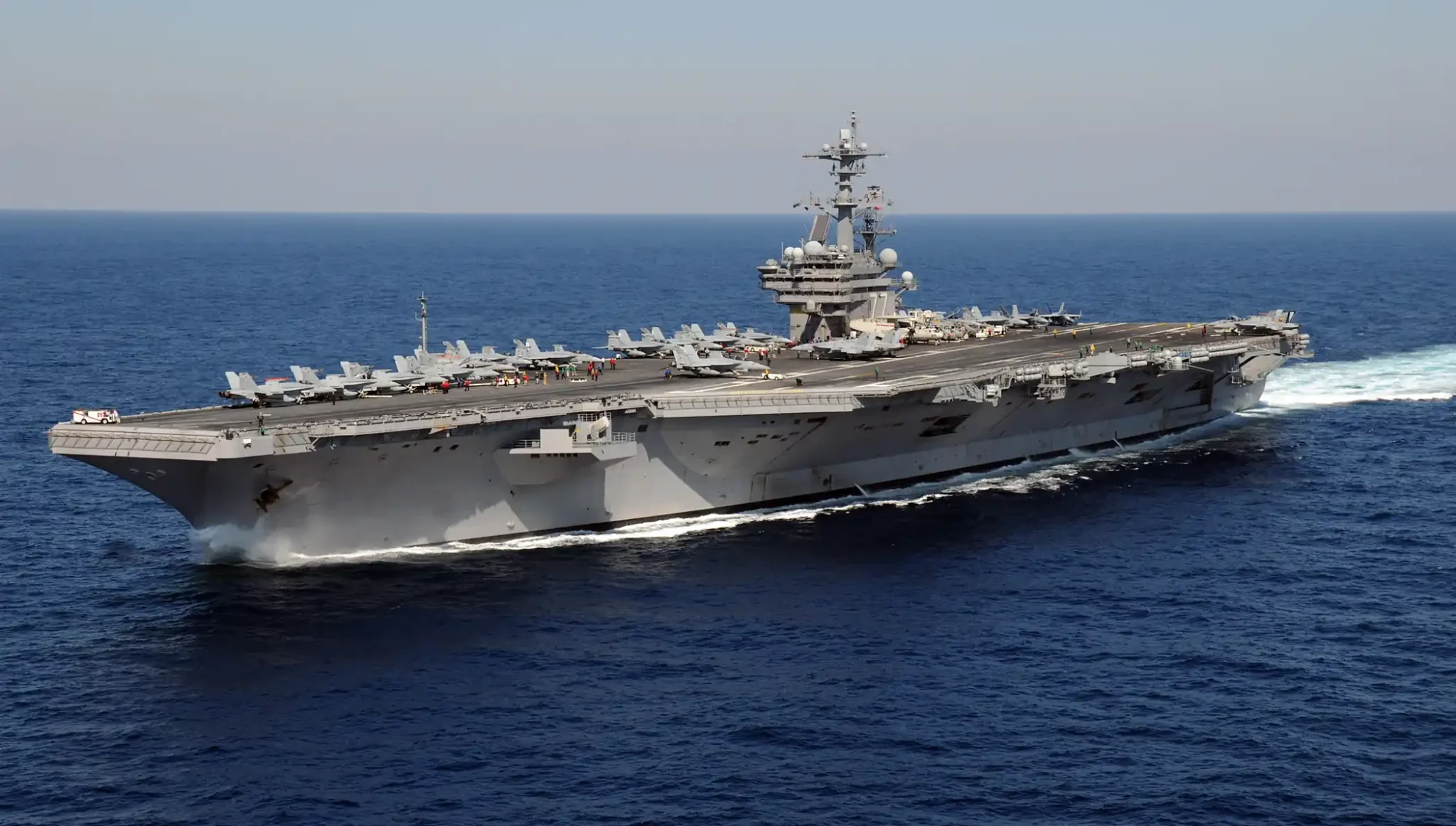
As the United States navigates a critical diplomatic and strategic moment with Iran, the Pentagon’s decision to prepare a second aircraft carrier strike group for potential deployment to the Middle East is certainly not just a side note. It represents a crucial shift in Washington’s Iran policy — one that adds weight to America’s deterrence strategy while diplomacy is still in play. If that order comes through — and officials indicate it could happen in just a few hours — it’ll be the first time in nearly a year that two American carriers are positioned in the region at once. This isn’t just routine; it’s a serious alert dressed up in diplomatic language.
Exclusive: The Pentagon told a second aircraft carrier strike group to prepare to deploy to the Middle East as the U.S. prepares for a potential attack on Iran https://t.co/c74fT62Lsi
— The Wall Street Journal (@WSJ) February 11, 2026
The USS Abraham Lincoln is already stationed in the Arabian Sea, a visible deterrent and rapid-response node in the region. U.S. officials say the USS George H.W. Bush, currently finishing exercises off Virginia, is being prepared to join its sister ship within about two weeks if President Donald Trump issues a deployment order.
The significance of two carriers in the Middle East can’t be overstated. This would be the first dual-carrier presence in nearly a year — a powerful statement that Washington is not only watching events unfold but is also willing to elevate its posture if necessary. It expands the range of U.S. options, from air defence and strike capability to extended maritime control, while serving as an unmistakable message to Tehran and America’s regional allies.
Holding the line. ????⚓
The USS George H.W. Bush Carrier Strike Group conducted a simulated strait transit while underway for Group Sail in the Atlantic Ocean. Group Sail is designed to increase the Strike Group’s tactical proficiency and lethality across all domains.
???? MC3… pic.twitter.com/3NBbyr6NKn
— U.S. Navy (@USNavy) February 6, 2026
But this buildup unfolds in parallel with ongoing diplomatic engagement. Talks between U.S. and Iranian officials — including sessions facilitated by regional interlocutors — continue even as the Navy readies for possible action. Tehran has insisted it will discuss constraints on uranium enrichment in return for sanctions relief, while rejecting negotiations over its ballistic missile program.
President Donald Trump, after his lengthy White House meeting with Israeli Prime Minister Benjamin Netanyahu, reiterated that his preference remains a negotiated settlement with Iran. He has not hidden his skepticism, nor his willingness to use force if talks collapse. His message appears to be straightforward: negotiations will continue — but they will not be open-ended, and they will not proceed under illusion.
Prime Minister Benjamin Netanyahu is now meeting with US President Donald Trump @realDonaldTrump, at the White House. pic.twitter.com/qa0XejDO7v
— Prime Minister of Israel (@IsraeliPM) February 11, 2026
This is classic coercive diplomacy. The logic is simple: credible military readiness strengthens negotiating leverage. The Pentagon’s preparations, satellite imagery showing expanded air defense deployments in Qatar, and public reminders of past strikes all reinforce the same premise — the United States is prepared to escalate if necessary.
While the dialogue is still happening, the hardware is on the move. Satellite imagery from this week has revealed that additional U.S. air defense systems are being established at Al Udeid Air Base in Qatar. The carrier preparations are well underway. Military resources are being deployed to the region, whether diplomacy works out or not. When the Navy begins to act before the diplomats have finished their talks, it’s a clear indication of how much faith anyone has in a peaceful resolution.
US forces in Qatar’s al-Udeid, the biggest US base in the Middle East, put missiles into truck launchers as tensions with Iran ratcheted up since January, analysis of satellite images shows, meaning they could be moved more quickly. pic.twitter.com/KkwKsBUwMO
— Al Arabiya English (@AlArabiya_Eng) February 10, 2026
From Washington’s perspective, that dynamic underscores the paradox at the heart of this moment: diplomacy and deterrence are not merely simultaneous; they are intertwined. The presence of carrier strike groups amplifies U.S. leverage at the negotiating table, but it also raises the pressure on Tehran to decide whether it sees compromise as preferable to further isolation and escalation.
This posture isn’t without risk. Iran’s own messaging, including official statements downplaying the impact of military pressure and maintaining firm stances on its strategic programs, suggests it is prepared for stand-off, not concession. There is, therefore, no guarantee that visibility equals influence.
Meanwhile, back in Tehran, they’re holding mass rallies for the anniversary of the Islamic Revolution, burning American and Israeli flags, and parading around coffins with pictures of U.S. generals on them. Real subtle stuff. Iranian officials say they’re willing to talk about nuclear limits in exchange for sanctions relief, but their missile program is completely off the table. Ali Shamkhani, an adviser to Iran’s Supreme Leader, called it “non-negotiable.”
BREAKING: At Islamic Republic events in Iran, they are burning American flags, as they chant “Death to America.” pic.twitter.com/1JMTnkuCvD
— Eyal Yakoby (@EYakoby) February 11, 2026
What often gets lost in all the strategic discussions is the very real human toll of what’s unfolding in Iran right now. The same regime that’s sitting across the table is running what human rights advocates have called an open-air prison. Edwin Abnous from Heart4Iran points out that everyday Iranians are unable to speak their minds, organize, or push back without the threat of arrest or something even worse.
The government has control over everything, and any form of dissent is met with harsh crackdowns. The protests that keep flaring up aren’t just political—they’re about survival. The economy is in ruins, inflation has decimated people’s savings, and there’s a growing feeling that the population has simply reached its breaking point. Even Iranian Christians, who already face severe persecution, are stepping up to support the protesters, praying for the injured, and trying to lend a hand despite the very real dangers posed by the Islamic Revolutionary Guard Corps.
Bringing in another carrier has implications that stretch beyond just Iran. It sends a strong signal to both friends and foes that America plans to stay as a security anchor in a region that’s anything but stable. Yet, it also draws attention and speculation about what military action might look like if talks break down. For those living in the area and policymakers everywhere, that’s a pretty unsettling uncertainty.
Trump is trying to strike a deal while making it clear that the military option is very much a possibility. Given the current circumstances, this might be the only realistic approach, but it’s a risky game with little room for error. If Iran misjudges the situation and thinks it’s all just bluster, or if hardliners on either side decide that diplomacy isn’t worth the effort, things could escalate quickly.
Carriers don’t deploy just because someone is feeling cautious; they deploy because time is running out, and you need to be ready for whatever comes next. The real question now is whether Tehran sees this as a final chance to negotiate or if they’ve already decided to take their chances with what comes after.
Beyond the bluffing, beyond the rhetoric, the hardware tells the real story. And right now, the hardware is saying we’re a lot closer to the edge than most people realize.