In recent days, a complex picture has emerged of the evolving confrontation between the United States and Iran — not through forecasts, but through the sequence of events themselves.
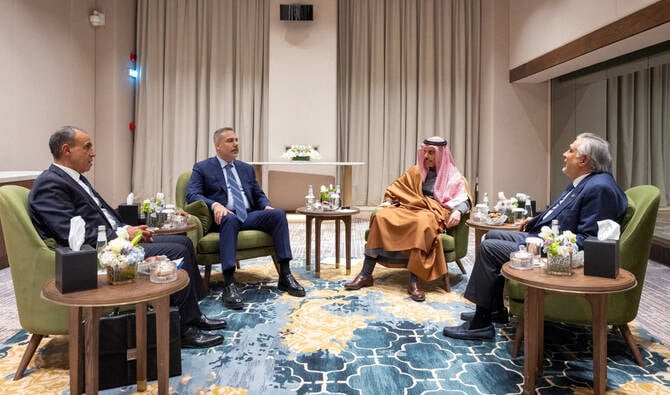
On Thursday, March 19, the foreign ministers of Saudi Arabia, Pakistan, Turkey, and Egypt convened in Riyadh. That same evening, the US president issued an ultimatum to Iran: reopen the Strait of Hormuz or face strikes on electricity production facilities — with the largest power station expected to be the first target.
Intensive diplomatic activity followed. Pakistan, Turkey, and Egypt entered mediation efforts. Turkey and Egypt engaged US envoy Steve Witkoff, while Pakistan held direct talks with Iran.
On Saturday night, the US president announced an extension of the ultimatum until March 27, stating that Iran was showing willingness to enter negotiations.
By Monday, financial markets responded with cautious optimism: indices edged higher, and energy prices declined slightly.
During the week, Trump stated that beyond Iranian seriousness, a “gift” had also been received. International media speculated about its nature — from easing navigation through the Strait of Hormuz to a temporary reduction in attacks on Gulf states.
Yet no official announcement of talks — in Pakistan or Turkey — materialized.
On Thursday morning (US time), in a cabinet meeting, Trump emphasized his desire for an agreement while simultaneously using harsh rhetoric against Iran.
At the same time, the mediators attempted to draw China into the process. Turkey and Egypt highlighted Beijing’s call to reduce violence, while a Chinese warship arrived in Karachi ahead of a joint naval exercise with Pakistan (March 27–April 2).
The exercise was framed as protecting trade routes — a clear reference to the China–Pakistan Economic Corridor (CPEC), a flagship component of China’s Belt and Road Initiative (BRI), which in some respects competes with the India–Middle East–Europe Corridor (IMEC).
On that same day, despite Trump’s claims of strong markets, the data told a different story:
The Dow Jones fell by about 1%, deepening a roughly 10% decline from its peak; the S&P 500 lost around 1.7%; and the Nasdaq also declined. Energy prices resumed their upward trend.
In the afternoon, Trump announced another extension of the ultimatum until early April, and envoy Witkoff reinforced the prospects for a deal — yet markets remained in the red.
On Friday, March 27, Iranian attacks on Gulf states resumed. Later that night, the Houthis joined the confrontation, launching attacks toward Israel and threatening maritime routes in the Red Sea.
In response, several Asian countries — including Japan, the Philippines, and Thailand — declared energy emergency measures.
Markets continued to decline, with the Dow entering correction territory, while oil and gas prices kept rising.
Meanwhile, political pressure in the United States intensified: some senators called for ending the fighting, while military analysts urged the administration to press forward.
According to a report by Barak Ravid in Axios, responsibility for negotiations with Iran was transferred to Vice President J.D. Vance, who is said to expect the conflict to continue for several more weeks.
Despite this, Trump continued to project a dual message: on one hand, highlighting military achievements and stating that thousands of targets remain in Iran; on the other, calling on Saudi Arabia to join the Abraham Accords.
On the international stage, Secretary of State Marco Rubio faced questions from G7 countries in Paris, amid European criticism of both the handling of the Iran conflict and US policy toward Russia.
At the same time, Ukraine’s president made a surprise visit to Riyadh and signed a security assistance agreement with Saudi Arabia, particularly focused on missile and drone defense — a reminder of the global interconnection between conflict zones.
Adding to the tension, Iran reportedly struck a US base in Saudi Arabia, injuring American personnel.
Meanwhile, a fresh report by Arab News indicates that diplomatic efforts are continuing: Pakistan is expected to host the foreign ministers of Saudi Arabia, Turkey, and Egypt in Islamabad on Sunday for talks on the ongoing conflict, as part of efforts to mediate a ceasefire between the United States and Iran.
The key question remains whether the rival parties themselves will join the process.
The overall picture reflects a combination of military escalation, intensive mediation efforts, increasing involvement of global powers, and mounting economic and political pressures.
There is significant fog, conflicting information, and strong rhetoric from all sides.
But on the ground, actions continue, and the conflict is expanding into additional arenas, including the Red Sea.
The words dominating the headlines are “escalation” or “agreement.”
For now — the facts continue to accumulate.