
Distinguished Professor of Sociology Emeritus CUNY
We’ve Been Here Before
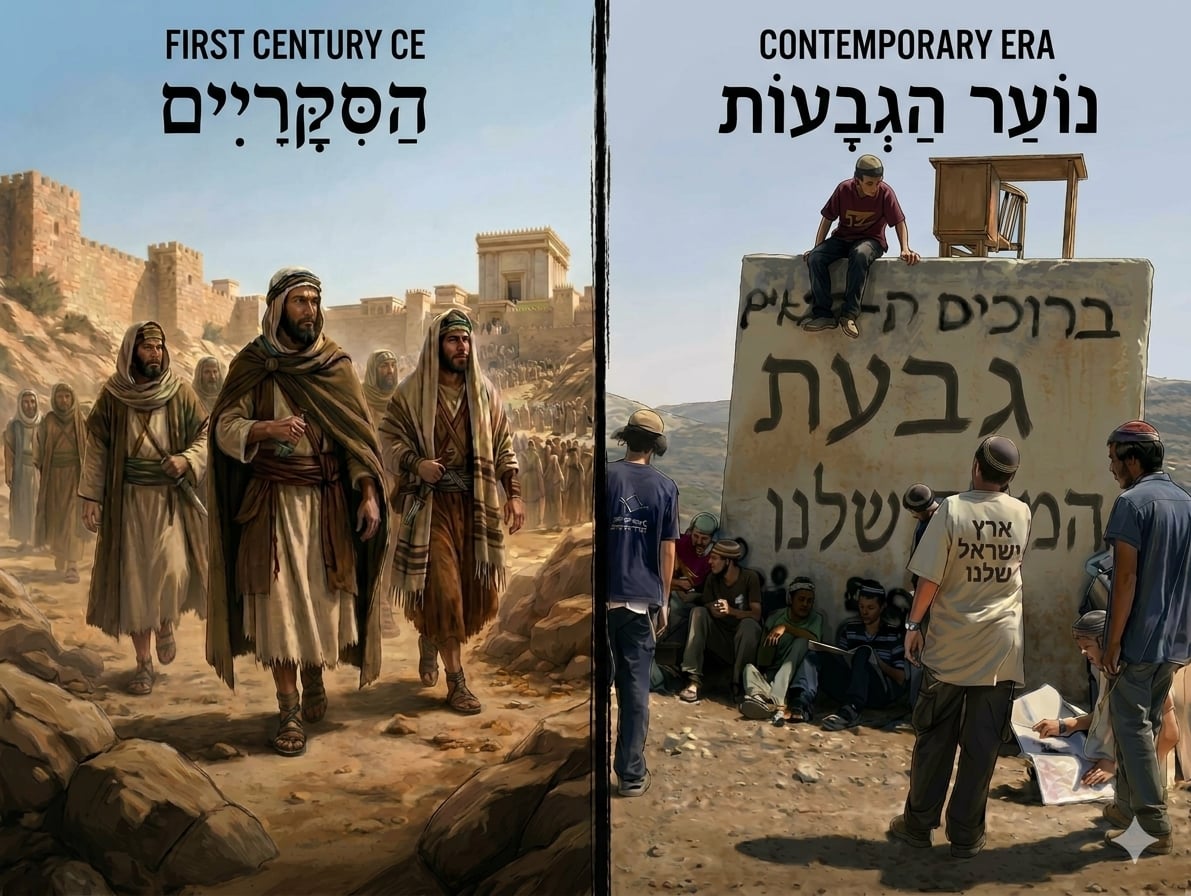
We've Been Here Before [AI generated]
We’ve been here before. A small state, led by incompetent leaders, some of whom see themselves as entitled to leadership, if not endowed with royalty, who believe they earned their exalted position for life, pressured by religious extremists, some of whom are bandits and rule by violence, but all of whom are convinced they are doing God’s work. A state which claims it is confronted by implacable enemies with whom there is no possibility of negotiation. A state that is politically dependent on greater powers yet chooses to ignore the demands of those great powers out of sheer hubris. Its political and military movement ultimately turns them into adversaries.
This is a situation that in the past led to national disaster and loss of all sovereignty. I am speaking of course of the events and actors who brought the defeat of Judea by Rome in the first century C.E., and the tragedy of destruction and exile that led to the Jews becoming for two millennia what sociologist Max Weber called, “a pariah people” and often a persecuted or barely tolerated minority.
The time was 66-73 C.E. when a great Jewish revolt ultimately led to a tragic final stand at Masada. The Sicarii (their name derives from sica, a curved pocket dagger that they concealed underneath their cloaks), were only the final extremist splinter faction of the Zealots but are considered by historians to be one of the world’s earliest political terrorist groups. They rejected all other political leaders, claiming they alone knew and were the instruments of God’s will. They were unmanageable and vicious. They incited the lower classes and nationalists to reject Roman efforts to come to terms with Judea and infiltrated Jerusalem and its leaders along with others there who also believed that God was on their side. They insisted there was no need to take account of the great powers.
The relationship between the Sicarii and the King of Judea during this period was one of absolute, violent hostility. King Agrippa II, the last ruler of the Herodian dynasty and a favorite of Roman Emperors Claudius and Nero, was ultimately controlled by Rome. But before Rome began appointing their own rulers in Judea, Antigonus II reigned as the last of the Hasmonean kings. Reaching his throne by dirty tactics against internal rivals, he had his supporters – many of whom were ordinary Jews who considered him a savvy king. For a long time, he managed to portray himself as a hero. When he turned against the dominant great power by allying himself with another, the Parthians, he ended up in a three-year war against Rome. Despite this misguided partisanship, he still had some local allies, who were sure they could play off the great powers and come out on top, but we know how that all ended badly.
At least for me, the parallels to our own times are frighteningly close. We have had a poor leader who has tried to play the current great power and engaged in misguided partisanship. We have our own Sicarii who go by the name of Hilltop Youth, the violent West Bank settlers whose extremism, masquerading as religiously inspired, is dragging the nation to oblivion along with the help of the so-called “Religious Zionists,” and those bandits in this government who call themselves the party of “Jewish Power” and the “National Union Revival.” Empowered by our version of a self-appointed king, Benjamin Netanyahu and his family, they have wrought chaos over the past four years.
A shape-shifting Prime Minister and his supporters who manage to paint all rivals to his power as traitors this longest serving PM evades responsibility for what has happened under his leadership by pointing fingers at others. He has succeeded in continuing an endless war with no plan for the day-after on the pretext of saving Israel (and his throne) while simultaneously alienating Israel’s hard-won allies. Now Netanyahu and his allies want a vote of confidence in the coming days of decision. Those inclined to give it to him should look to Antigonus II. Instead of trying to rein in our extremists, this government has instead turned its anger against countries upon whose support we need, expelling their diplomatic personnel and trying to deflect the political conversation against us by attacking an earlier generation of leaders among many of our oldest allies.
We do not need a replay of the mistakes of the past. We want a different and more hopeful revival: one that looks forward to peace with our neighbors as the first goal, and peace within as its necessary precursor. We need to embrace a change that brings us back to the higher principles of this country’s Declaration of Independence: “to foster the development of the country for the benefit of all its inhabitants.” To build a state “based on freedom, justice and peace as envisaged by the prophets of Israel” that “will ensure complete equality of social and political rights to all its citizens irrespective of religion, race or sex,” and “guarantee freedom of religion, conscience, language, education and culture,” as well as “safeguard the Holy Places of all religions.” We cannot do this with endless war, nor can it be done by those who have led Israel to this low point. We cannot do it by occupying another people or by expanding our borders endlessly. May the new year bring us hope and change for the better, not more of the follies and tragedies of the past.
Related Topics
Related Posts