


Middle East Analyst
What Does the Barak–Epstein Connection Tell Us?
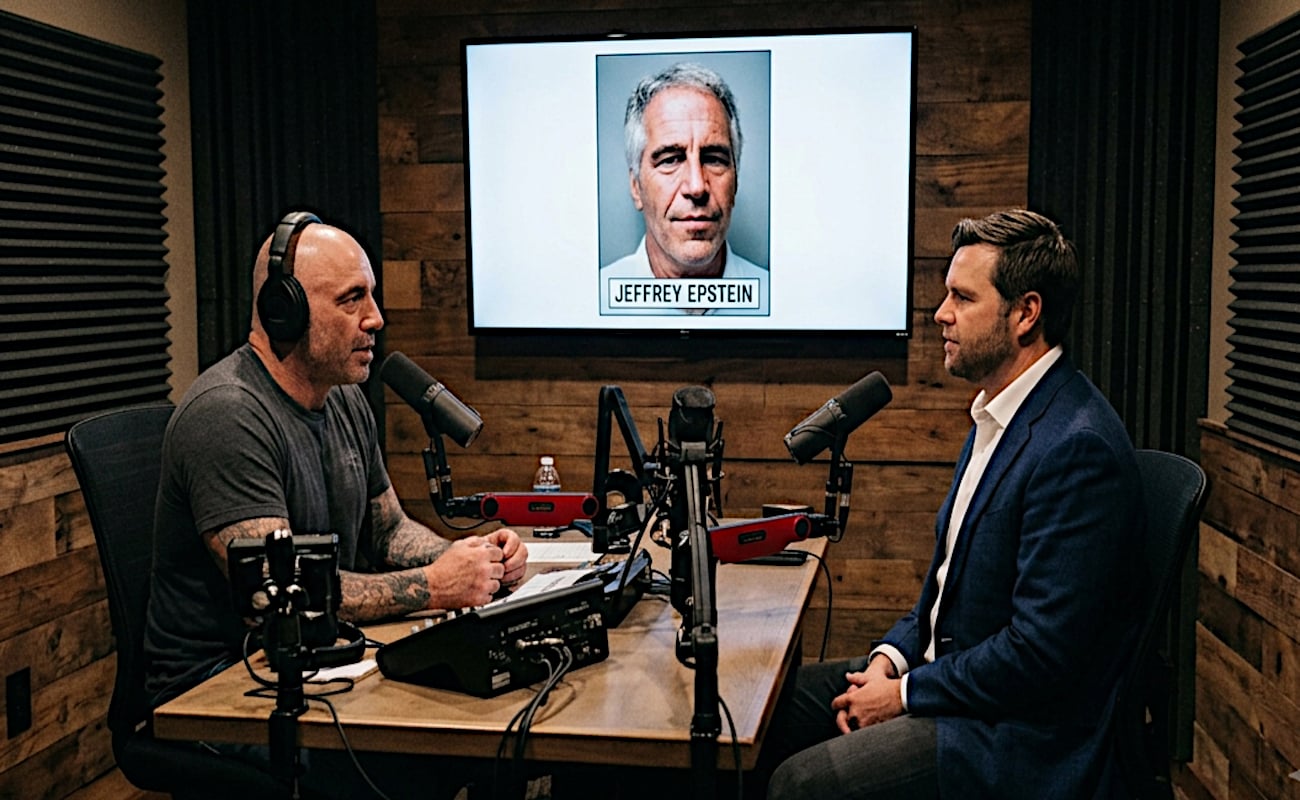
by author (AI)
Intelligence Adjacency versus Espionage
During his recent interview with Joe Rogan, Vice President JD Vance made a striking claim. Jeffrey Epstein, he said, “clearly had connections to the upper levels of American intelligence” and “the highest levels of Israeli intelligence.” Vance offered no evidence for either assertion and acknowledged that no publicly released verified documents directly connect Epstein to any intelligence service. Yet another part of his remarks attracted less attention. Vance suggested Epstein had ties to the “left-of-center” elements of Israel’s “deep state,” a description many commentators interpreted as a likely reference to former Israeli Prime Minister Ehud Barak, whose long relationship with Epstein has been documented through publicly released emails, financial records, and extensive reporting.
Vance’s comments raise an important analytical question. What does the Barak-Epstein relationship actually demonstrate? Does it point toward espionage? Political networking? Or does it instead illustrate a more common phenomenon that is frequently misunderstood—the overlap between political elites, former intelligence officials, venture capital, and advanced technology companies operating within national security ecosystems?
Much of the public discussion has been trapped between two opposing narratives. One dismisses every Barak-Epstein connection because no intelligence operation has been proven. The other treats the same relationships as self-evident proof that Epstein was an Israeli intelligence asset. Neither conclusion follows from the available evidence.
The more useful analytical framework lies between those extremes.
Intelligence Adjacency
Modern democratic states produce what might be called intelligence adjacency—professional ecosystems in which former intelligence officers, military leaders, government officials, venture capitalists, entrepreneurs, and advanced technology companies routinely interact. These relationships develop naturally because governments increasingly rely upon private industry for cybersecurity, artificial intelligence, communications, data analytics, aerospace, and defense technology.
The United States provides obvious examples. Former officials from the CIA, NSA, and Department of Defense routinely move into private cybersecurity firms, venture capital partnerships, artificial intelligence companies, and defense contractors. Britain’s GCHQ maintains similar relationships with the British cyber sector. France’s DGSE, Germany’s BND, and numerous NATO allies exhibit comparable patterns.
Israel’s system is even more tightly integrated. Mandatory military service, the central role of defense technology in the Israeli economy, and the influence of elite military organizations such as Unit 8200 and AMAN naturally create dense professional networks that extend well beyond government service. Senior officers frequently move into technology startups, venture capital, consulting, and public office. Investors seeking opportunities in Israel’s technology sector inevitably encounter individuals with intelligence and military backgrounds.
None of this constitutes evidence of espionage.
It reflects the structural characteristics of advanced national security economies.
Recognizing this distinction is essential because intelligence adjacency should not be confused with intelligence operations.
Barak’s World
Ehud Barak is not an ordinary political figure. He is among the most decorated soldiers in Israeli history, a former commander of Sayeret Matkal, former Chief of Staff of the Israel Defense Forces, former Defense Minister, and former Prime Minister. Every stage of his career placed him in continuous contact with Israel’s intelligence agencies, defense establishment, and military technology sector.
Consequently, any private venture involving Barak—particularly in cybersecurity or advanced technology—will almost inevitably intersect with Israel’s broader national security ecosystem. That observation says little about clandestine activity. It says much about the professional networks surrounding someone who spent his entire career at the highest levels of Israeli defense and government.
Publicly released correspondence documents repeated communications between Epstein and Barak over a period of years. Their relationship clearly extended beyond a passing social acquaintance. It included sustained personal contact, financial interactions, and business investments that later became the subject of political controversy within Israel.
Those facts are established.
What they establish, however, is proximity—not operational involvement.
Yoni Koren
The Barak relationship becomes more analytically interesting when viewed alongside Epstein’s documented association with Yoni Koren.
Koren served as a senior aide and bureau chief to Barak during Barak’s tenure as Israel’s Defense Minister and had longstanding experience within Israel’s intelligence community. Publicly released emails also place Koren among the frequent visitors to Epstein’s New York residence. Those same emails appear to indicate that Epstein arranged or paid for portions of Koren’s cancer treatment in 2012.
That detail deserves attention—not because it proves anything about intelligence activity, but because it suggests a relationship considerably closer than a routine political or business acquaintance. Paying—or arranging payment—for expensive medical treatment represents a level of personal commitment that naturally raises analytical questions regarding the depth of the relationship.
At the same time, analysts should resist extending that inference beyond what the evidence supports.
Persistent allegations claim Koren installed surveillance equipment in one of Epstein’s residences. Those allegations have circulated for years through speculative reporting and online commentary, but they have never been substantiated through official investigations, released Department of Justice documents, or other authoritative evidence. They remain allegations rather than established fact.
Distinguishing documented relationships from unsupported allegations is not merely an academic exercise. It is the difference between disciplined intelligence analysis and speculation.
Carbyne
The most significant business connection between Epstein and Barak involved Carbyne, an Israeli emergency communications and cybersecurity company. Epstein invested alongside Barak, placing himself inside one of Israel’s rapidly growing technology sectors.
Again, context matters.
Israel’s cybersecurity industry draws heavily from veterans of Unit 8200, AMAN, and other military intelligence organizations. Former intelligence officers routinely become entrepreneurs, engineers, investors, or executives. Similar transitions occur throughout the United States, Britain, and other technologically advanced democracies.
There is no publicly available evidence that Carbyne functioned as an intelligence front. Nor is there public evidence that Yoni Koren held a formal position within the company.
Rather, Carbyne illustrates the broader concept of intelligence adjacency. Companies operating at the intersection of cybersecurity, emergency communications, artificial intelligence, and national security naturally attract founders, investors, and advisers whose careers originated in military and intelligence institutions.
Participation in that ecosystem should not be mistaken as proof of participation in covert intelligence operations.
Note: During the Rogan interview Vice President Vance denied that President Trump was being blackmailed by anyone. This was a likely in reference to an unverified allegation made by an FBI Confidential Human Source (CHS) in an FBI Memo that was released from the Epstein Files. Here is a link is to my analysis of that memo, which also contains a link to the actual FBI Memo.
Related Topics
Related Posts