Zionist and Proud!
When Ideology Overtakes Education
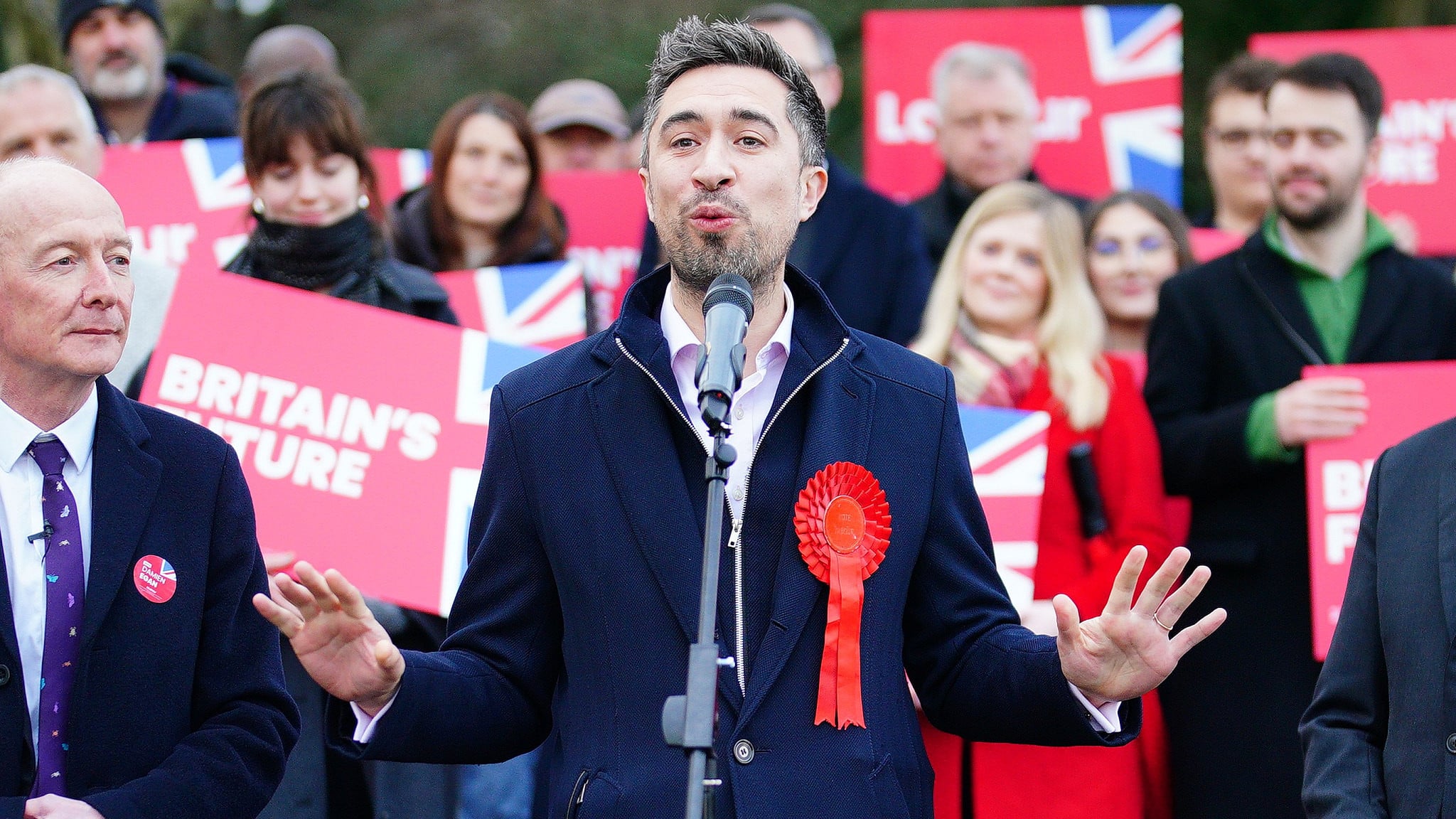
Recent news about an incident at Bristol Brunel Academy has shone a harsh light on a troubling trend in British education. A Jewish Member of Parliament, Damien Egan, was prevented from visiting a secondary school in his own constituency after pressure from pro-Palestine activists, reportedly involving members of the National Education Union. The justification offered was that his presence, because of his views on Israel, could make staff, pupils, and parents feel unsafe. The implication is stark. A democratically elected MP was treated as a risk not because of anything he planned to say or do, but because of who he is and the causes he supports.
That should alarm anyone who believes schools are meant to prepare young people for life in a democratic society. Suggesting that a Jewish MP, who is also associated with Labour Friends of Israel, could make people feel unsafe simply by attending a school visit is not safeguarding. It is exclusion based on identity and belief, dressed up in the language of concern.
What makes this episode even more unsettling is that the school itself appears to have been placed in an impossible position. Bristol Brunel Academy confirmed that Egan is an alumnus and that he had been invited, like other local MPs from across the political spectrum, to speak about democracy and the role of Parliament. The purpose of the visit was constructive and educational, to raise aspirations and show students how democratic institutions work. The cancellation came only after plans for a public protest emerged, prompting concerns about disruption at the end of the school day. The school has since made clear that it remained in contact with Egan, arranged an alternative date, and followed police advice, signalling that it did not share the ideological motivations of those who campaigned against the visit.
The National Education Union is not a marginal body. It is the largest teachers’ union in the United Kingdom and in Europe, representing hundreds of thousands of education professionals. With that scale comes enormous influence over the culture of schools and the boundaries of acceptable debate. When activists within such an organisation push a political agenda, the consequences are felt far beyond individual staff rooms. In this case, entryism within the union, the deliberate embedding of activists to shape policy and practice, appears to have enabled the exclusion of an MP whose views fell outside an approved ideological line.
This was not an isolated incident. Across the country, union activists have increasingly promoted pro-Palestine and anti-Israel perspectives in educational settings. This has included support for workshops and resources that explicitly encourage teachers to advocate for Palestine in schools, activity that legal experts have warned may breach rules on political neutrality. The union works closely with the Palestine Solidarity Campaign and is formally affiliated with it, coordinating campaigns and encouraging members to take part in PSC events. Conferences, webinars, and sessions framed around advocating for Palestine in schools have become part of this ecosystem.
In those spaces, one-sided narratives about Israel are often presented, while opposing views are treated as morally suspect or actively unwelcome. Indeed, both the NEU’s General Secretary and the Chair of its International Committee, who also serves as Chair of the Palestine Solidarity Campaign, have been regular participants in the now familiar so-called pro-Palestine marches in London. These demonstrations have repeatedly been marked by a pervasive strain of anti-Zionist antisemitism, creating an atmosphere that has left many Jewish Londoners fearful of entering central London.
It is here that one of the most glaring contradictions becomes impossible to ignore. The pro-Palestine movement routinely accuses Israel of practising apartheid, a factually refutable charge that is repeated relentlessly in protests, classrooms, and union-backed campaigns. Yet what is unfolding in British schools looks far closer to a genuine system of exclusion. Jewish pupils, Jewish teachers, and Jewish representatives who are Zionist or supportive of Israel are being singled out, marginalised, and told they do not belong. When people are excluded from public institutions because of their identity or their political and national associations, that is not equality. It is discrimination. It is the drawing of ideological and communal lines that determine who is acceptable and who is not. If apartheid means separating people based on identity and belief, then the behaviour being normalised in these educational spaces bears an uncomfortable resemblance to the very thing Israel is falsely accused of.
In this climate, what should have been a straightforward educational visit became a political battleground. The Bristol branch of the Palestine Solidarity Campaign celebrated the cancellation as a victory, claiming it sent a clear message that politicians who support Israel are not welcome in schools. That message should worry parents of all backgrounds. Schools are not meant to shield children from controversial ideas or uncomfortable debates. They are meant to equip young people with the tools to think critically, to engage respectfully, and to understand that democracy involves disagreement.
Most reasonably minded parents expect schools to develop independent minds, not enforce ideological conformity. When external activists and union members succeed in dictating who can speak and which views are permitted, trust between schools and communities is eroded. Students are deprived of the chance to engage with their elected representatives and to see democratic pluralism in action.
The solution is not complicated, even if enforcing it may be uncomfortable. Schools must uphold political neutrality and resist pressure from campaign groups seeking to turn education into a vehicle for activism. Trade unions should represent their members’ professional interests, not act as gatekeepers of political ideology. And policymakers must be willing to intervene when democratic norms are undermined in institutions that shape the next generation.
It would also be a mistake to see what is happening in schools as disconnected from wider questions of national security and social cohesion. Many of the ideas now circulating through activist networks and finding their way into classrooms echo those long associated with Islamist political movements such as the Muslim Brotherhood, including the rejection of Jewish national self-determination and the portrayal of Zionism as inherently illegitimate. This does not require proof of direct coordination to be concerning. When such ideas are normalised in education, they shape how young people understand minorities, democracy, and the place of Jews in public life.
That is why We Believe in Israel and the National Jewish Assembly, working within the framework of its new partnership, are launching a campaign to press the UK government to take extremist movements more seriously. This includes renewed calls to ban both the Muslim Brotherhood and the Iranian regime’s Islamic Revolutionary Guard Corps, organisations whose ideology fuels hostility toward Israel and helps create the environment in which Jewish people and Zionists are increasingly marginalised. Protecting schools from political intimidation is not just an education issue. It is about defending democratic values and the long-term security of British society.
Related Topics
Related Posts