
Jewish Leader and Activist from Guatemala
When the Conquered Return: The Jewish Case
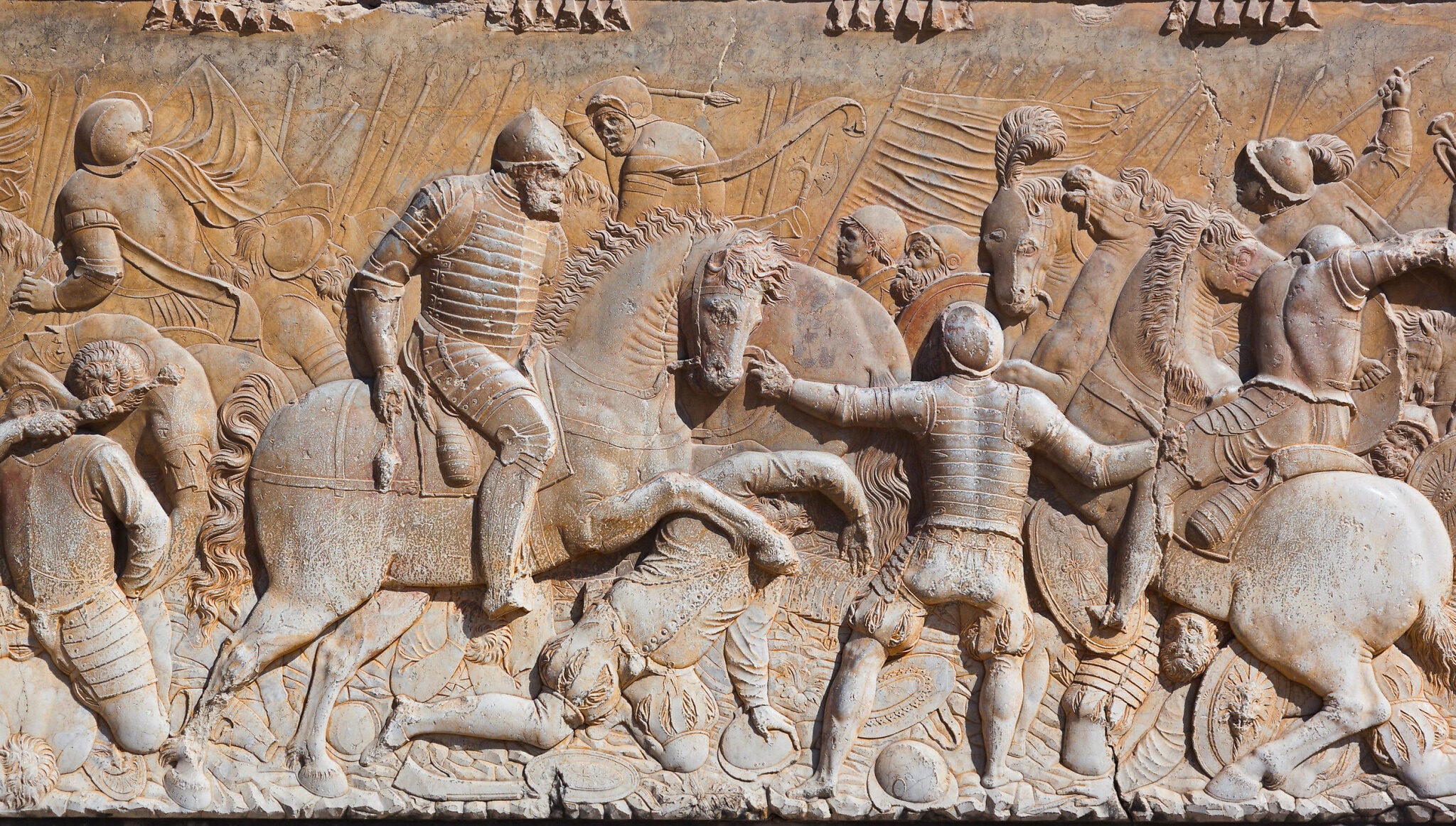
History is largely a story of conquest. Empires expanded, civilizations disappeared, indigenous populations were displaced, and ancestral territories became part of new nations. While many conquered peoples preserved their cultures and identities, relatively few recovered political sovereignty.
Today, much of the world exists on land once governed by other peoples. Yet this reality is often overlooked when discussing one of history’s most remarkable examples of national restoration: the Jewish return to Israel.
A World Shaped by Conquest
Conquest and territorial displacement have shaped civilizations for thousands of years, long before modern colonialism.
In the ancient Middle East, successive empires conquered and absorbed numerous peoples, including the Assyrians. Ottoman expansion incorporated much of the region into an empire. Its dissolution left the Kurdish people divided primarily among Turkey, Iraq, Iran, and Syria, without an independent nation-state. Armenians,suffered foreign domination and the genocide of 1915 before eventually regaining independence in a portion of their historical homeland.
In Europe, Roman expansion conquered ancient Gaul, now largely France, and extensive Celtic territories. The Basques remained divided between what became Spain and France, while the Sámi saw their ancestral territories gradually incorporated into northern European states.
Spain and Portugal emerged through centuries of conquest, reconquest, and political unification. The United Kingdom was likewise shaped by the incorporation of Wales, Scotland, and Ireland, while France gradually consolidated territories with distinct historical identities, including Brittany and Corsica.
In East Asia, Successive Chinese dynasties extended their authority over territories inhabited by distinct peoples, including Tibetans, Uyghurs, and Mongols. Korea endured Japanese colonial rule from 1910 to 1945. Mongolia recovered independence following centuries of Qing domination, although Inner Mongolia remained within China.
In The Americas, the Spanish conquered the Aztec Empire in Mexico in 1521, the Inca Empire in Peru beginning in 1532, and Maya kingdoms in Guatemala during the sixteenth and seventeenth centuries.
In North America, European settlement and the expansion of the United States and Canada displaced numerous indigenous nations, including the Cherokee, Lakota, and Navajo.
In South America, Portuguese colonization displaced indigenous peoples such as the Guaraní and Tupinambá in Brazil, while the expansion of Argentina and Chile dispossessed the Mapuche, Tehuelche, and Qom of extensive ancestral territories.
British colonization dispossessed Aboriginal Australians and transformed Māori territories in New Zealand. Both peoples have since achieved forms of restitution and recognition, but not independent national sovereignty.
During the nineteenth and twentieth centuries, European colonial expansion in Africa incorporated numerous distinct peoples into territories governed by foreign powers.
Some nations eventually recovered independence: Greece in the nineteenth century, Poland in 1918 after 123 years of partition, Ireland during the twentieth century, and the Baltic nations following Soviet occupation. Armenia and Mongolia likewise recovered independence after prolonged periods of foreign domination.
Today, Tibetans, Kurds, Uyghurs, and other peoples continue to face unresolved questions of political rights, territorial claims, and national self-determination.
When the Conquered Return: The Jewish Case
More than three thousand years ago, the Jewish people developed their national, religious, and cultural identity in the Land of Israel. Jewish kingdoms existed there, Jerusalem became the center of Jewish national life, landmarks were built and Hebrew emerged as the language of an ancient civilization.
For nearly two millennia without an independent state, Jewish communities maintained a continuous presence in their homeland, while generations in the diaspora preserved their traditions, historical memory, and aspiration to return.
In 1948, Jewish sovereignty was reestablished in part of that ancestral homeland.
The Jewish connection to the land predates modern Zionism by millennia and rests upon extensive historical, archaeological, cultural, and religious evidence.
What distinguishes the Jewish experience is the extraordinary combination of ancient sovereignty, prolonged dispersion, continuous national identity, an enduring presence in the ancestral homeland, and the eventual restoration of political independence.
History’s Double Standard
The United States, Canada, Australia, Mexico, Guatemala, Peru, Brazil, and numerous European and Asian countries occupy territories shaped by conquest, territorial incorporation, and, in many cases, indigenous displacement.
Their existence is accepted as a political reality.
Yet in these same societies, including France, Spain, Italy, Germany, Ireland, and the United Kingdom, demonstrations against Israeli policies include voices portraying Jewish national restoration as nothing more than colonial conquest.
Criticism of Israeli policies, Palestinian rights, and territorial disputes is legitimate. But criticizing a state’s actions is fundamentally different from denying a people’s historical connection to its homeland.
The Jewish people, after nearly two thousand years without independent statehood, achieved something historically uncommon: restoring national sovereignty in their ancestral homeland.
And therein lies history’s extraordinary irony: in a world where conquest so often became permanent, the Jewish people managed to reverse the loss of their independence, only to be accused, by some voices in societies themselves shaped by conquest, of being the conquerors.
History deserves consistency, not selective interpretation.
Related Topics
Related Posts