Why Iran’s Nuclear Possession Would Endanger Global Stability
In today’s already fragile international security environment, the question of Iran acquiring nuclear weapons continues to raise serious global concern. While nuclear technology can be used for civilian energy purposes, its military dimension introduces risks that go far beyond any one region.
If Iran were to possess nuclear weapons, it could significantly reshape the balance of power in the Middle East and beyond. The region is already marked by deep political rivalries, active conflicts, and mistrust between key states. In such an environment, the introduction of nuclear weapons would likely intensify insecurity rather than reduce it.
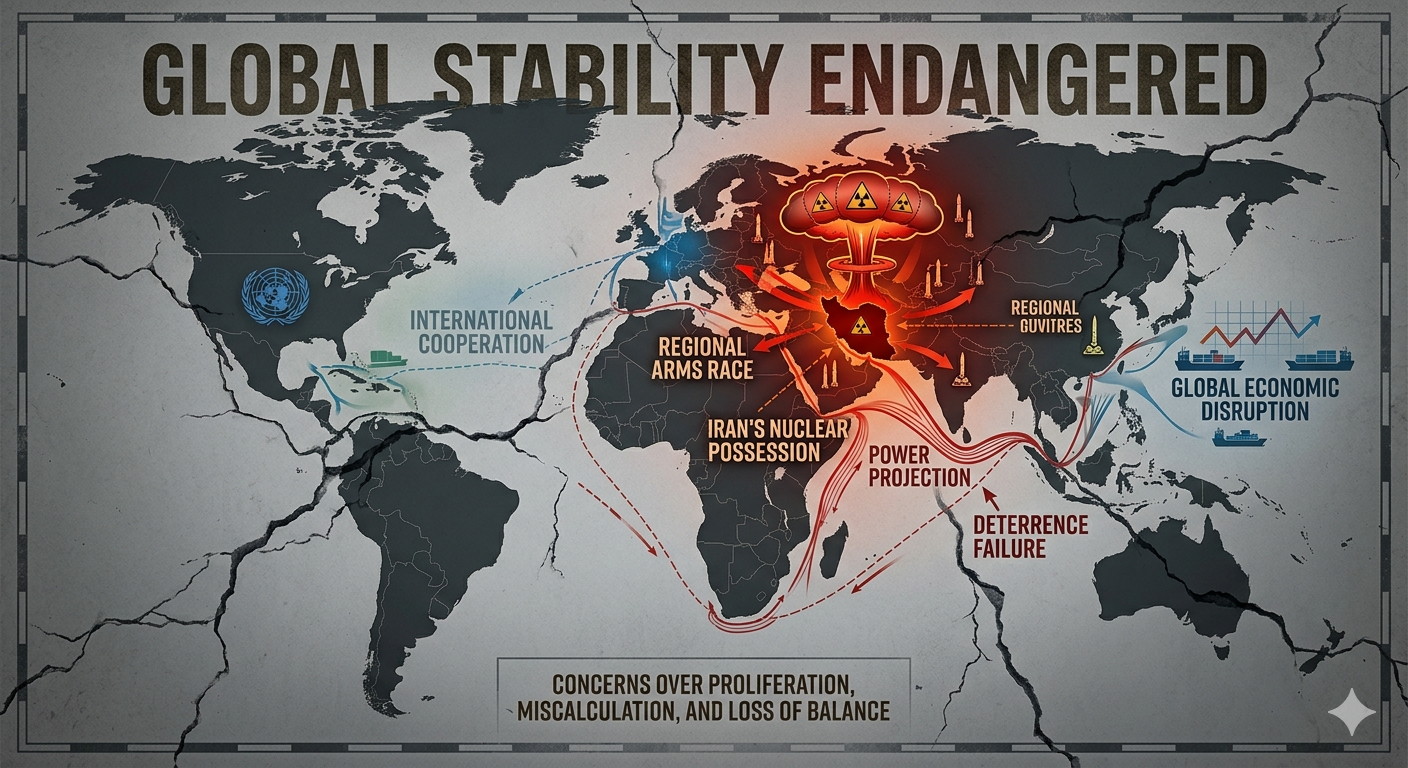
One of the primary concerns is the possibility of a regional arms race. If one state in a highly tense region becomes nuclear-armed, others may feel pressured to follow, increasing the number of nuclear actors and the chances of miscalculation. Even small misunderstandings between nuclear-armed states could carry catastrophic consequences.
Another major issue is the weakening of global non-proliferation efforts. The international system has long relied on agreements and inspections designed to limit the spread of nuclear weapons. A nuclear-armed Iran could undermine confidence in these frameworks and encourage other states to question existing restrictions.
There are also concerns about escalation during crises. In regions where military tensions already run high, the presence of nuclear weapons raises the stakes of every confrontation. This increases the risk that a local conflict could expand into something far more dangerous and difficult to control.
Beyond the regional level, global markets and international security would likely feel the effects. Energy routes, alliances, and diplomatic relations could all become more volatile as states adjust their strategies in response to a changed security landscape.
Ultimately, the concern is not only about one country, but about the broader stability of the international system. In a world already facing multiple security challenges, the expansion of nuclear weapons capabilities adds another layer of uncertainty that the global community has long sought to avoid.