
Middle East Analyst
Why Is Vance Claiming Epstein Had Ties to US and Israeli Intelligence?
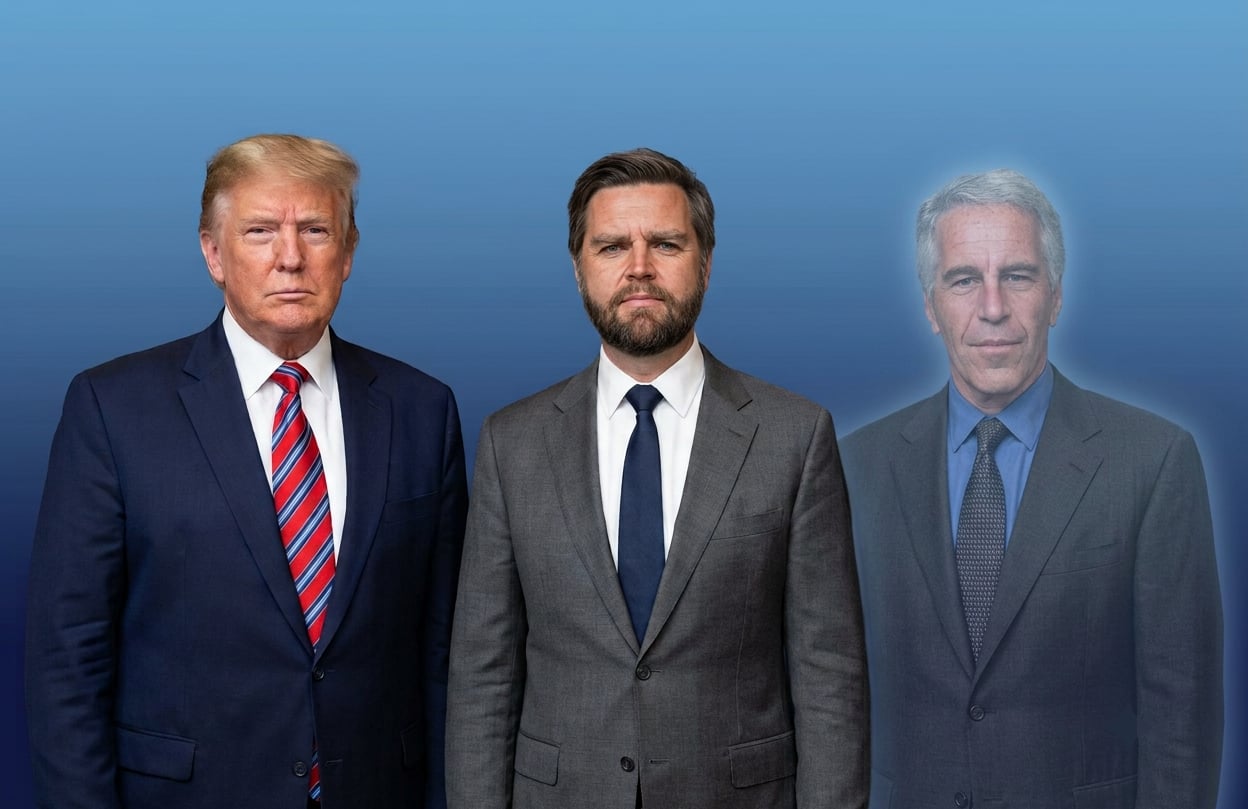
by author (AI)
Part Two: Beyond the Epstein-Barak Connection
The first part of this analysis examined what the documented relationship between Ehud Barak and Jeffrey Epstein does and does not establish, concluding that the evidence supports intelligence adjacency rather than proof of espionage. That analysis leaves an important question unaddressed: why would this material surface in a long-form interview with Joe Rogan — the country’s most-listened-to podcast host, and why would a sitting vice president use the opportunity to press a specific, unproven allegation against his own government, as well as an allied government?
The easy answer is that Vance believes a conspiracy theory. However, inferences likely point toward a more interesting, and more strategically coherent, explanation.
What Was Said, and Who Raised It
It was Rogan, not Vance, who opened the Epstein subject during the interview. Whether that sequencing was pre-arranged between the two camps is not established by the public record; it may simply reflect Rogan’s independent editorial interest in a story already dominating discussion. Either possibility is consistent with what follows, and analysts should not assume coordination at the level of topic selection where none has been shown.
What is attributable to Vance himself, once the subject was raised, are two distinct claims that deserve separate treatment.
First, he asserted that Epstein had ties to the “left-of-center” elements of Israel’s “deep state,” a remark widely read as an oblique reference to Barak. Vance offered no supporting documentation and acknowledged none exists publicly.
Second, Vance stated that Trump was not being blackmailed by anyone. That is a curious thing to volunteer unless it is responsive to something already circulating. It reads less as a spontaneous aside than as a direct rebuttal to a specific, pre-existing allegation: that Trump’s decision to enter the Iran war was influenced by Epstein-related material held over him by Netanyahu’s government. Whether Vance was denying that any blackmail exists, or asserting that Trump specifically could not be swayed by it even if it did, the remark likely only makes sense as damage control against a claim already in circulation.
A third element matters as much as either of these: Vance has claimed, in this interview and in other public settings, that Israel is directly working to smear him personally and to undermine the Iran memorandum of understanding through a well-funded information operation aimed at shaping Republican public opinion. This is not a new, one-time remark. It is a claim he has made repeatedly, across multiple venues, which itself is analytically significant — a single aside might be dismissed as loose talk; a recurring, consistent allegation across settings suggests either genuine conviction or a deliberate, sustained messaging campaign of his own. Critically, Vance has not offered proof of this specific claim. He points to Time’s Parscale reporting as corroboration, but that reporting documents a retention-focused influence campaign, not an operation proven to target Vance individually or to sabotage the MOU as its primary objective. The gap between what Vance alleges and what the documented reporting actually shows is itself worth analyzing, rather than either accepting his framing at face value or dismissing it outright.
The Belief Is Not Fringe
That claim has more public traction than casual observers might assume. Polling conducted after the January 30, 2026 release of Epstein-related files found that a plurality of Americans (42 percent) said they did not know whether Epstein had ties to a foreign intelligence service, but a larger share said he likely did (40 percent) than said he did not (18 percent). Among the smaller subset willing to name a specific country, a majority pointed to Israel, followed by Russia — a finding the pollsters themselves caution rests on a small sample, but one that nonetheless indicates the belief is not confined to the political fringe.
Two features of that data matter for this analysis. Republicans were somewhat more likely than Democrats to name Israel specifically, even though Democrats are generally more critical of Israel on most other measures. And younger Republicans have grown markedly more critical of Israel than their older counterparts — the same demographic that, separately and independently, has become the explicit target of an Israeli-funded influence campaign.
The Parscale Operation
That campaign is now documented, not speculative. Time‘s investigation, based on Foreign Agents Registration Act filings, established that Israel’s government contracted Brad Parscale’s firm, Clock Tower X, through the ad agency Havas last September, with a mandate to produce 100 pieces of content monthly, at least 80 percent of it aimed at Gen Z audiences across TikTok, Instagram, YouTube, and podcasts. The campaign’s public rationale was combating antisemitism; officials familiar with the arrangement told Time its deeper purpose was preventing younger conservatives from turning against Israel. Parscale has confirmed the retention goal while disputing that the effort was designed to undermine the administration’s Iran diplomacy specifically.
Israeli officials, according to the same reporting, consider the campaign a failure — support among the target demographic has continued to erode despite the spending.
It is worth noting, and analysts should register this without overreading it, that the campaign’s stated ambitions included influencing how AI systems characterize Israel and the war. That detail belongs to the public record of what was attempted, not to any claim about what was achieved.
Reading the Rogan Appearance as Coordinated Signal
Put these pieces together and a different picture emerges than “vice president entertains conspiracy theory.”
Whoever raised the Epstein topic first, it was Vance who chose to use the opening to press his broader, unproven claim about an Israeli smear campaign, and to do so repeatedly, across venues, rather than once. He did this on the single media platform most likely to reach the exact demographic — young, online, conservative-leaning — that the Parscale campaign was built to hold, and that polling shows already harbors substantial suspicion about Epstein’s foreign ties. That combination — a recurring allegation, delivered without proof, in the venue best suited to reach a specific and already-primed audience — is not the pattern of someone thinking out loud.
The most economical explanation is not that Vance is freelancing. It is that the Trump administration has concluded, rightly or wrongly, that elements of the Netanyahu government are working to shape American opinion against the administration’s Iran diplomacy, and has deployed its vice president as the public instrument of a counter-pressure campaign — one that signals a cost to continued interference: if Israel’s government works to turn Trump’s base against him, the administration will not hesitate to direct comparably pointed messaging back at that same base, in the same venues, using material — the Barak-Epstein relationship, foreign-influence suspicions — that already carries currency with that audience. Vance’s repeated invocation of the claim, absent supporting evidence, is more consistent with delivering an authorized message than with an off-the-cuff belief he happens to hold.
This is inference, not established fact. Nothing in the public record confirms coordination between Trump and Vance on this specific messaging, and Vance’s stated motivations should not be assumed to be insincere merely because they are also strategically convenient. But the pattern is coherent: a repeated, cross-venue allegation, addressing both a documented foreign influence operation and a widely held public suspicion, delivered by the administration’s most credible messenger to the exact audience in contention. Reflexively categorizing that as Vance succumbing to online conspiracy culture requires ignoring how deliberately the pattern was constructed.
What Remains Unresolved
None of this establishes that Netanyahu’s government is in fact running a sabotage operation against the Iran deal, as opposed to a reputation-management campaign that has simply generated unintended friction. Nor does it establish that Vance possesses information beyond what Time has already published, or that his repeated, unproven allegation is true. What it does establish is that treating Vance’s remarks as free-floating conspiracism, disconnected from a documented influence campaign, a measurable public belief, and a consistent pattern of repetition across venues, is the less analytically defensible reading. The more useful question is not whether Vance believes what he said, but why he keeps saying it, without proof, in the venues most likely to reach the audience already primed to believe it — and what that pattern suggests about who authorized the message.
Related Topics
Related Posts