
Geopolitical & Defense Analyst
Why Israel Must Hold Hermon and the North
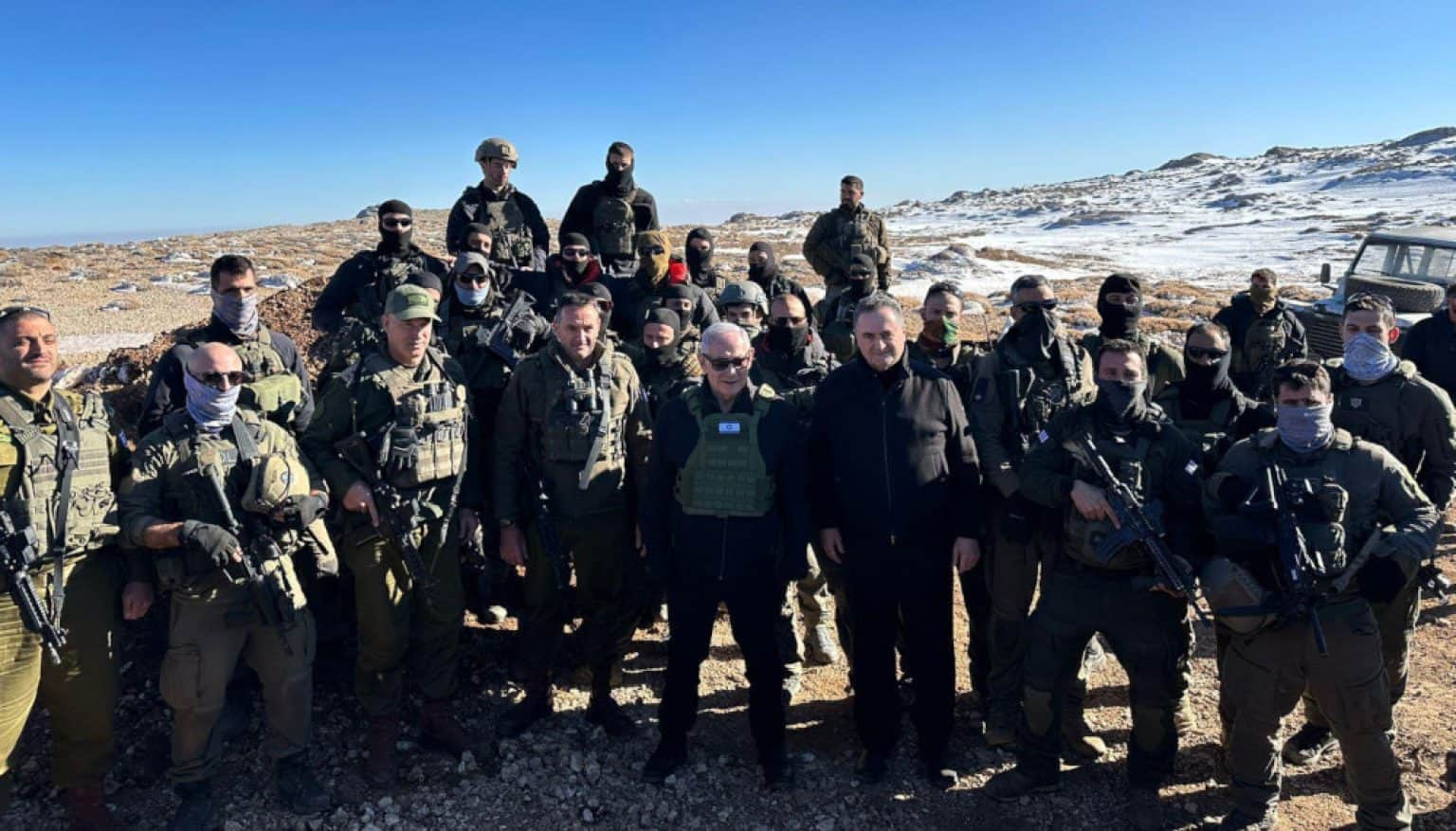
Israeli Prime Minister Benjamin Netanyahu and Defense Minister Israel Katz on Mount Hermon. (Israeli Defense Ministry)
In the brutal calculus of the Levant, geography is destiny. Modern warfare may be dominated by fifth-generation stealth aircraft, precision stand-off munitions, and autonomous strike systems, but the physical terrain still dictates whether a nation can survive a surprise attack. For a state lacking geographic depth, illusions about security guarantees are fatal.
Israel does not possess the vast territorial buffers of continental powers. There is no strategic rear to absorb a sustained initial thrust, regroup, and counterattack. From the northern frontier, armored echelons, hostile salvos, or armed infiltration units can threaten core population centers, vital infrastructure, and the industrial hub of Haifa within minutes. Under such unforgiving parameters, passive border defense is not caution; it is an invitation to catastrophe. Survival requires an unyielding posture of forward defense.
The fall of the Assad regime has radically transformed the northern battlespace, but it has not eliminated the threat. Instead, it has fractured it into a more unpredictable and lethal paradigm. The vacuum left behind across Syria is being actively exploited by Ankara’s network of proxy formations, hardened militant factions, and opportunistic irregular fighters operating under shifting banners.
Facing this volatile combination of conventional backing and insurgent asymmetry, any notion of abandoning Israeli vantage points on Mount Hermon and the strategic ridges of the north would be military suicide.
Mount Hermon is not merely high ground; it is the dominant electronic, tactical, and visual anchor of the entire theater. Holding these elevations provides uninterrupted surveillance depth deep into Syrian and Lebanese territory, neutralizing low-altitude approaches and exposing enemy movement long before an offensive can materialize. Yielding the Hermon would surrender both the line of sight and the physical fire control to actors who have repeatedly demonstrated their intent to redraw regional borders by force.
Equally decisive is the reality on the ground in southern Lebanon. The displaced residents of northern Israel cannot return home under the perpetual shadow of direct fire. True stabilization cannot be secured by paper commitments, toothless resolutions, or diplomatic communiqués that evaporate at the first sign of friction.
The territory south of the Litani River must be treated as a permanently demilitarized buffer zone. The proliferation of low-cost, high-leverage threats—particularly fiber-optic guided anti-tank missiles and low-observable FPV strike drones—has effectively bypassed classical border observation posts. If non-state networks or proxy forces are permitted to entrench themselves in the wadis and ridgelines along the border, no electronic fence or iron dome system can guarantee the daily safety of Israeli communities.
Security in this sector demands an uncompromising enforcement architecture: either sustained, proactive operational control by the IDF or an internationally mandated force operating under an enforceable Chapter VII framework with an explicit, recognized Israeli right to interdict rearmament instantly and unilaterally.
Western capitals often pressure Jerusalem to implement rapid withdrawals in the name of de-escalation. These calls deliberately ignore the harsh structural realities on the ground. A security vacuum created by a premature Israeli withdrawal will not foster moderate governance; it will be filled immediately by hostile militias, foreign-backed proxies, and Turkish revisionist ambitions seeking to project an unbroken arc of influence from Anatolia directly to the borders of the Galilee.
Maintaining an unbreachable shield across the northern front protects far more than Israel’s border kibbutzim. It anchors the stability of the entire Eastern Mediterranean corridor. By anchoring its northern flank on dominant terrain and neutralizing ground proxies, Israel prevents revisionist axes from establishing a combined land-and-sea stranglehold that would threaten Cyprus, Greece, and the broader maritime balance.
Peace in the Middle East has never been preserved by treaties signed in distant conference rooms. It is enforced by physical barriers, dominant geography, and unambiguous operational superiority. For Israel, holding the heights of Hermon and denying hostile forces a staging ground in southern Lebanon is not a bargaining chip—it is the irreducible prerequisite for long-term deterrence.
Related Posts